
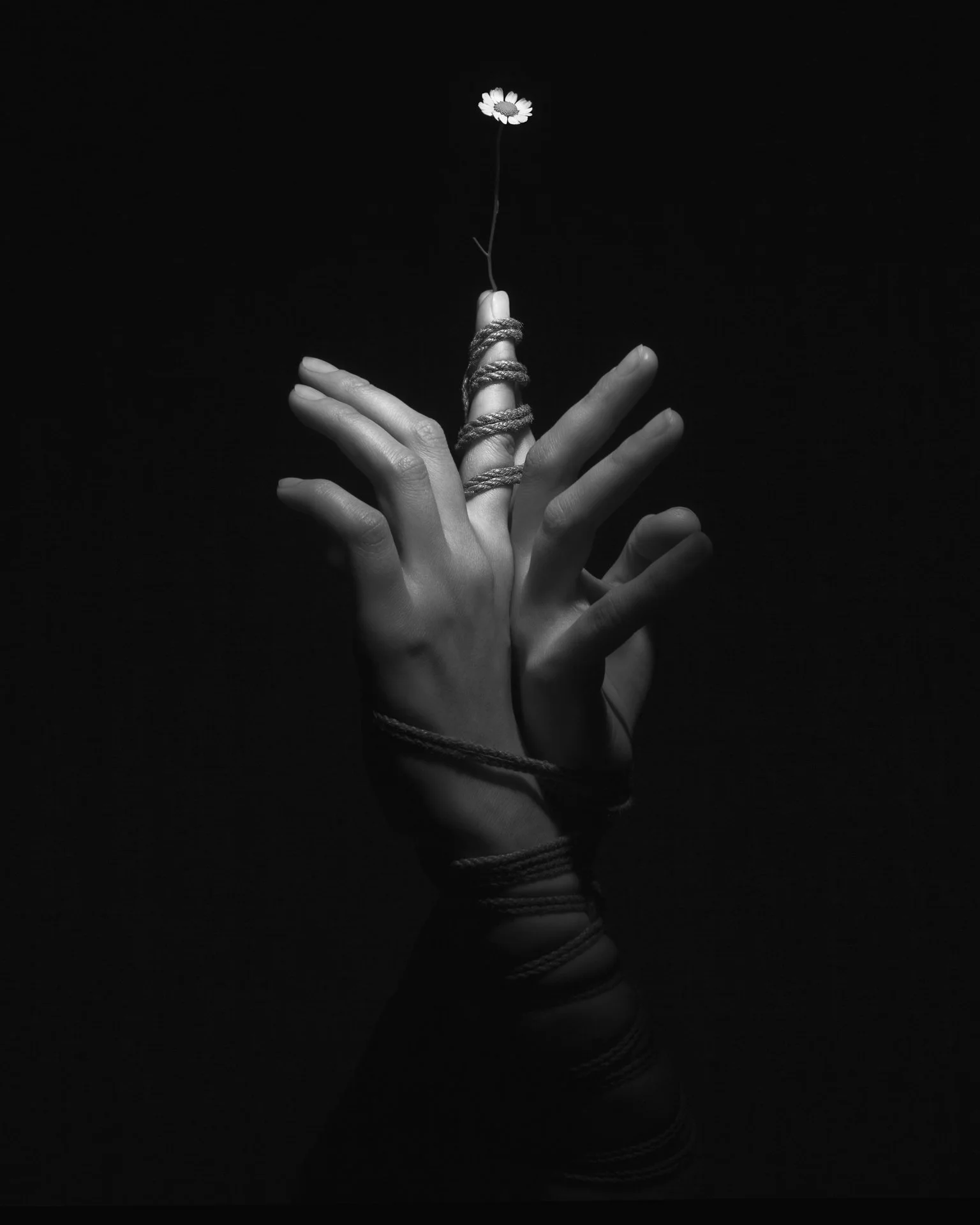
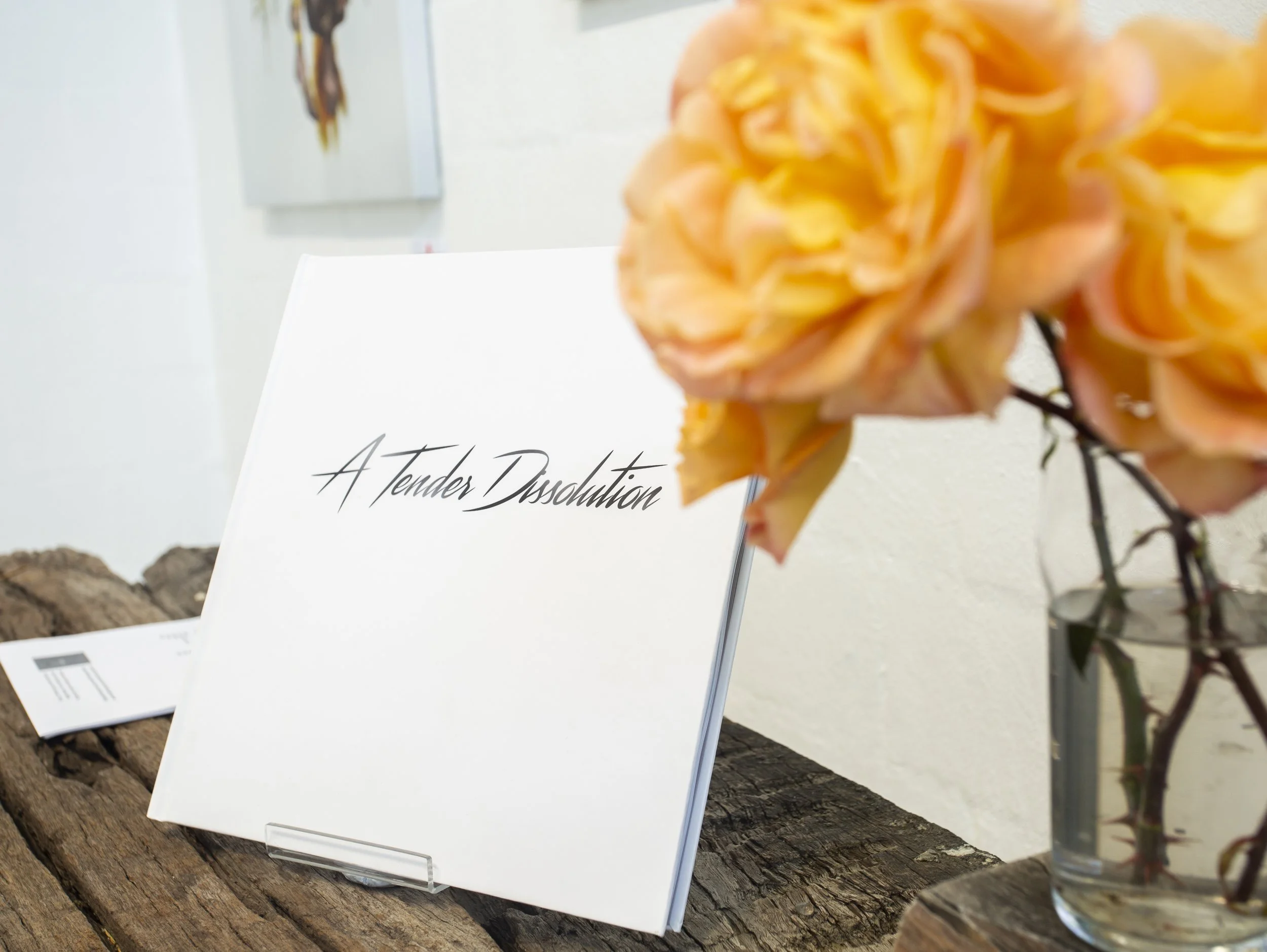
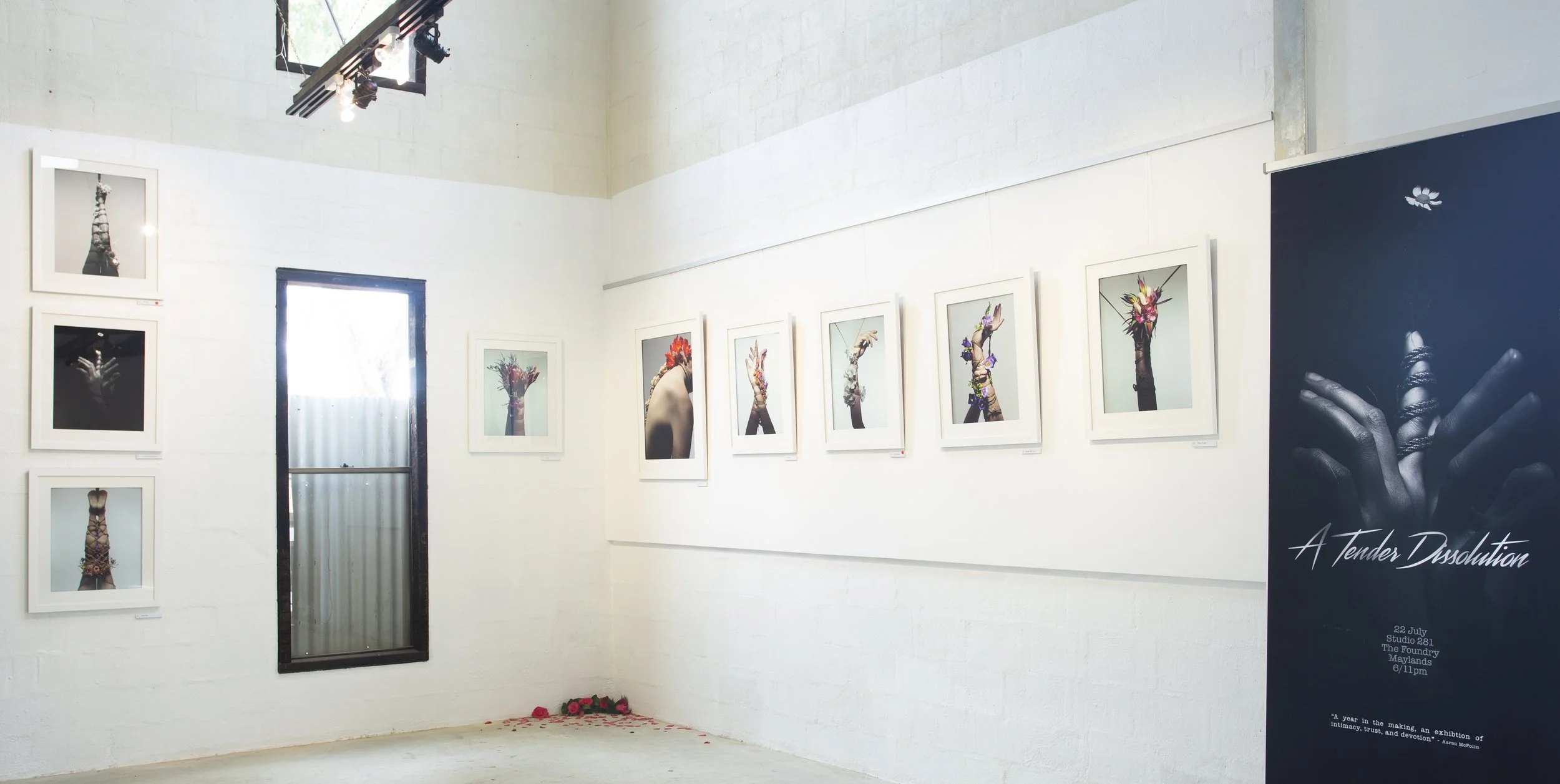
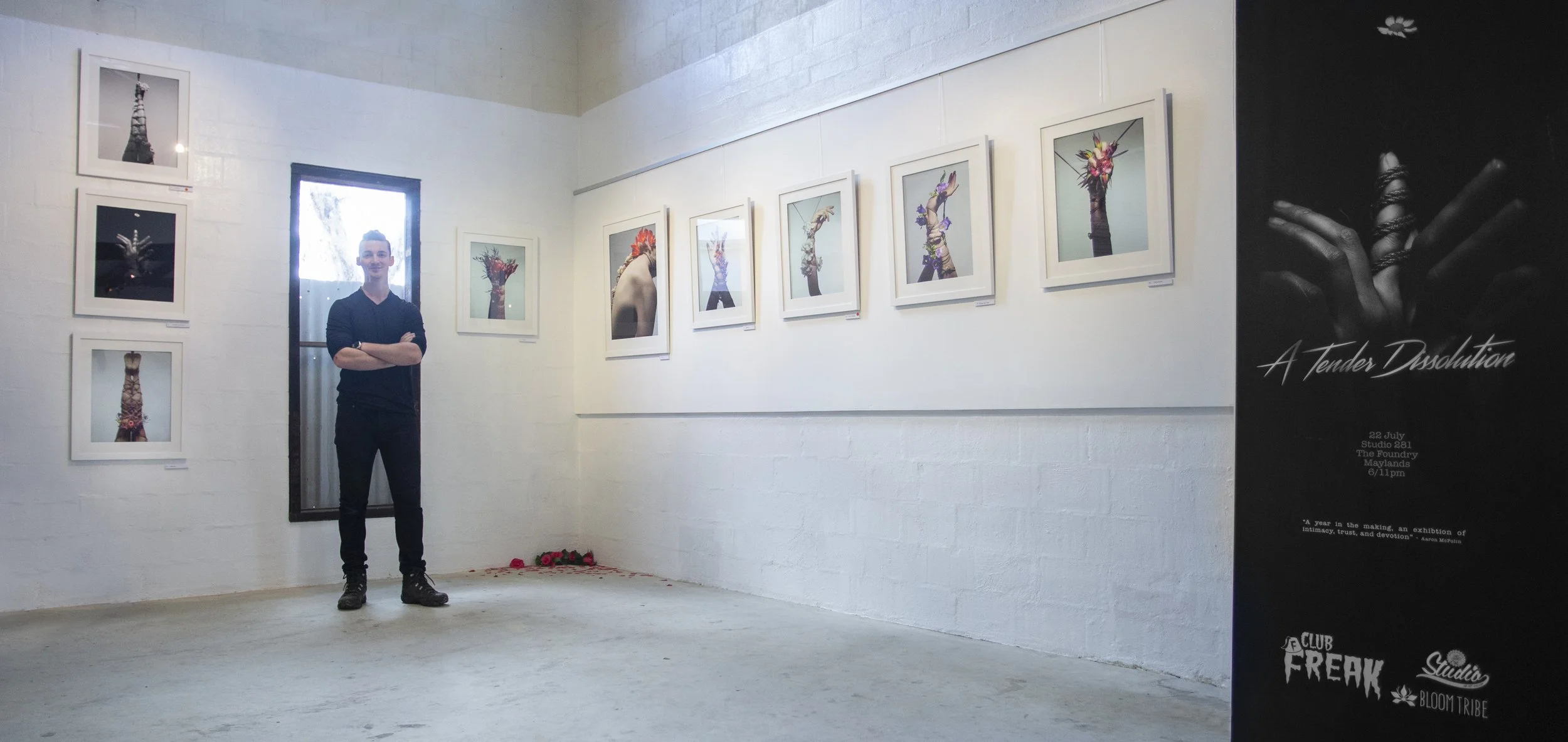
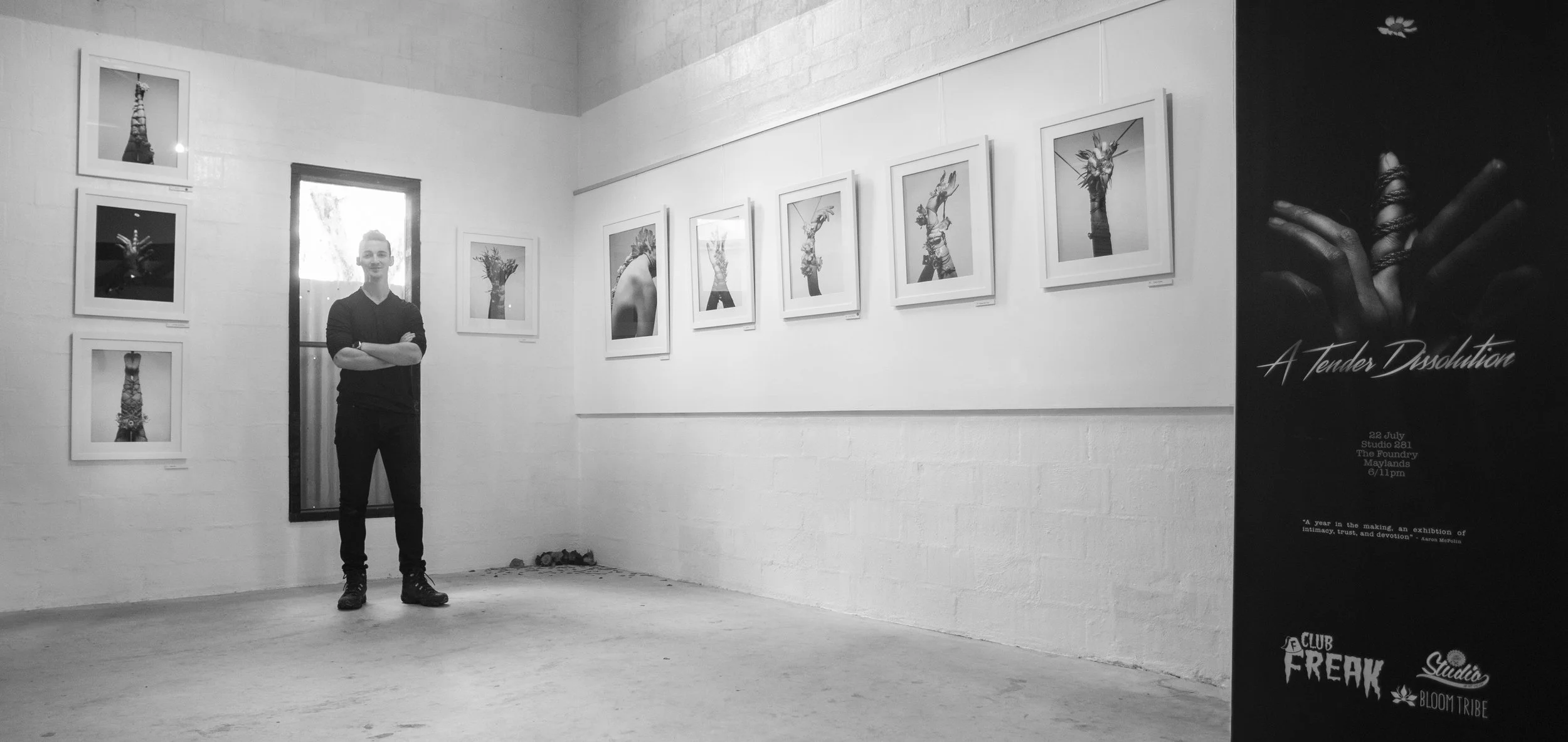
A TENDER DISSOLUTION

Artist: Aaron McPolin
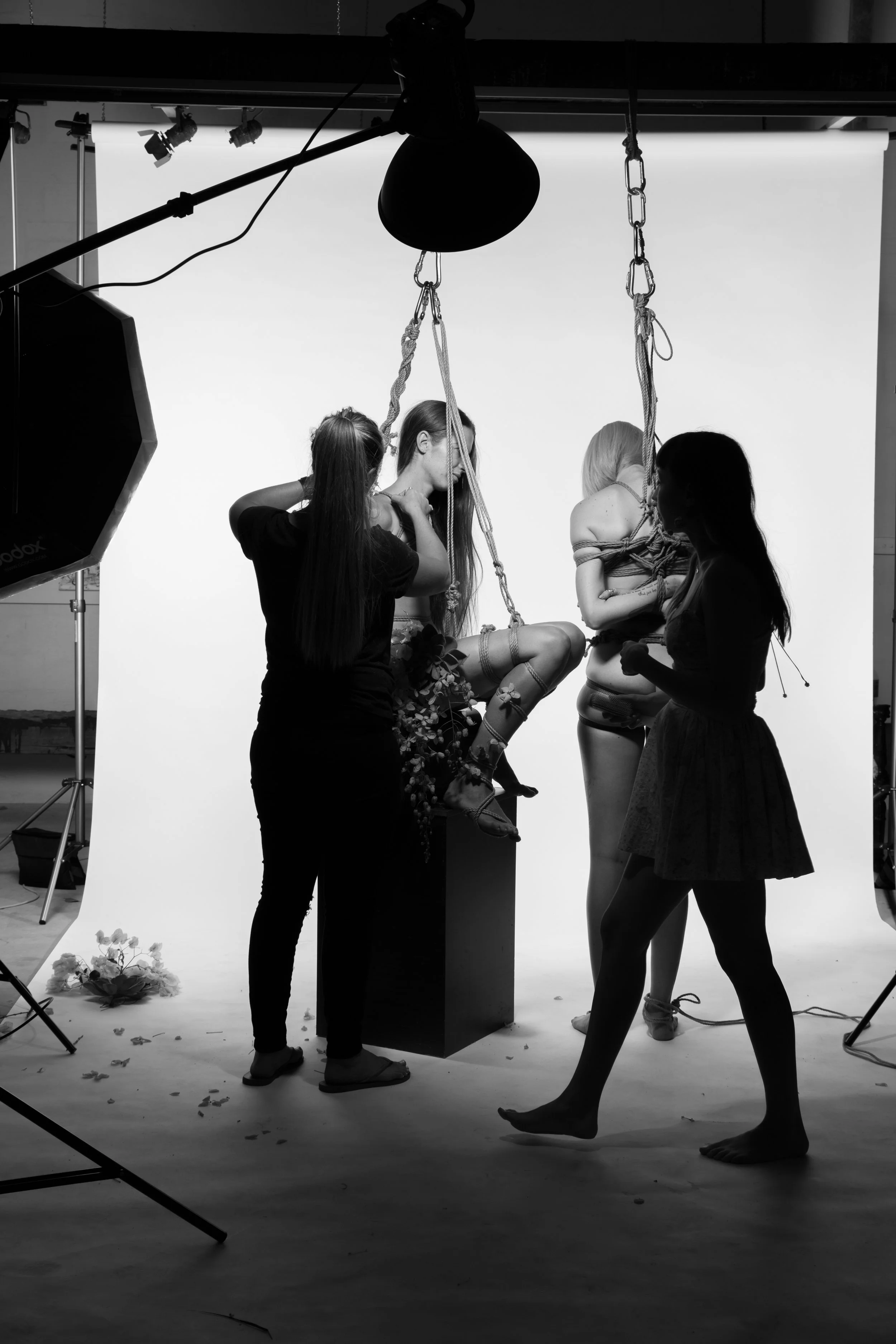
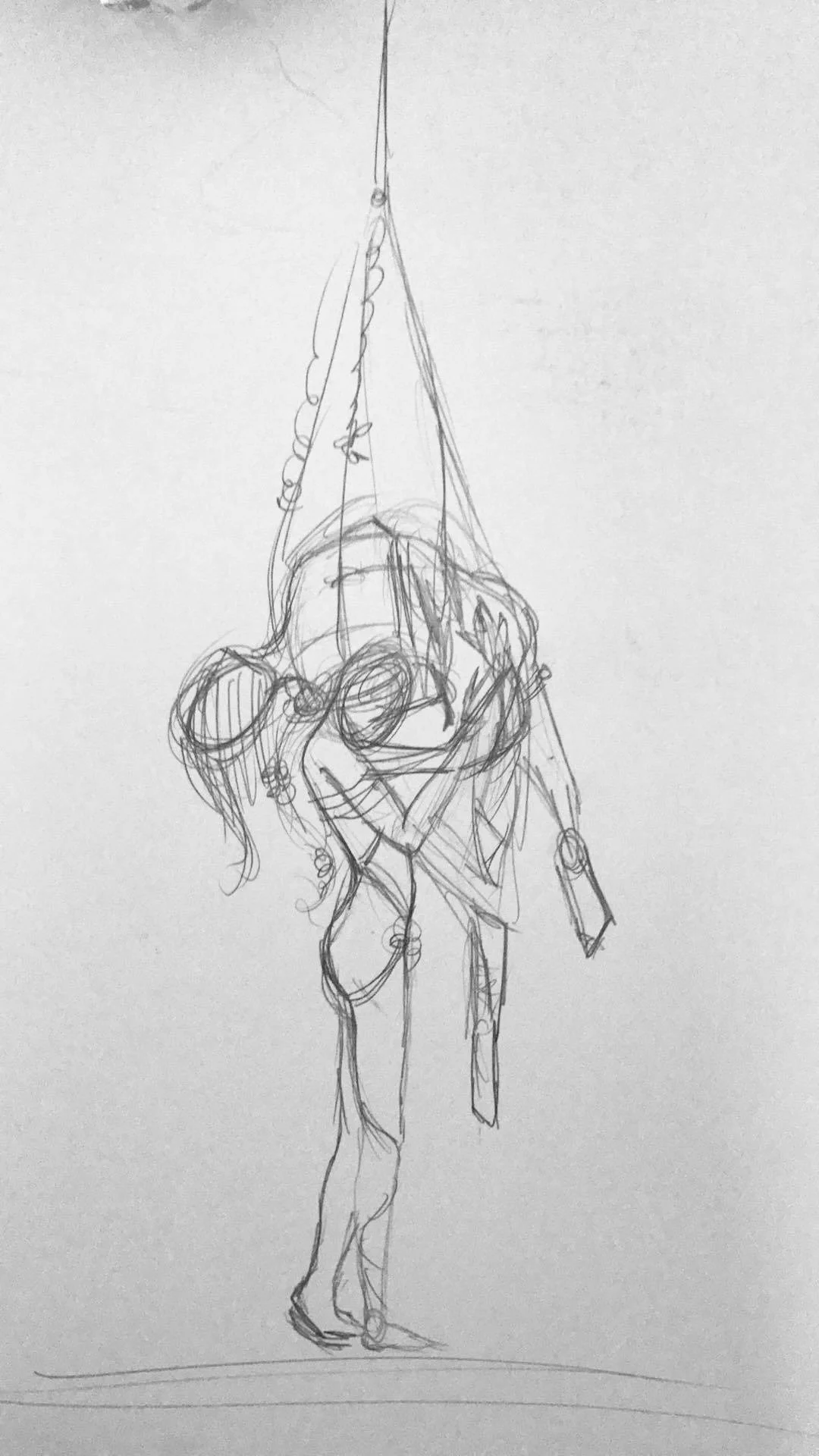
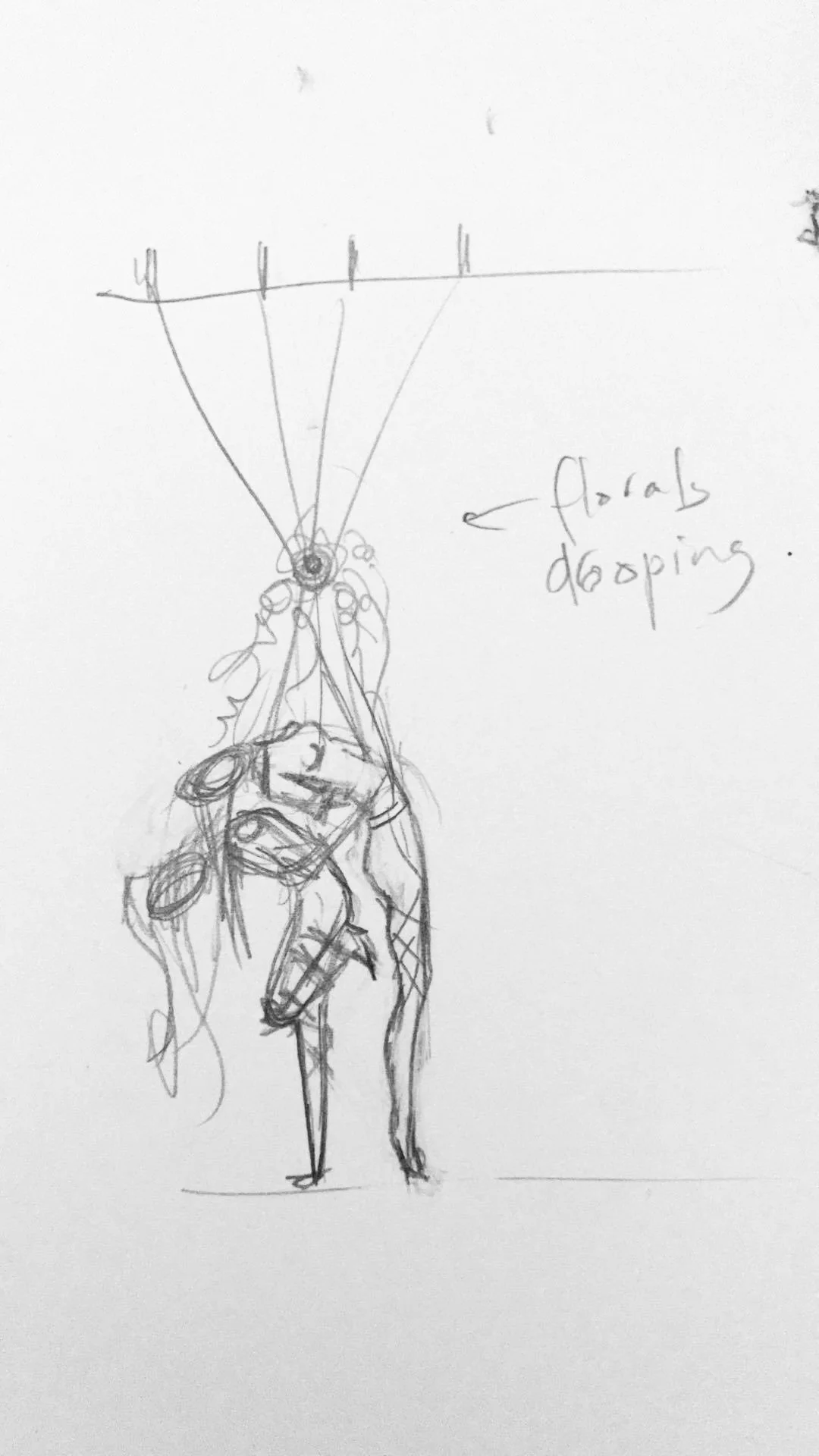
Assistant: Calliope Bridge
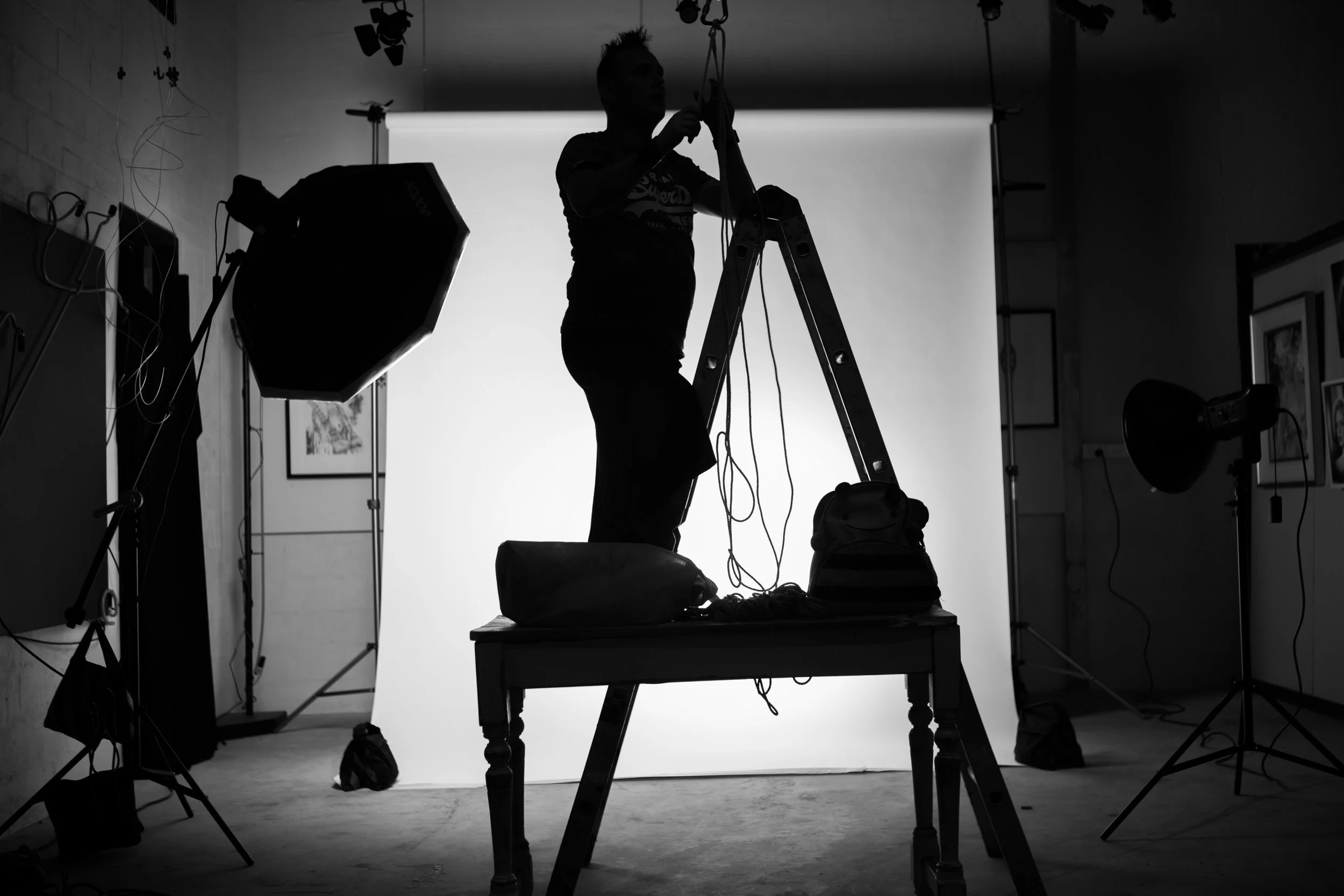
Shibari Artist: Paul Kabzinski
Floral Artist: Samara Flavel
Model: Liesel Claire
Model: Paige Savill
Model: Haylee Cee
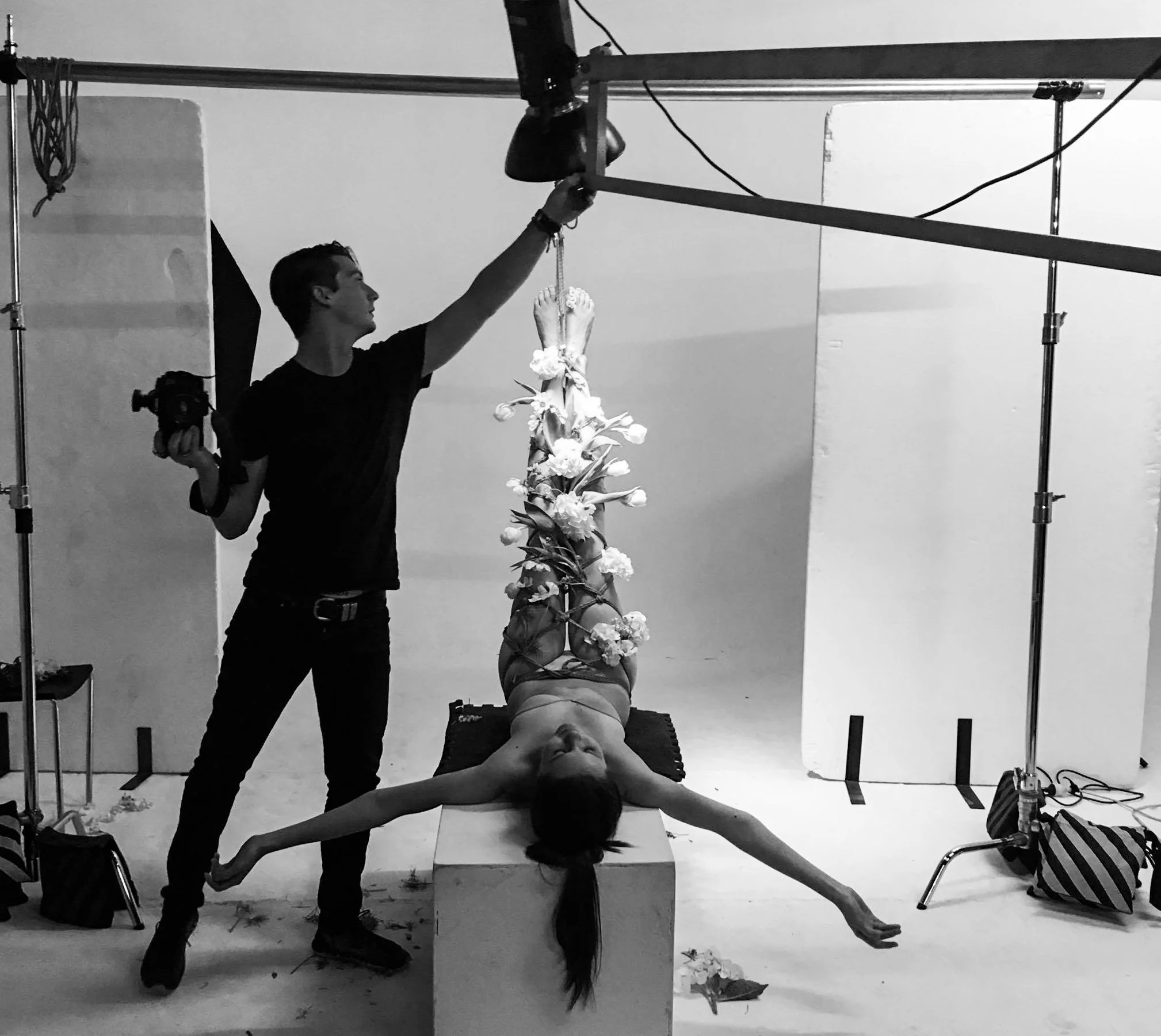
The Exhibition
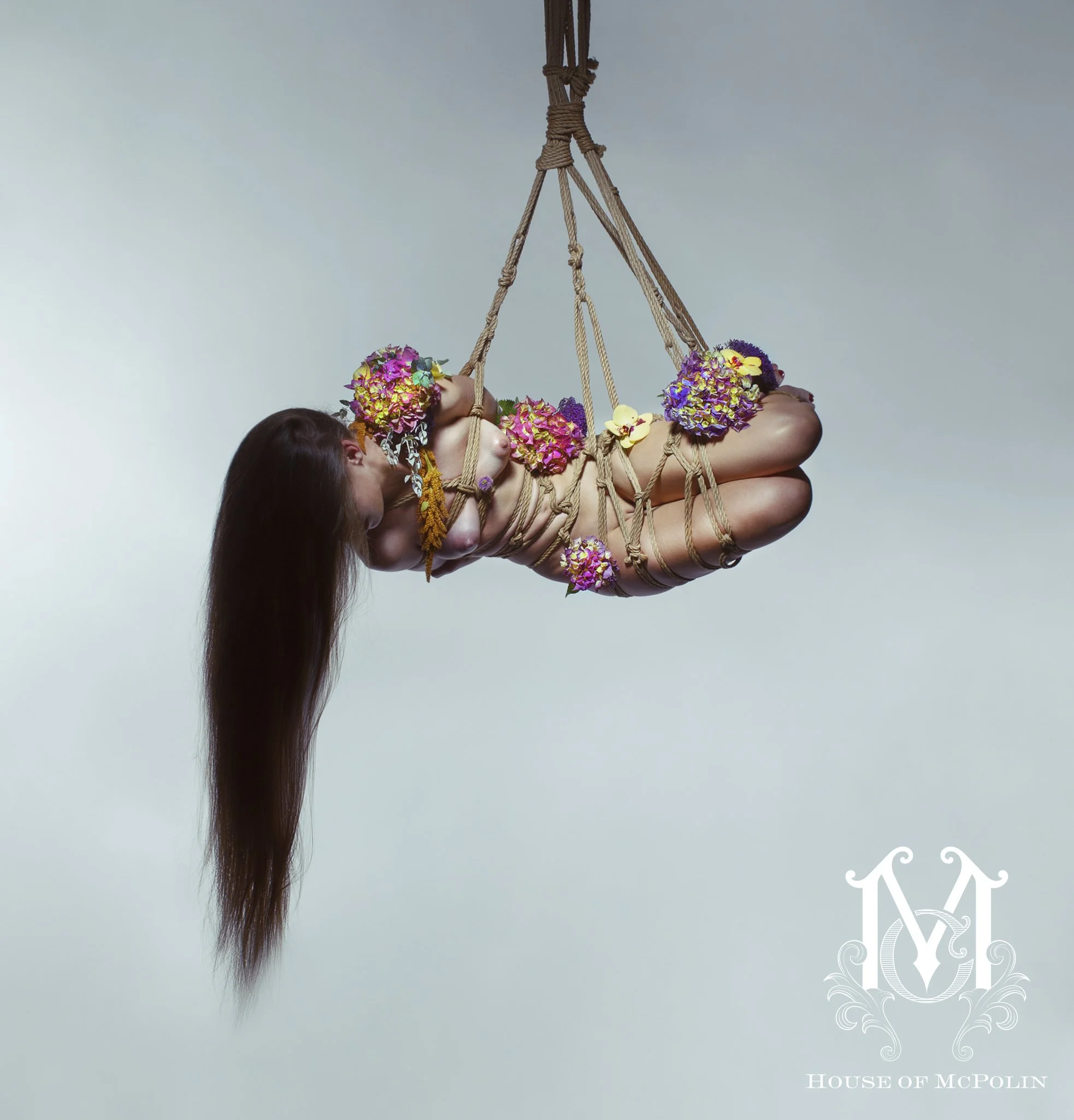
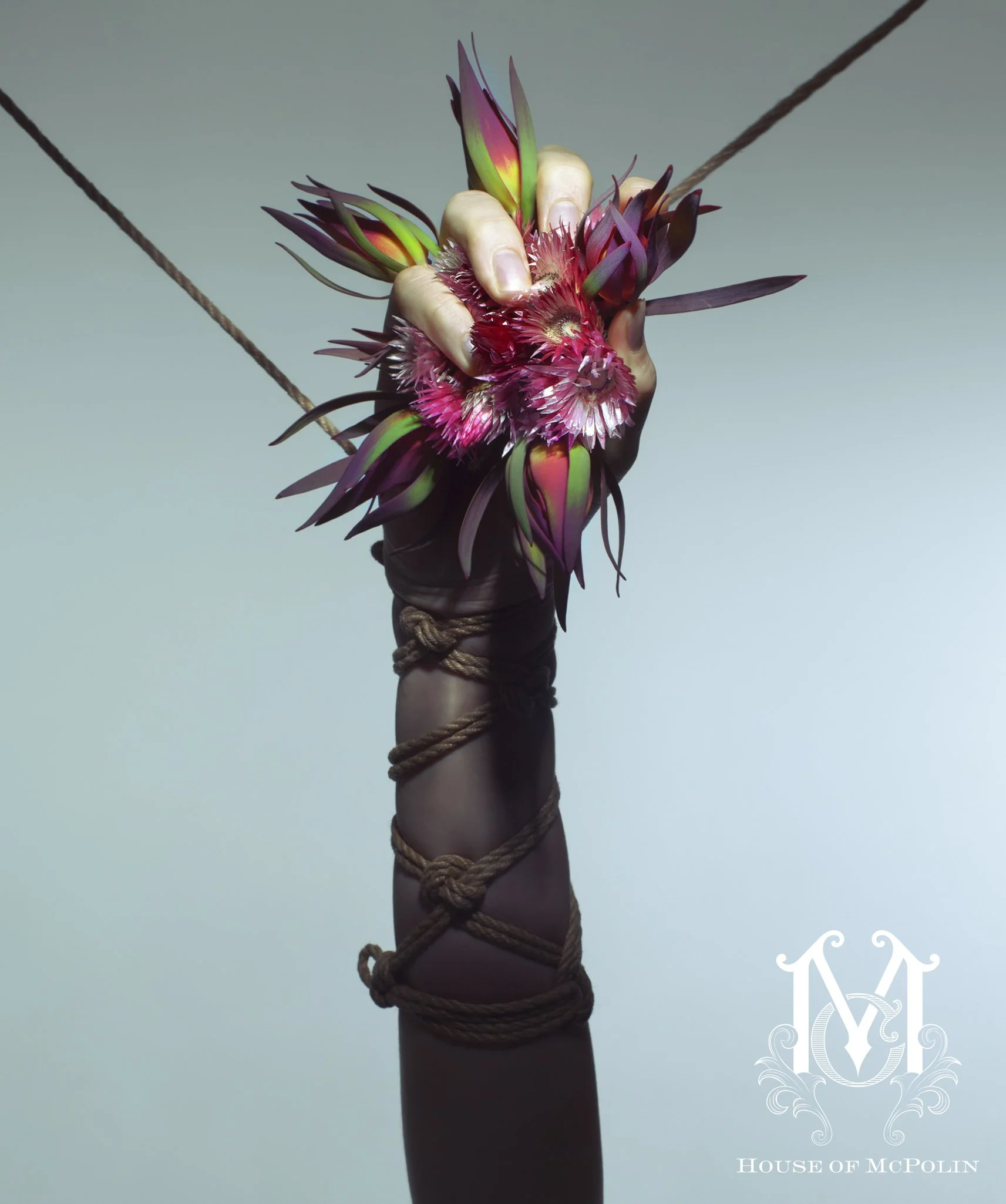
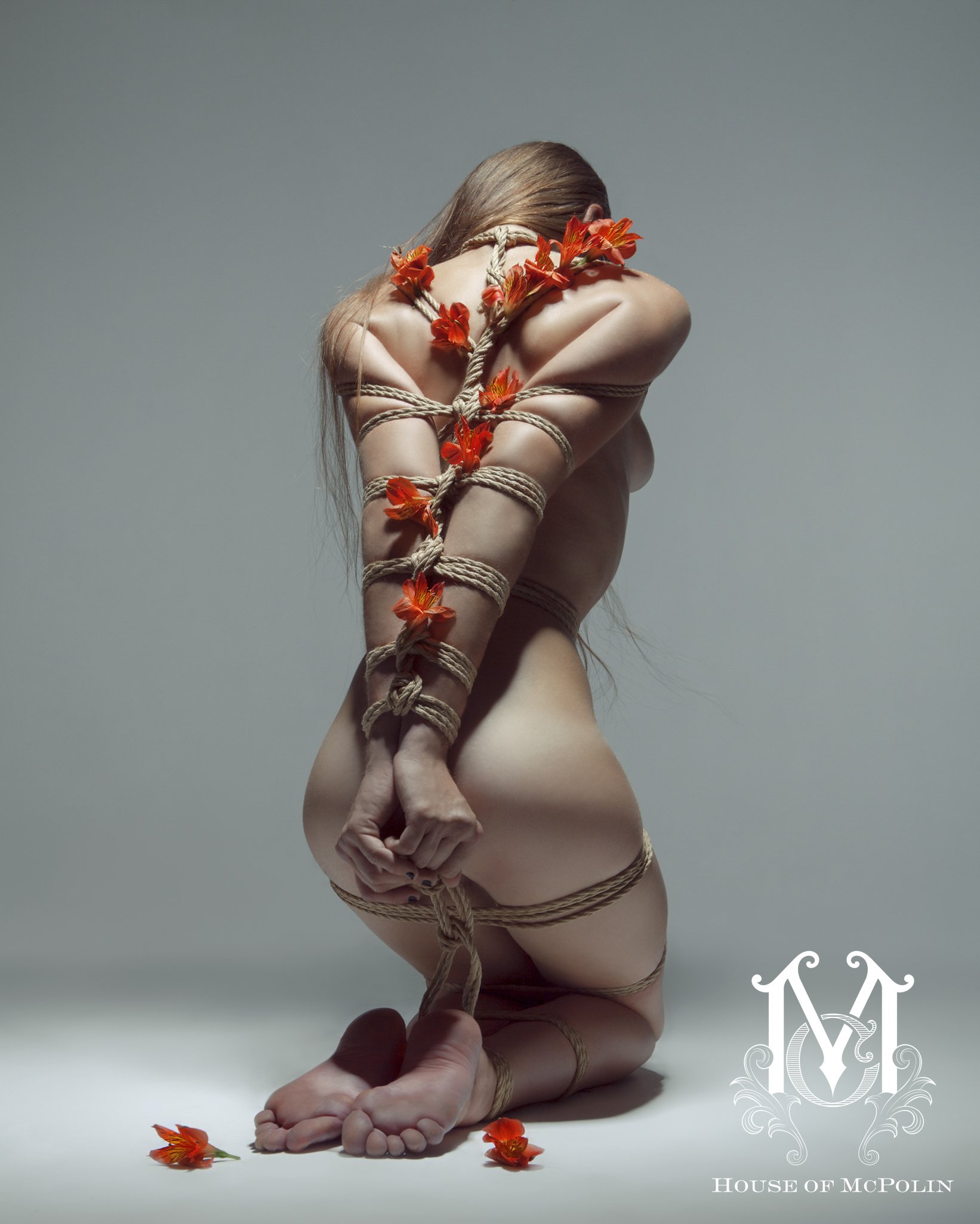
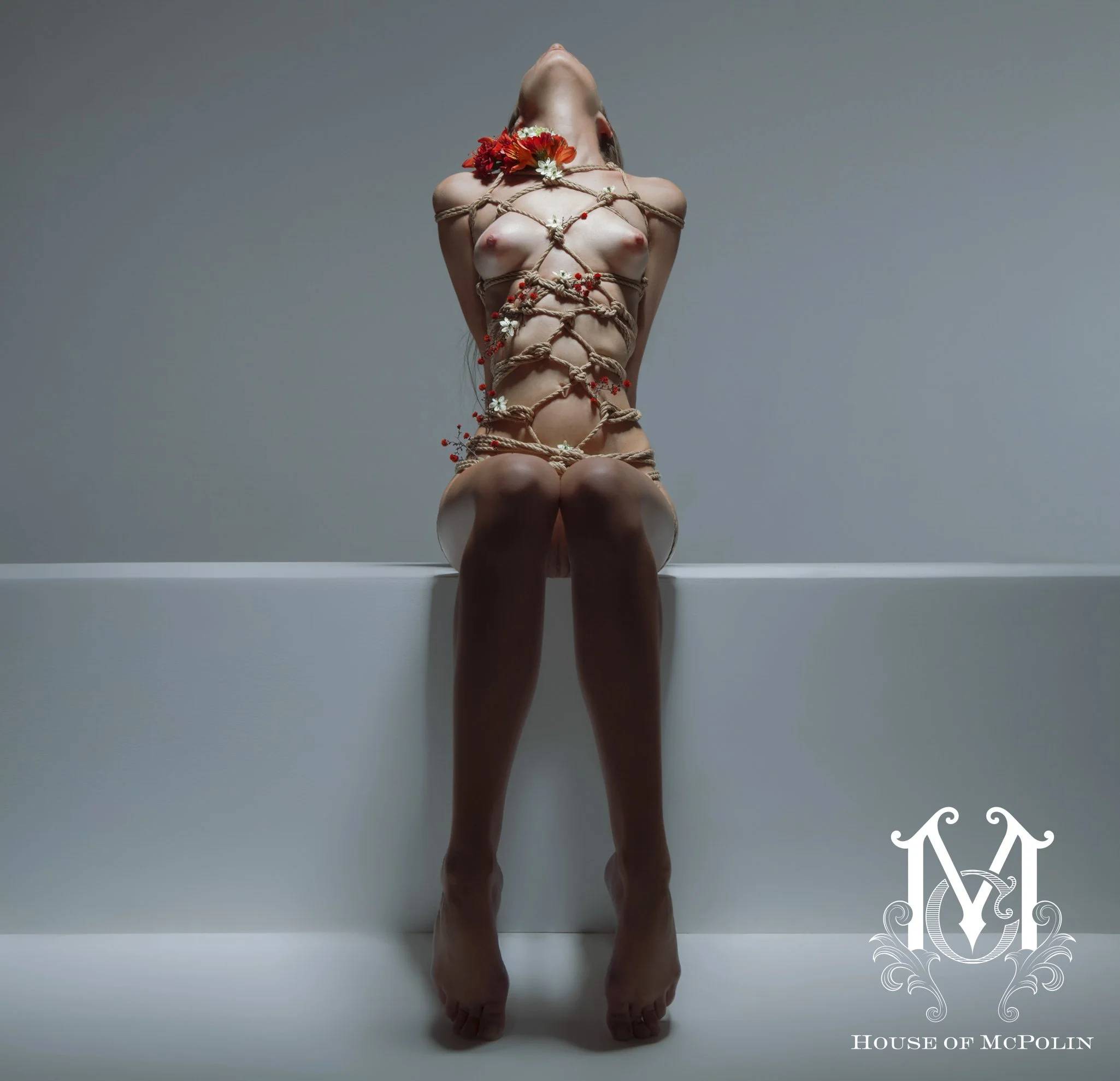
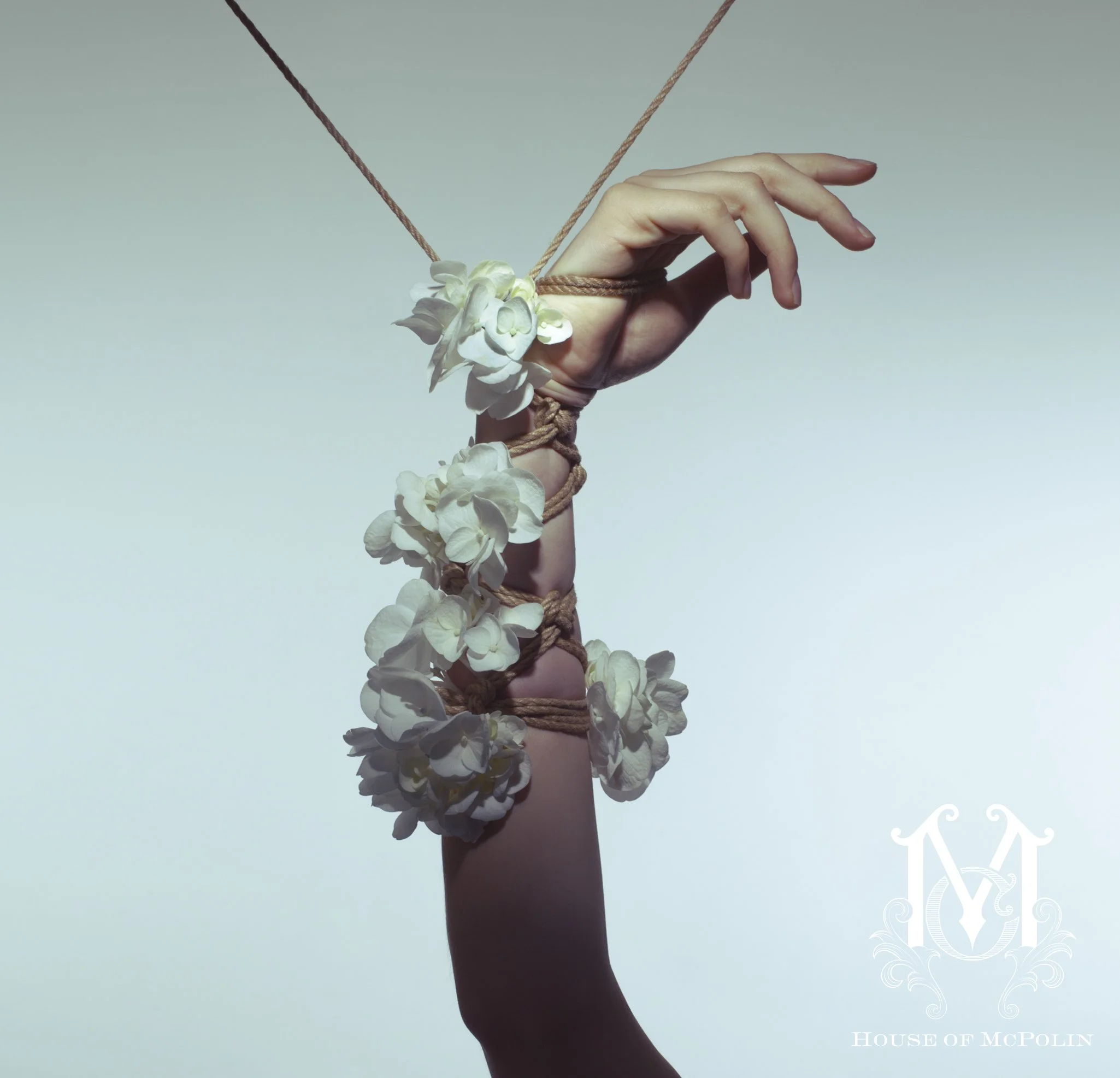
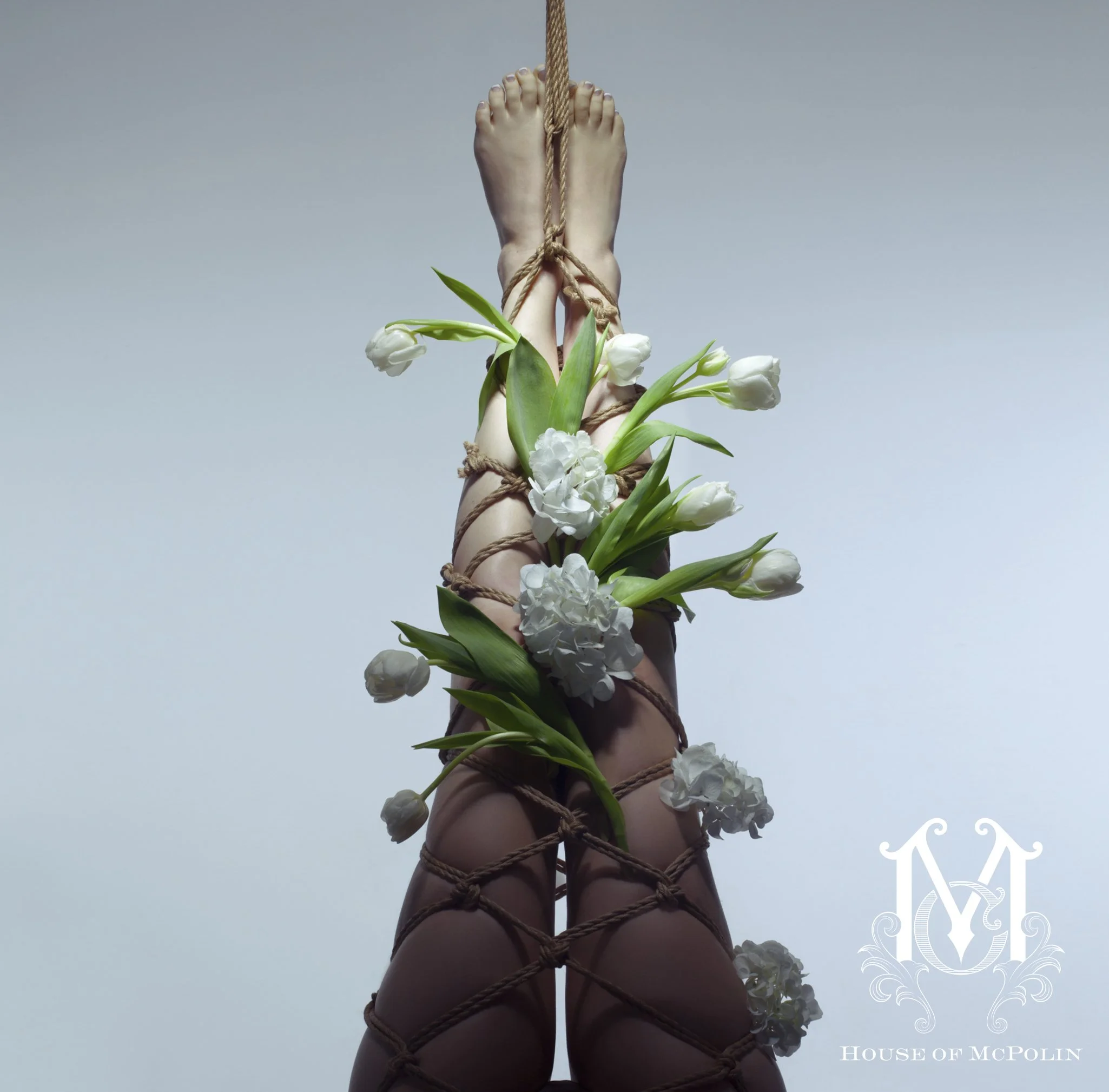
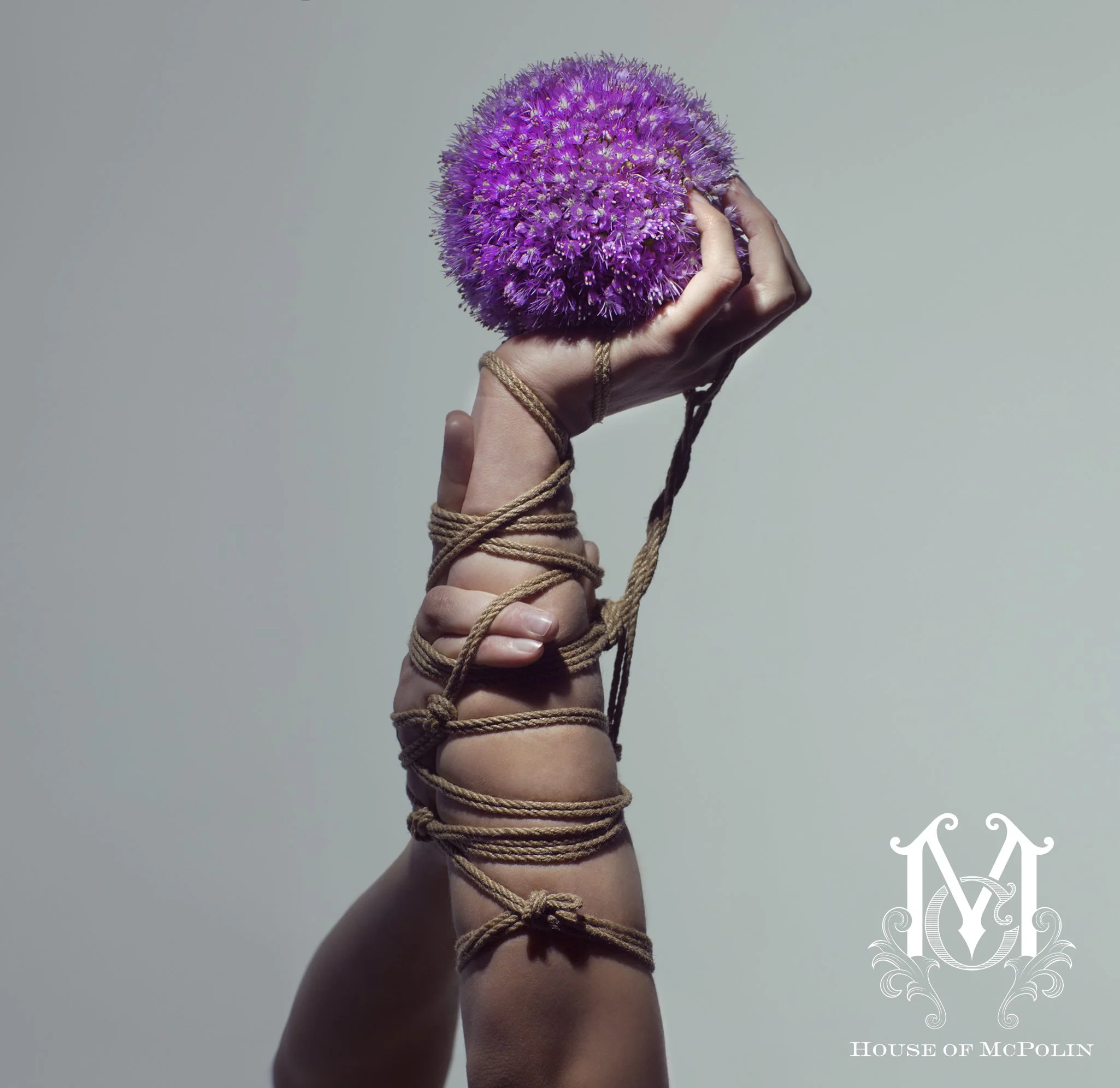
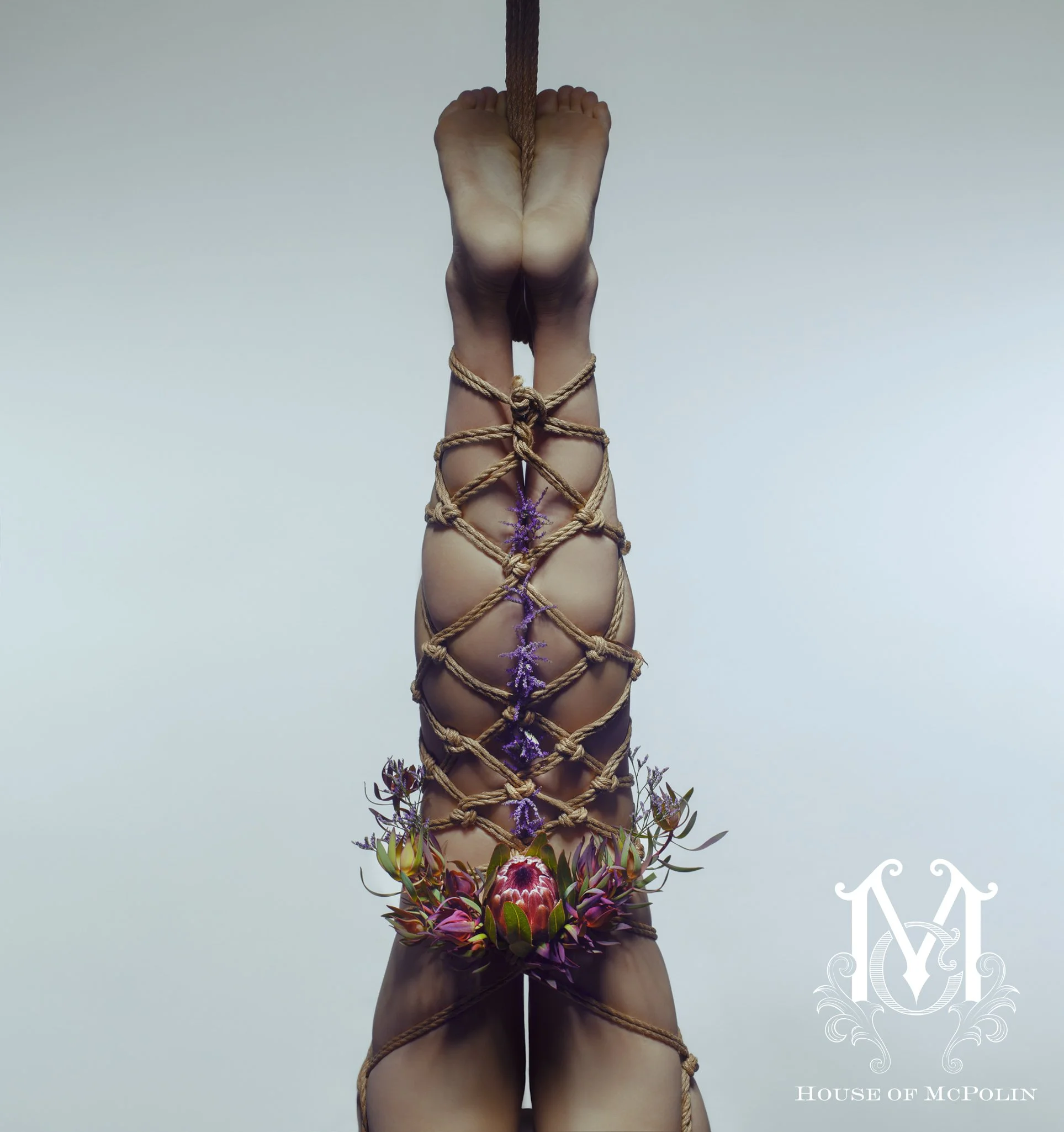
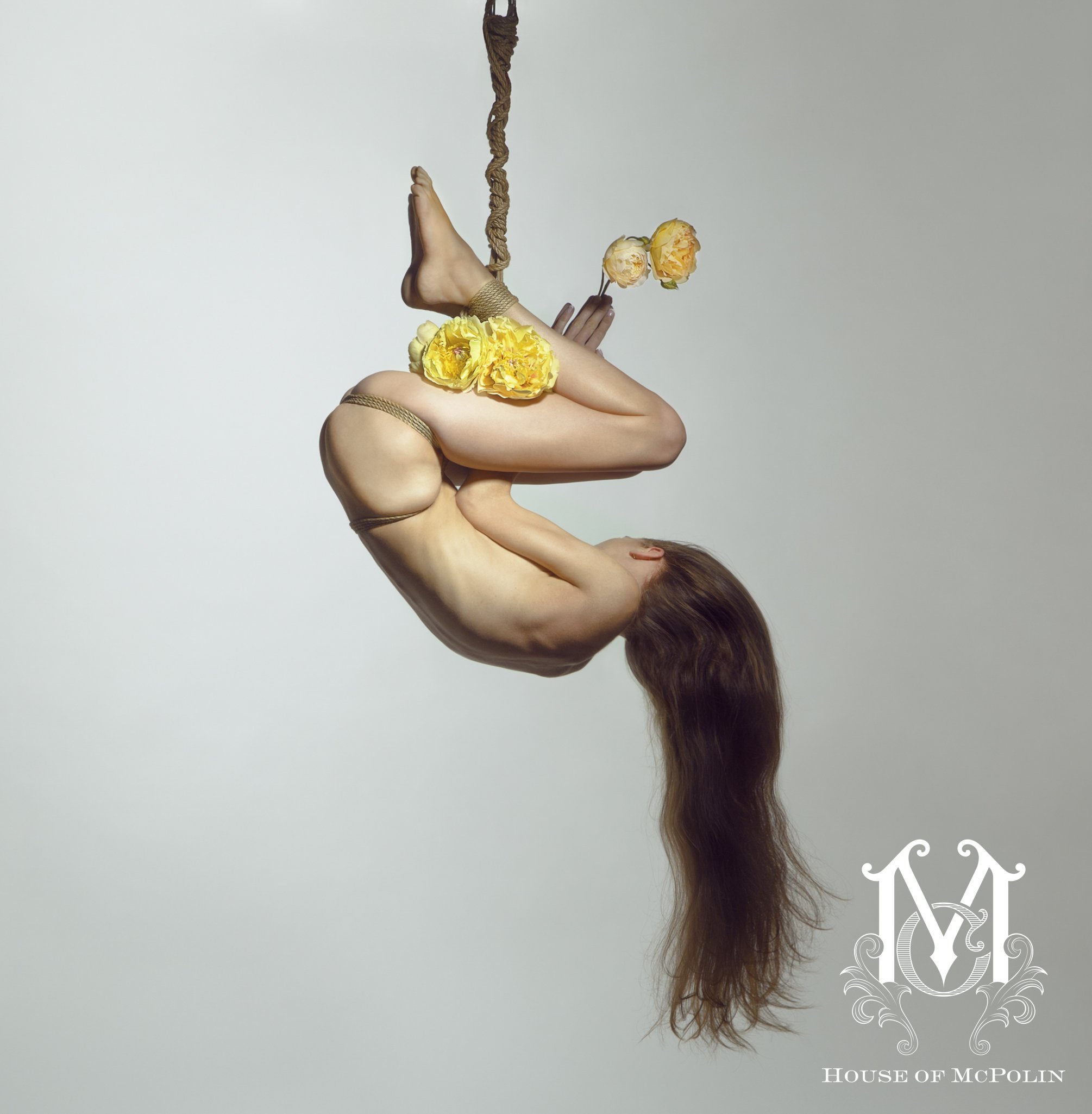
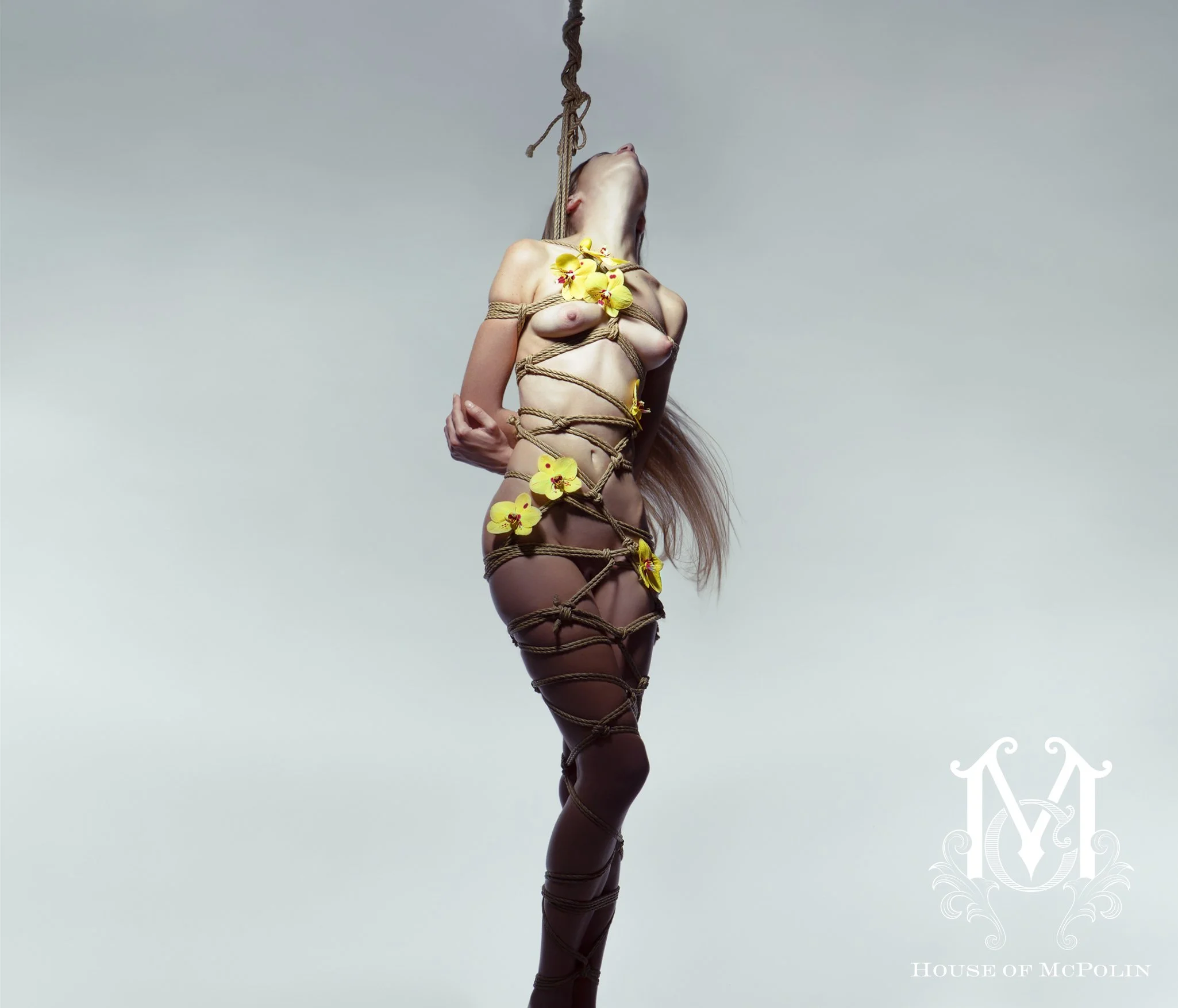
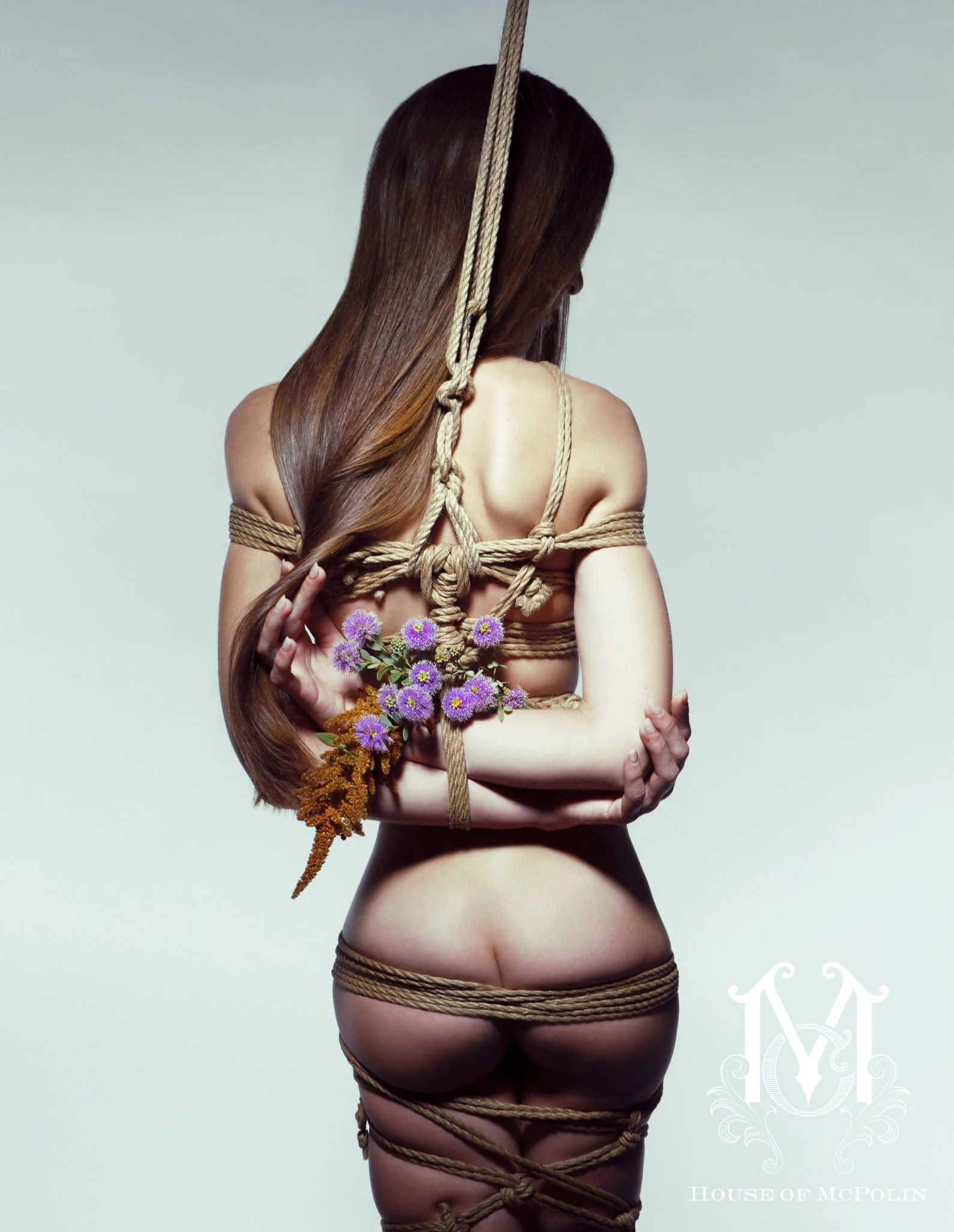
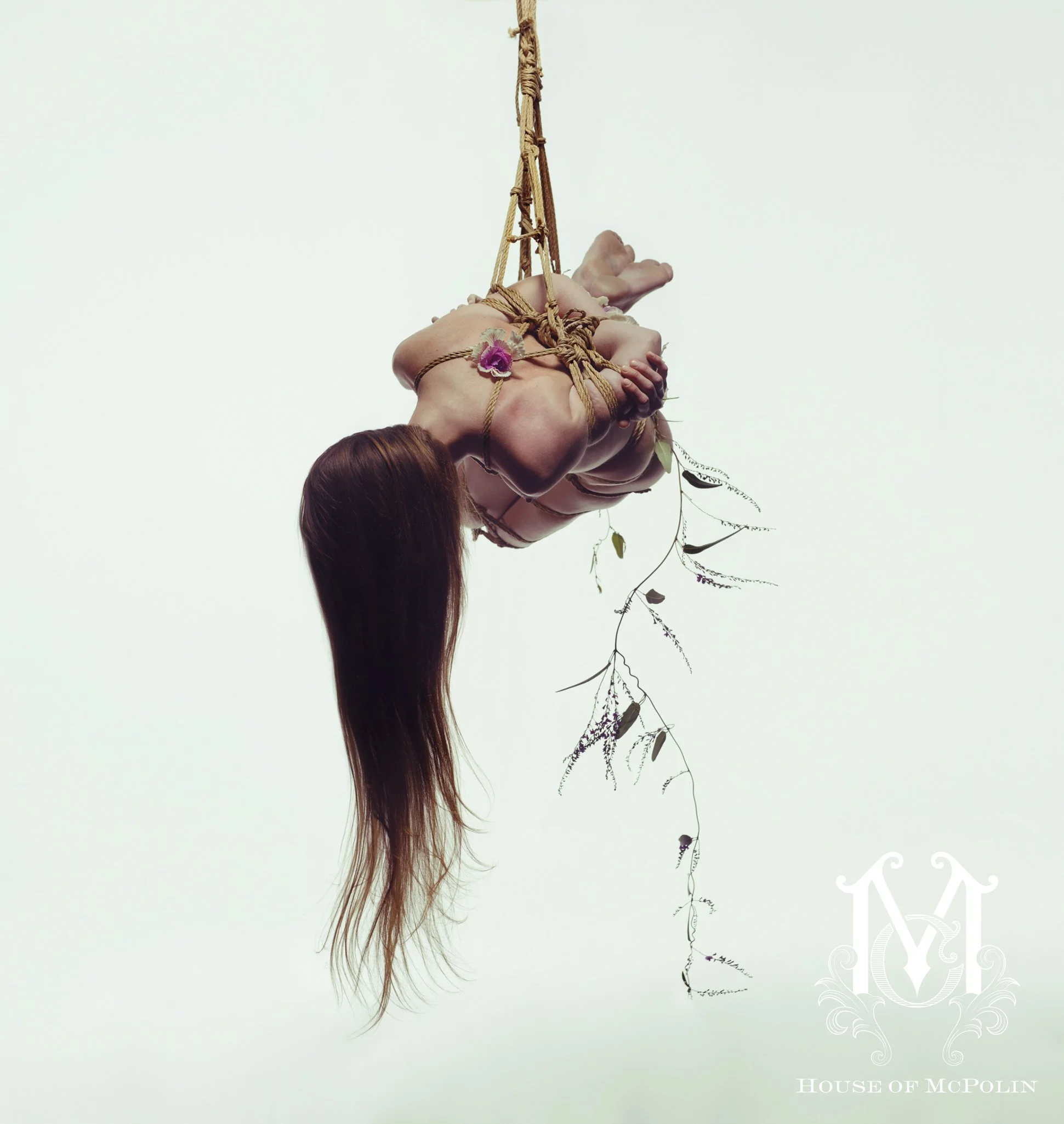
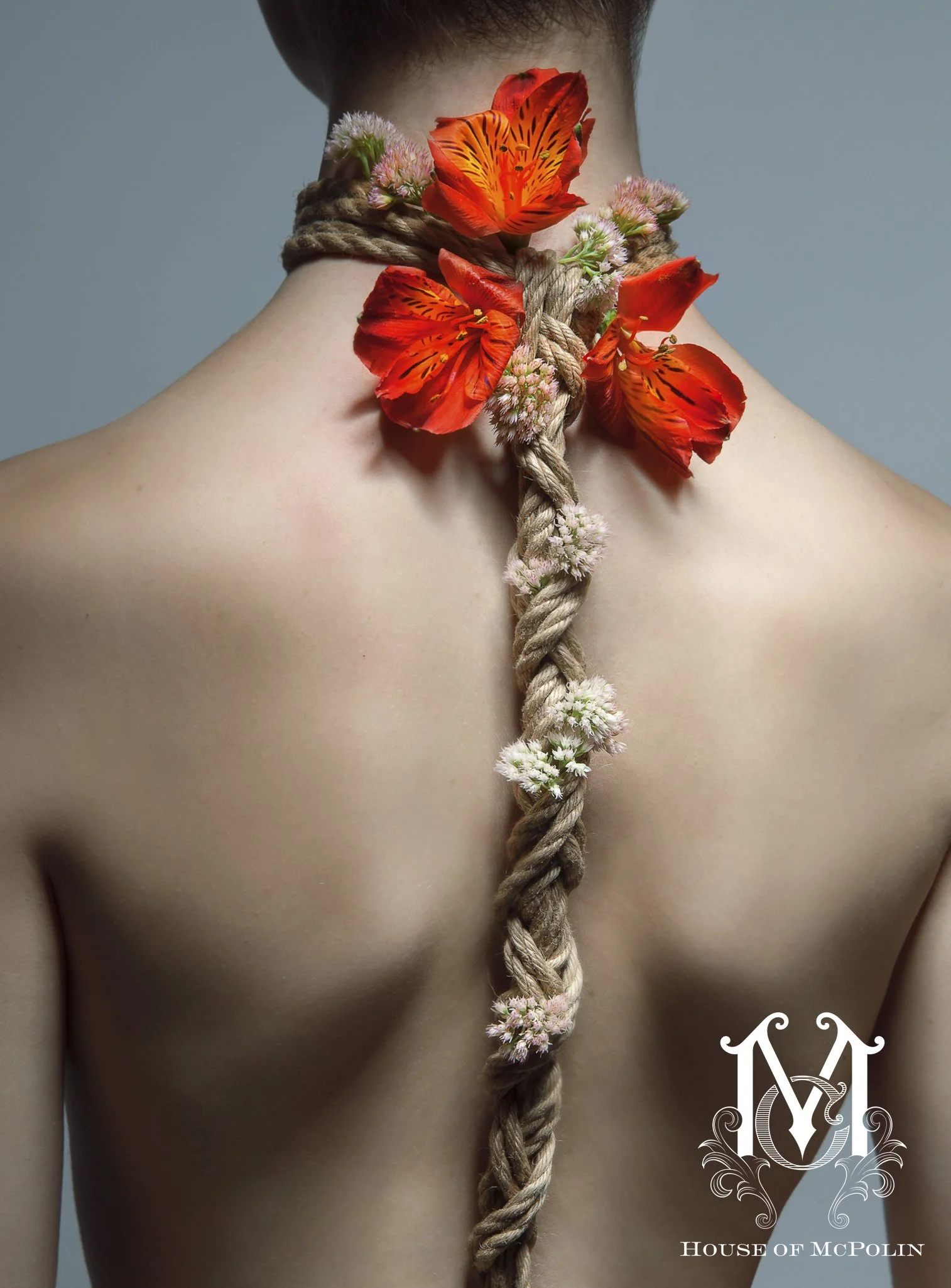
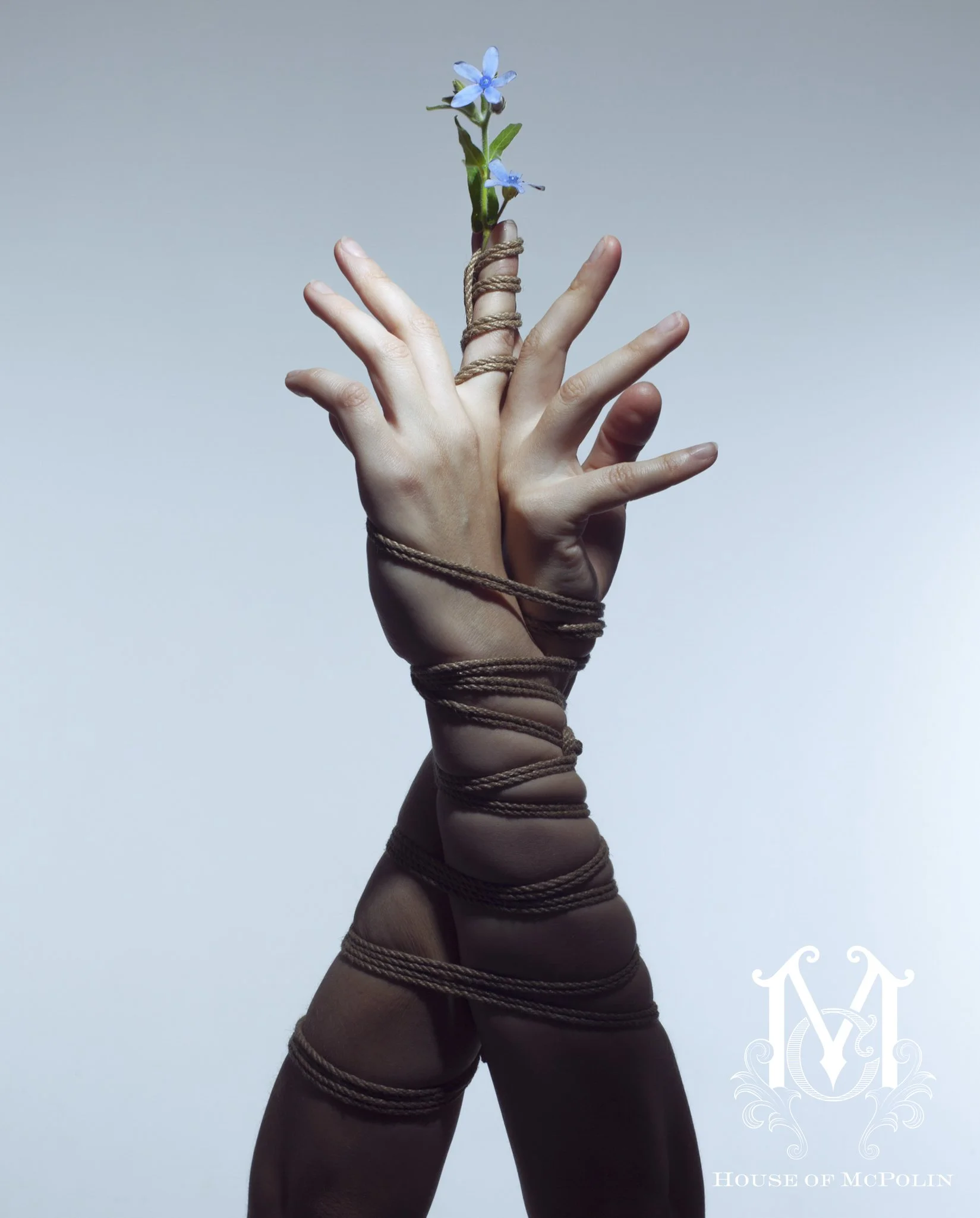
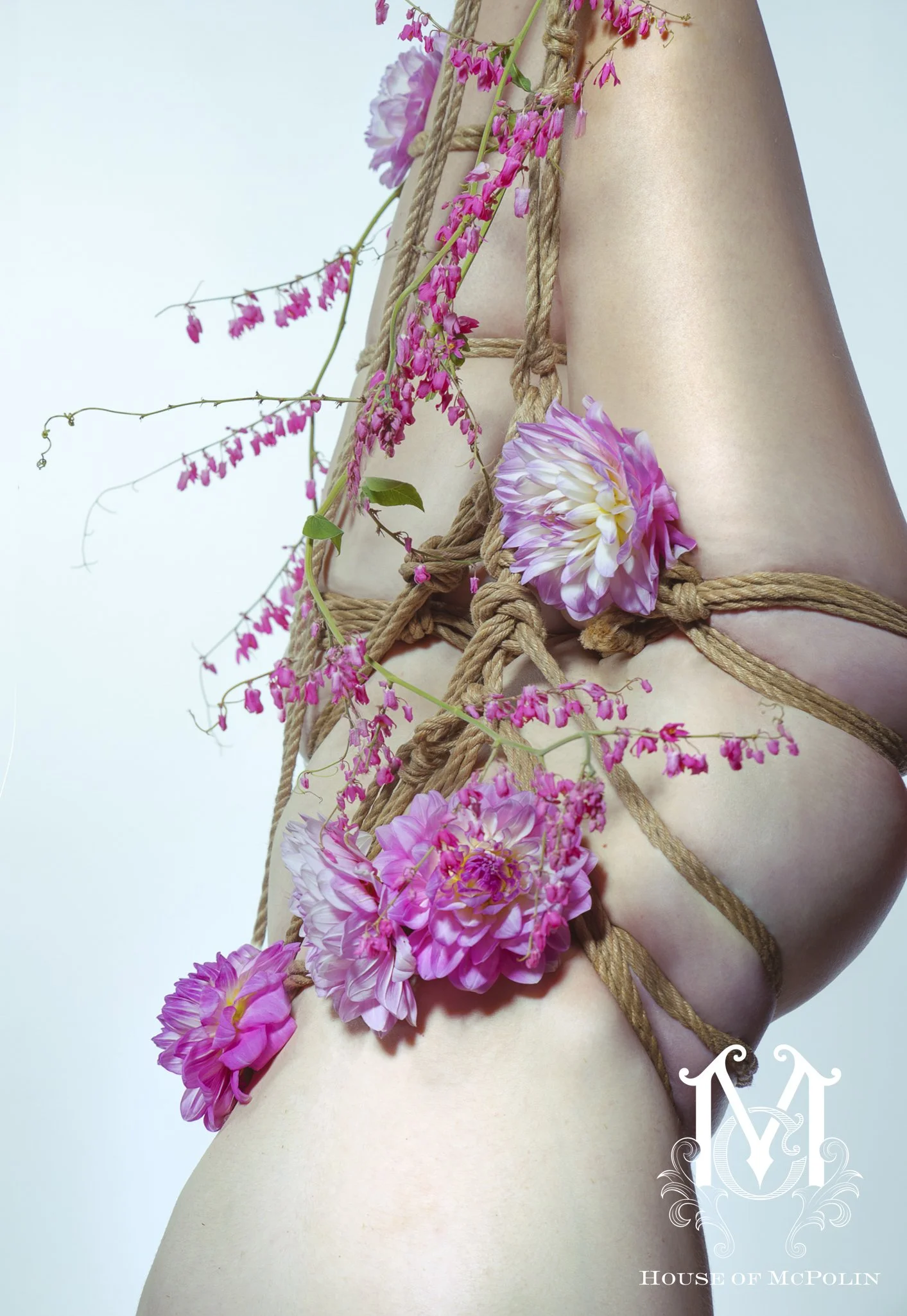
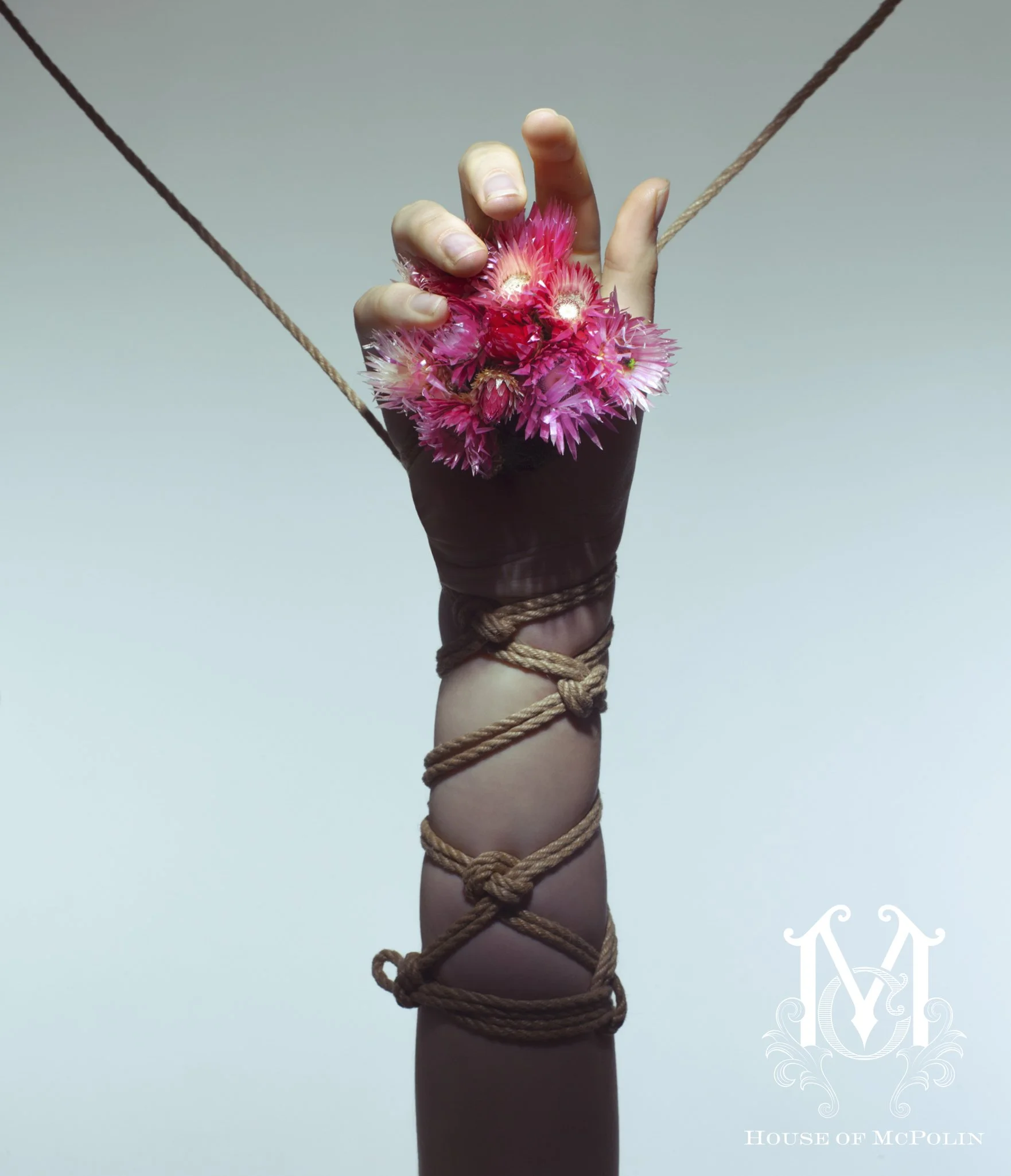
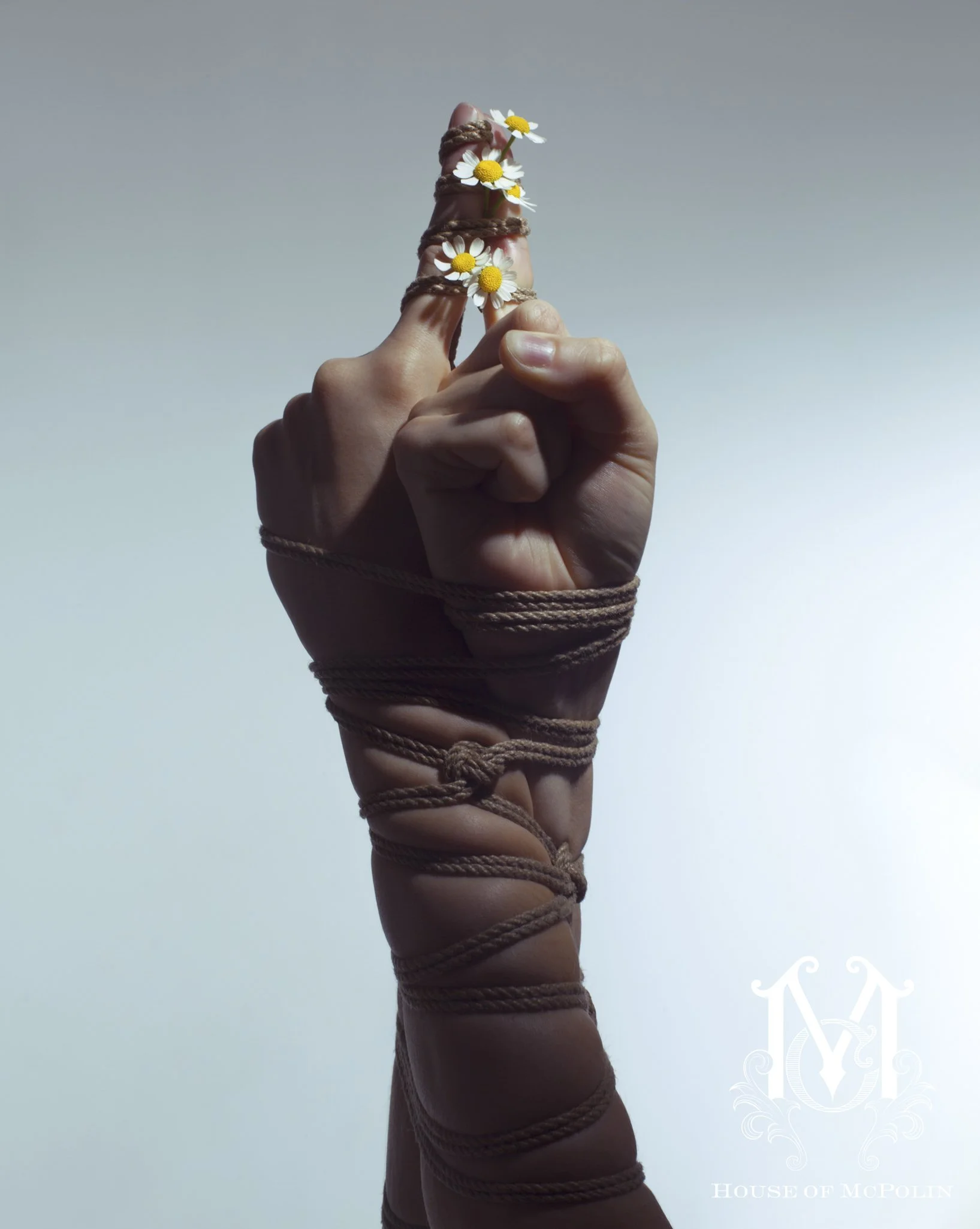
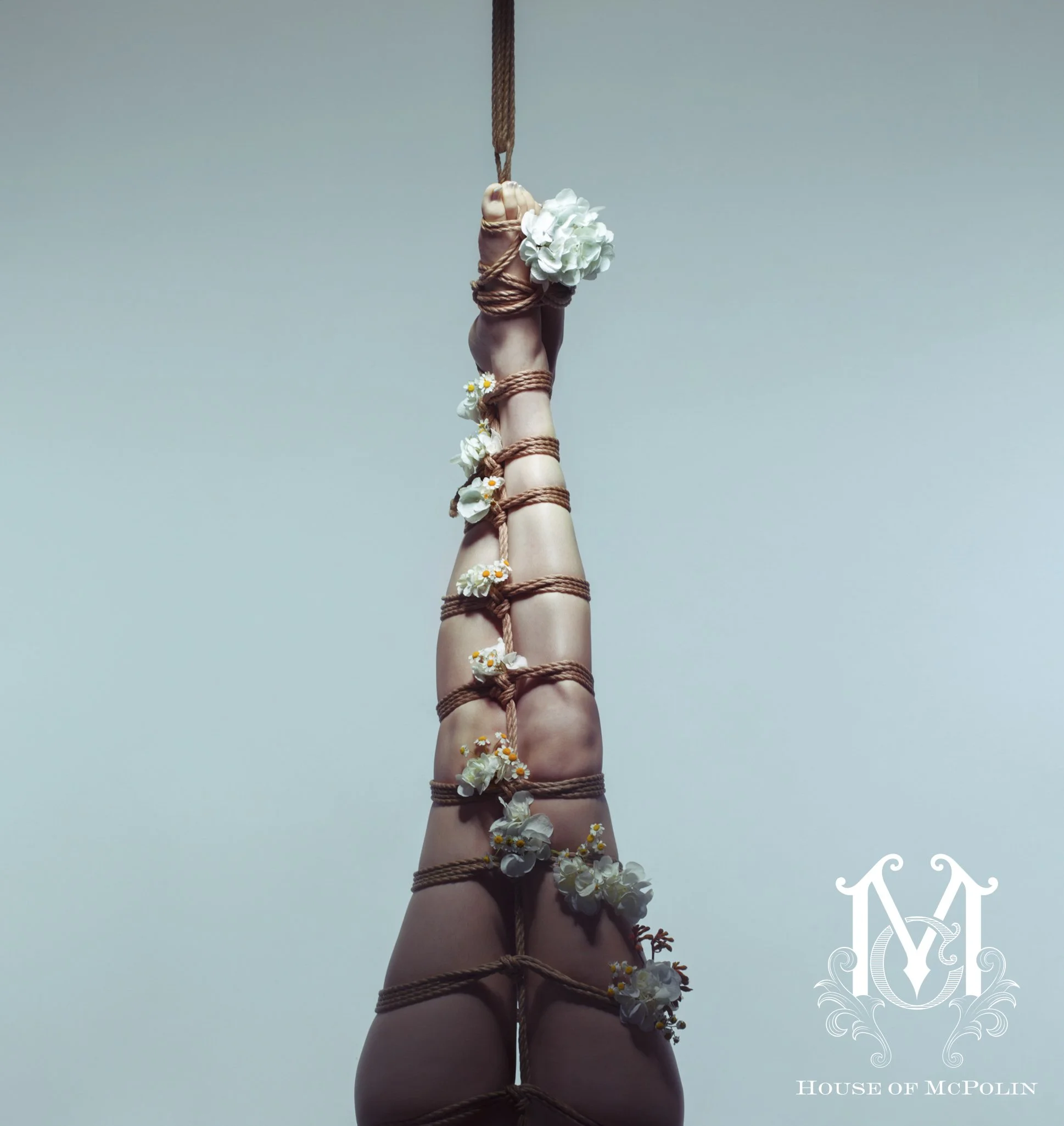
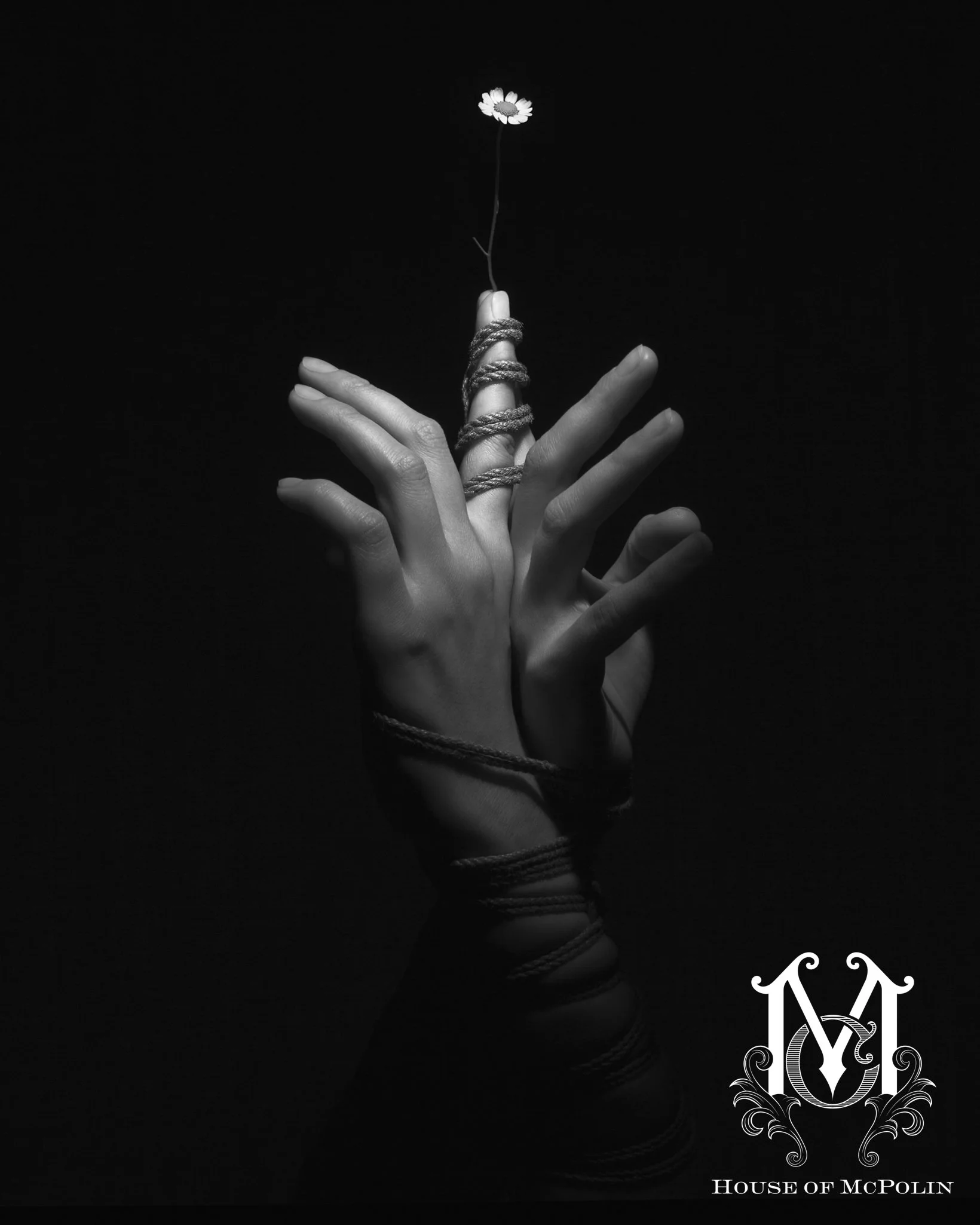
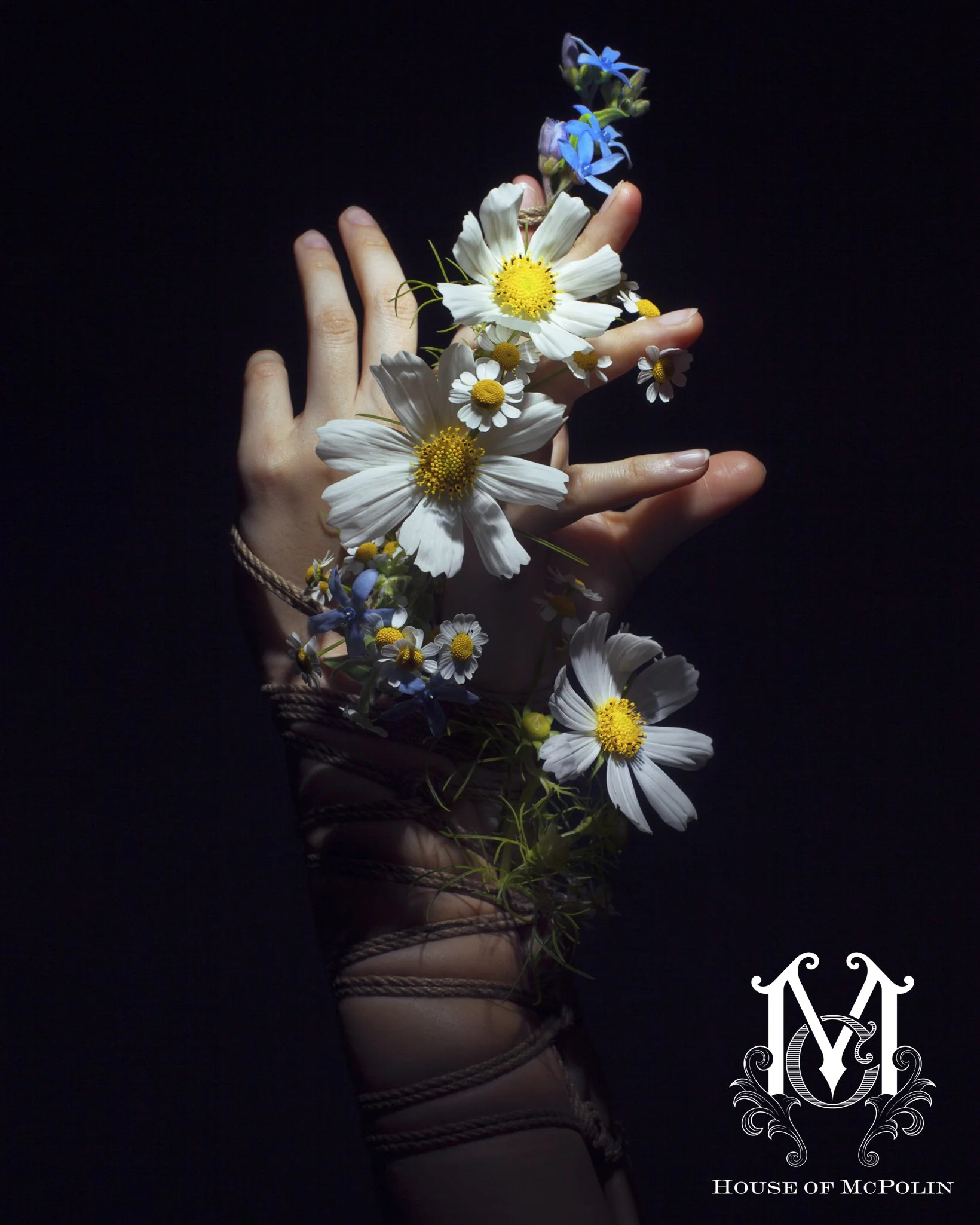
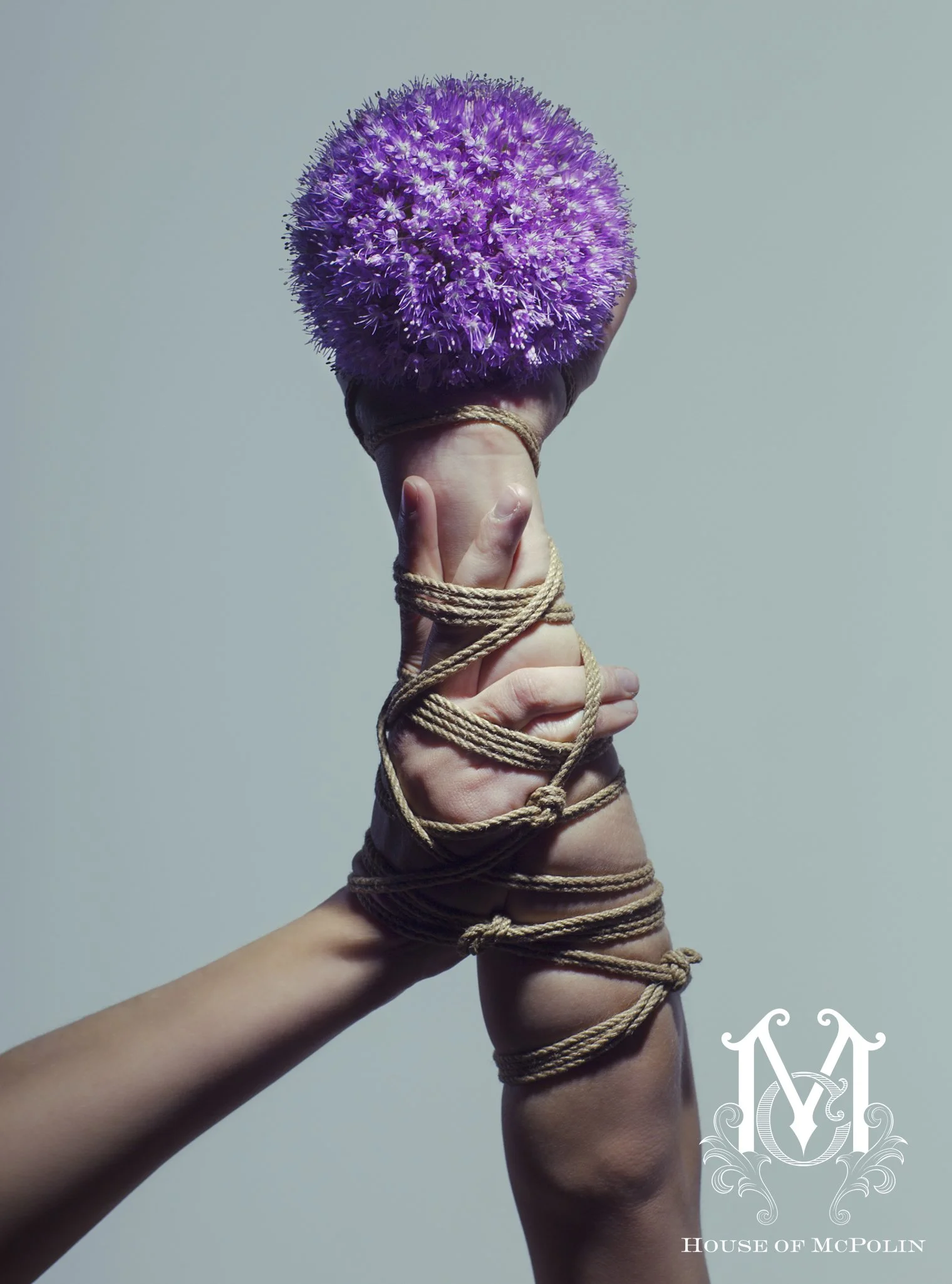
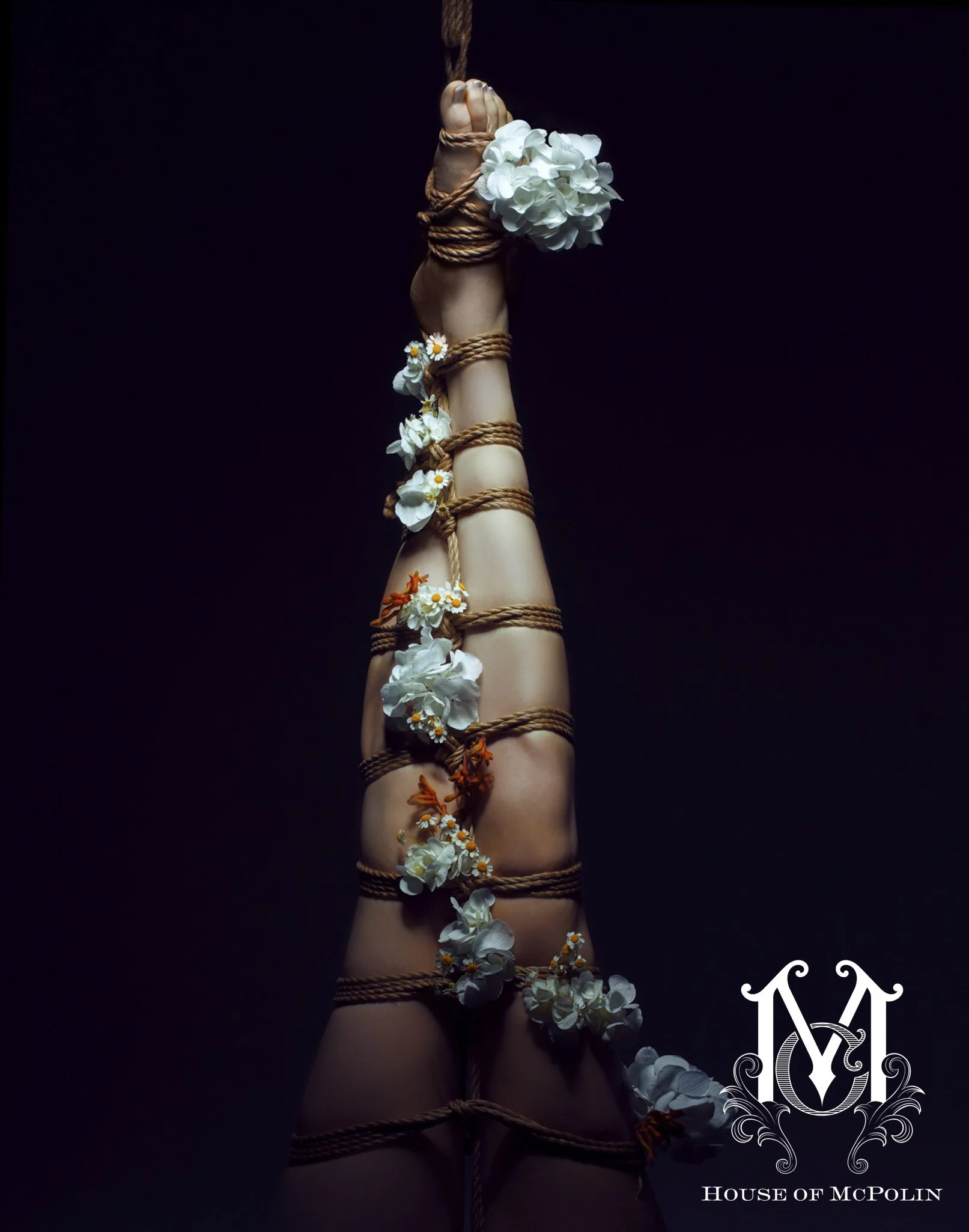
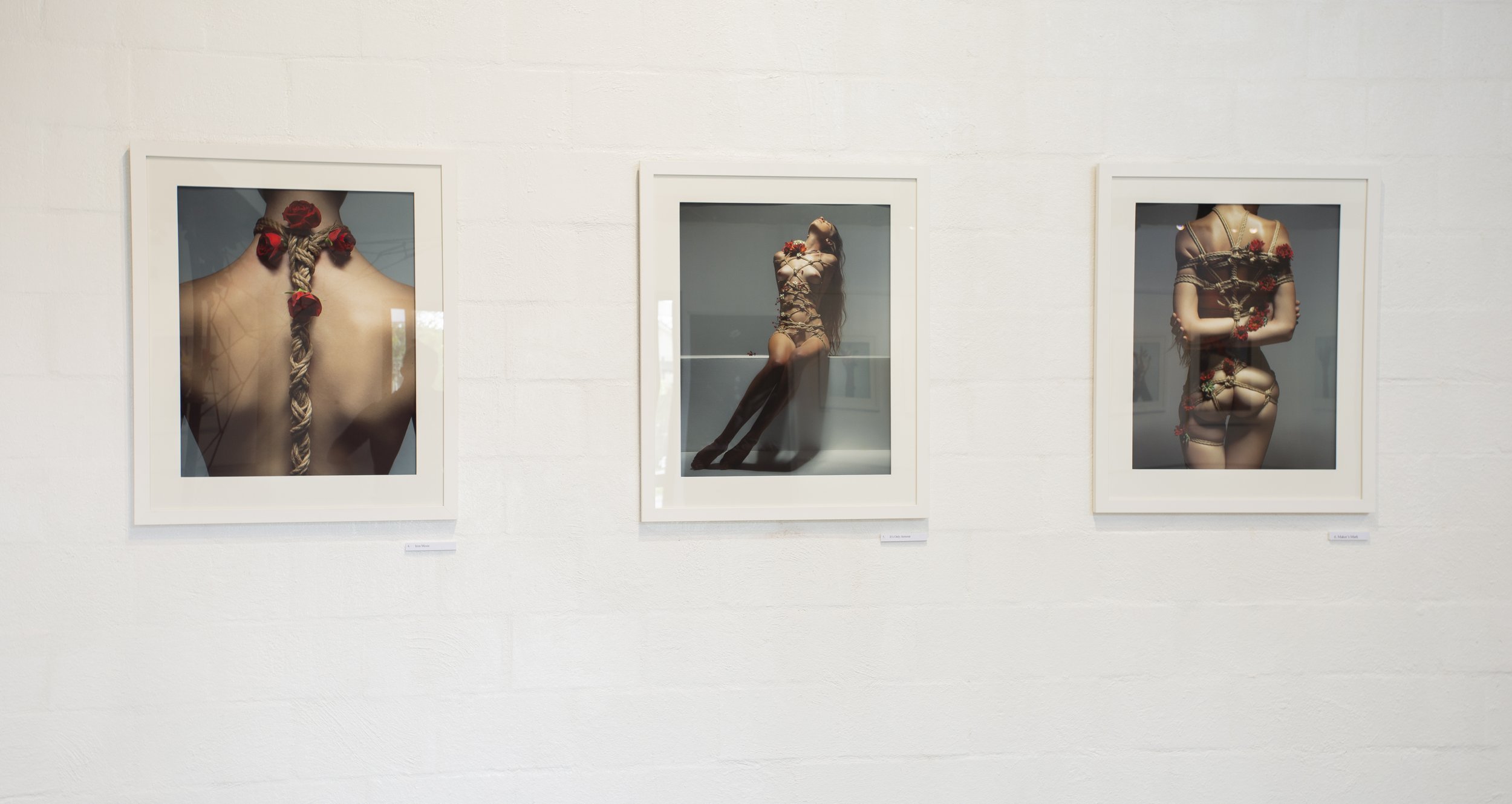
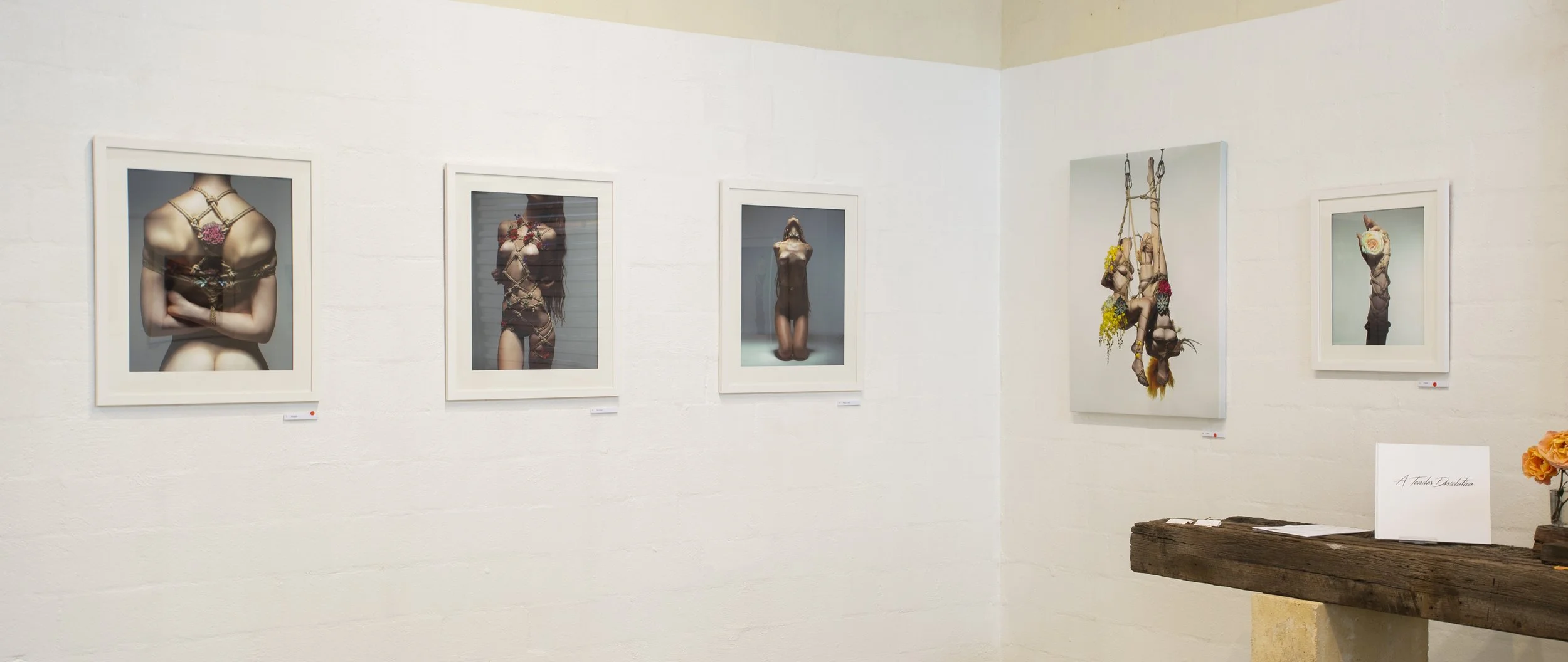
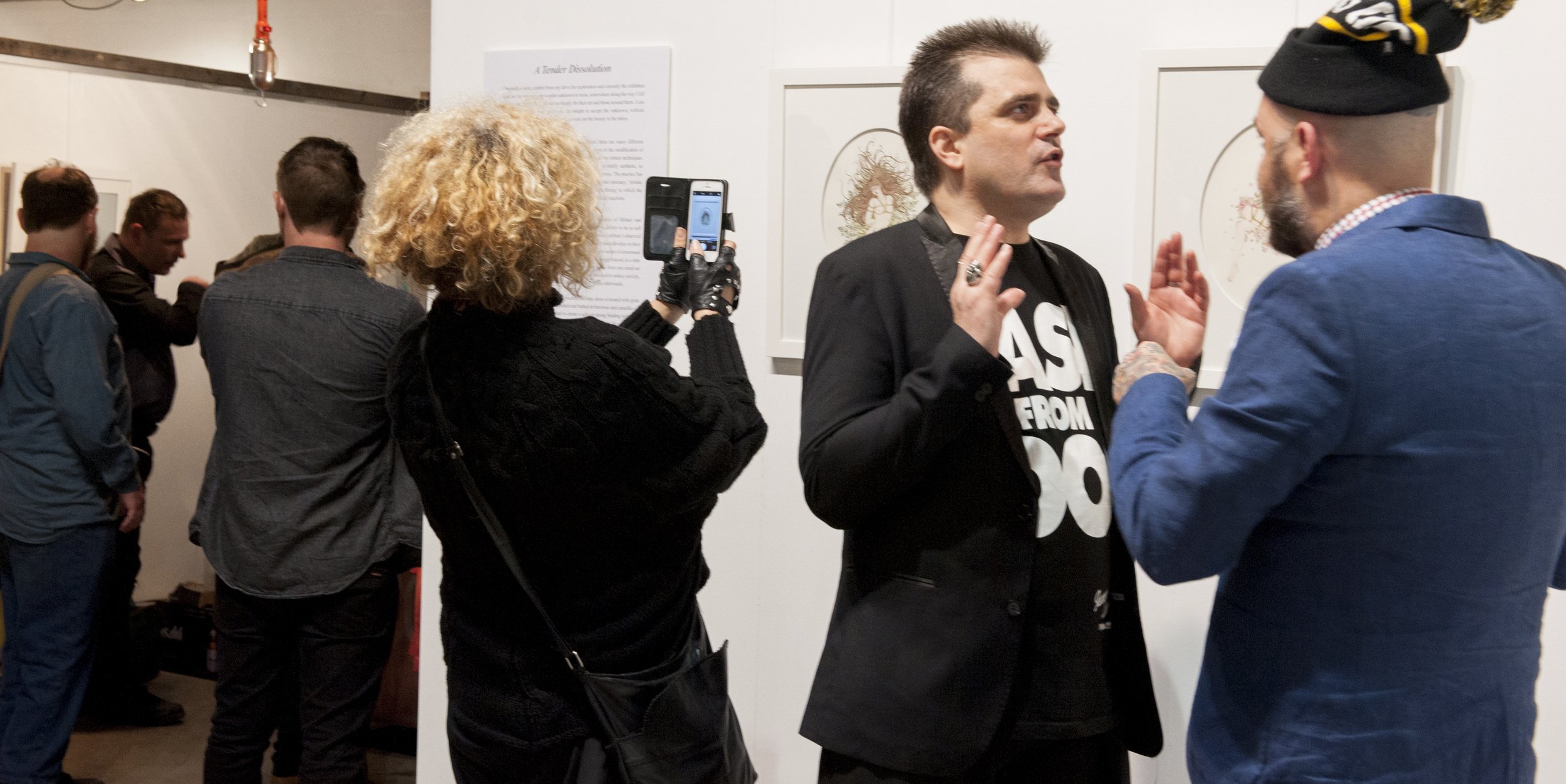
With a warm embrace, we dissolve our preconceived notions towards others and ourselves. The art, I hope, helps the viewer to see the beauty in the taboo, to highlight their own inner workings as we explore the realm of shibari; opening closed doors to a new dialogue and encouraging us to see the world a little differently.
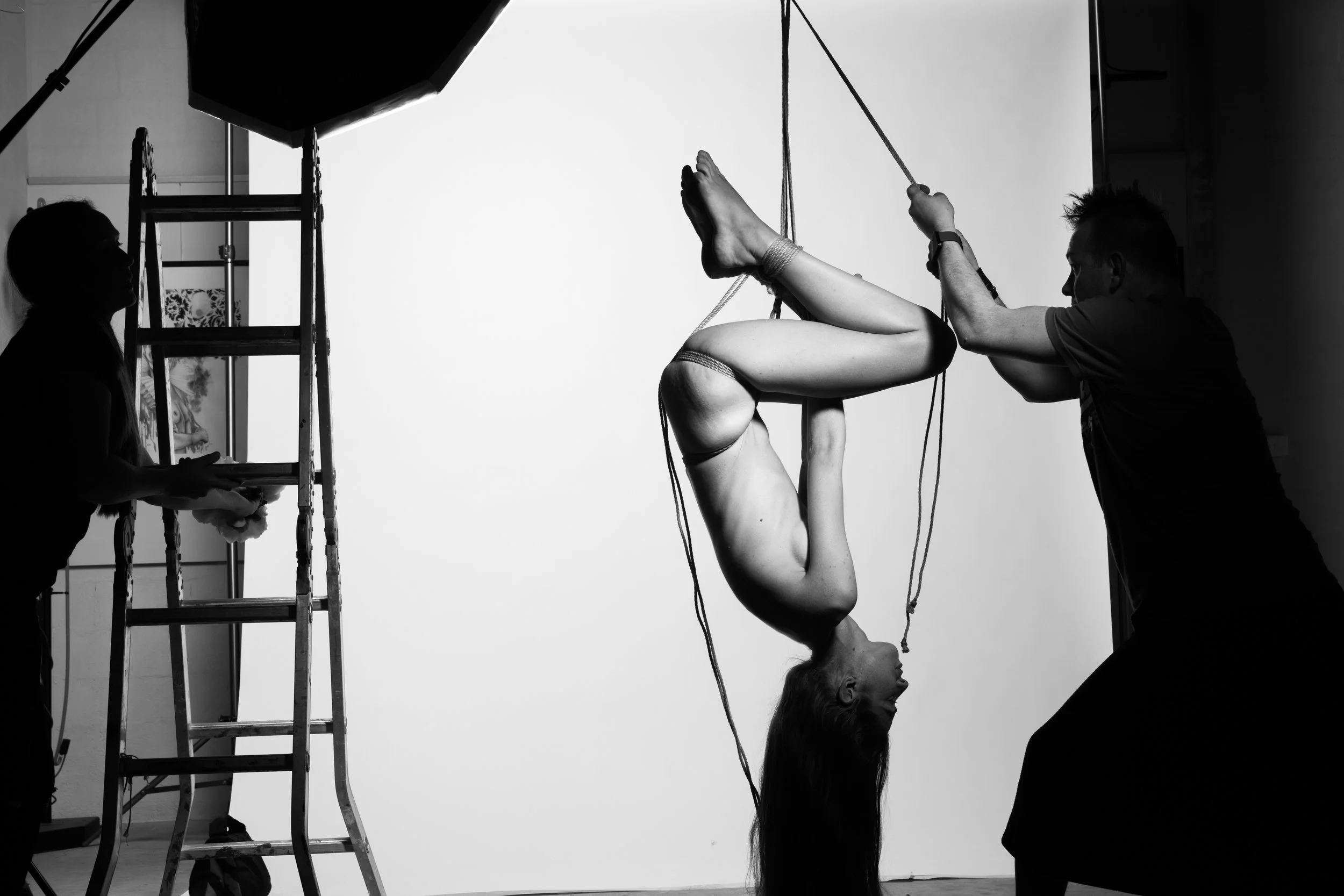
Shibari &trust.
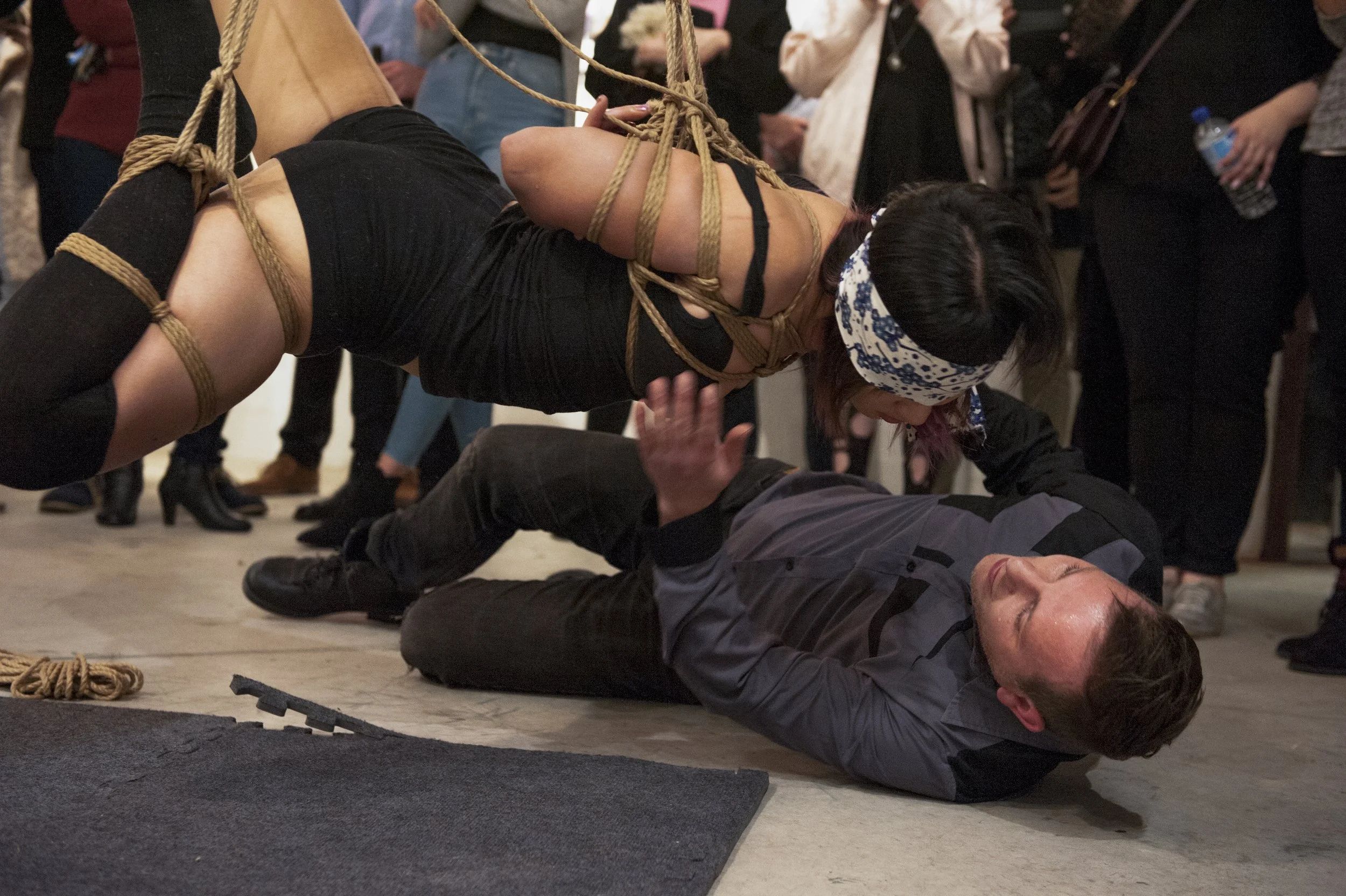
Originating in thirteenth-century Japan, the artistic form of Japanese rope bondage has many different interpretations of its history, while most of the art form derives from the modification of Judicial Hojojutsu and the Ukiyo-e woodblock prints of various torture techniques and methods for restraining and punishing prisoners. Today, however, the Japanese practice of Shibari literally means "to tie" and is treated as a consensual experience for the purposes of art or arousal, with a rigger ("top" or "dom") tying up another person ("bottom," "sub," or "bunny"). The Japanese art of kinbaku, meaning "tight binding," is primarily aesthetic, as opposed to the more provocative art that kinbaku aims to express. The practice delves into intimacy, trust, and bliss, in a ceremonial and delicate process.
The practitioner binds their rope partner with a specially treated jute rope, and depending on the practitioner, they may use diverse forms and styles of binding. Most notably, "Connective Rope" is a practice that emphasizes touch, feel, arousal, and the building of connection with the subject through intimate rope play, closeness, touch, pace, and rope placement. "Artistic Rope," which is geared toward aesthetics, involves contorting the body, morphing limbs and body parts through binding or suspension, and highlighting or pulling inwards or outwards to define and enhance form and shape. "Beauty in Suffering" involves positioning the subject in contortions designed to create controlled reactions toward a certain experience—stress positions combined with specific pace, timing, and positioning.
Shibari is an art that can be as delicate, soft, and beautiful or as intense and harsh as the practitioner desires. A common attribute I observe in Shibari is the building of trust—an essential ingredient that the artist must develop on their journey into "rope space," where the rope partner passes through a series of consensual gates and no longer attempts to control their environment, instead becoming relaxed and in a state of bliss. The rope acts as a messenger in this journey, transitioning the mind-set from one state to another. Those involved in Shibari report that it can reduce anxiety and depression and improve mental well-being for up to a week afterward.
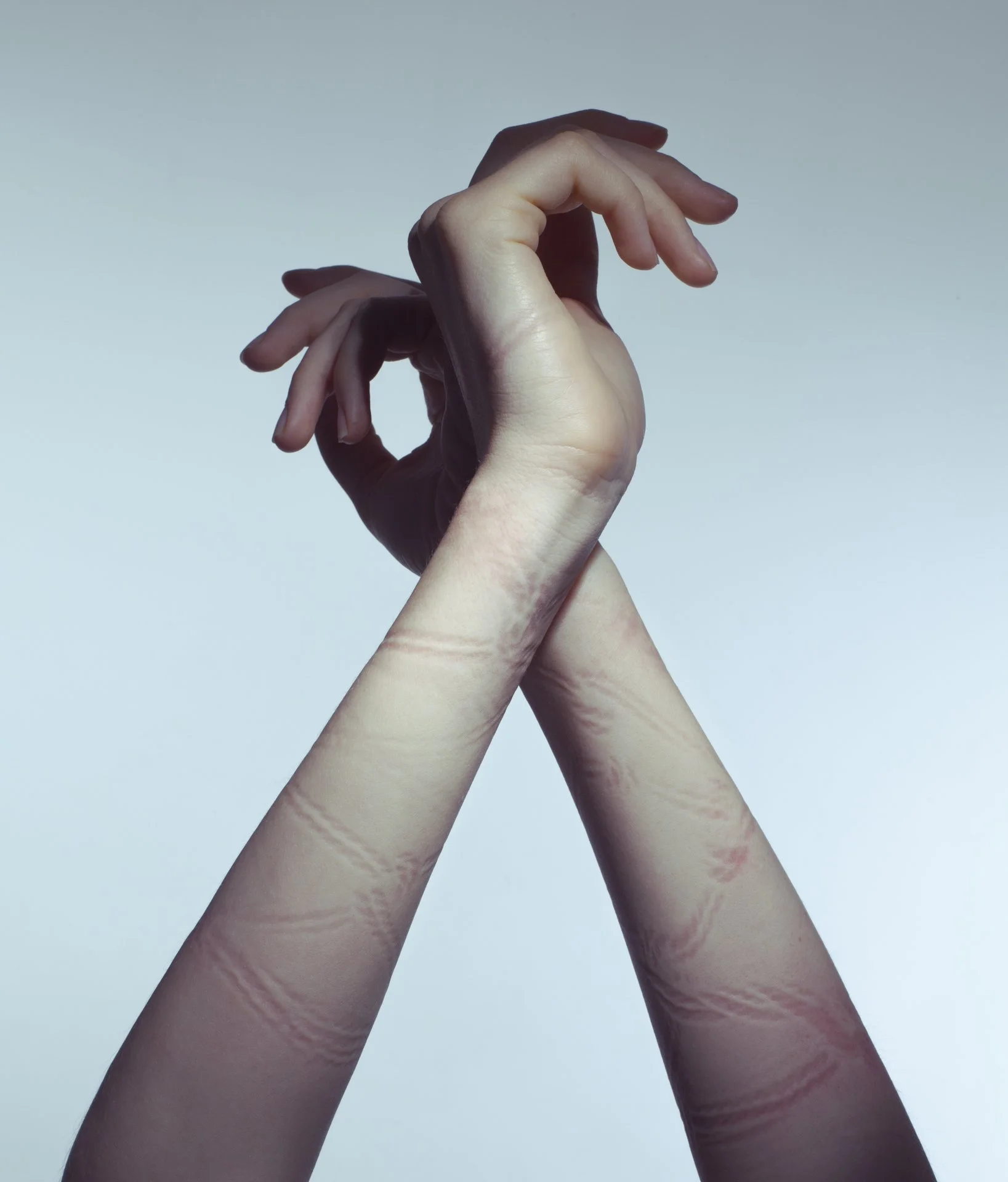
Intimacy and devotion.
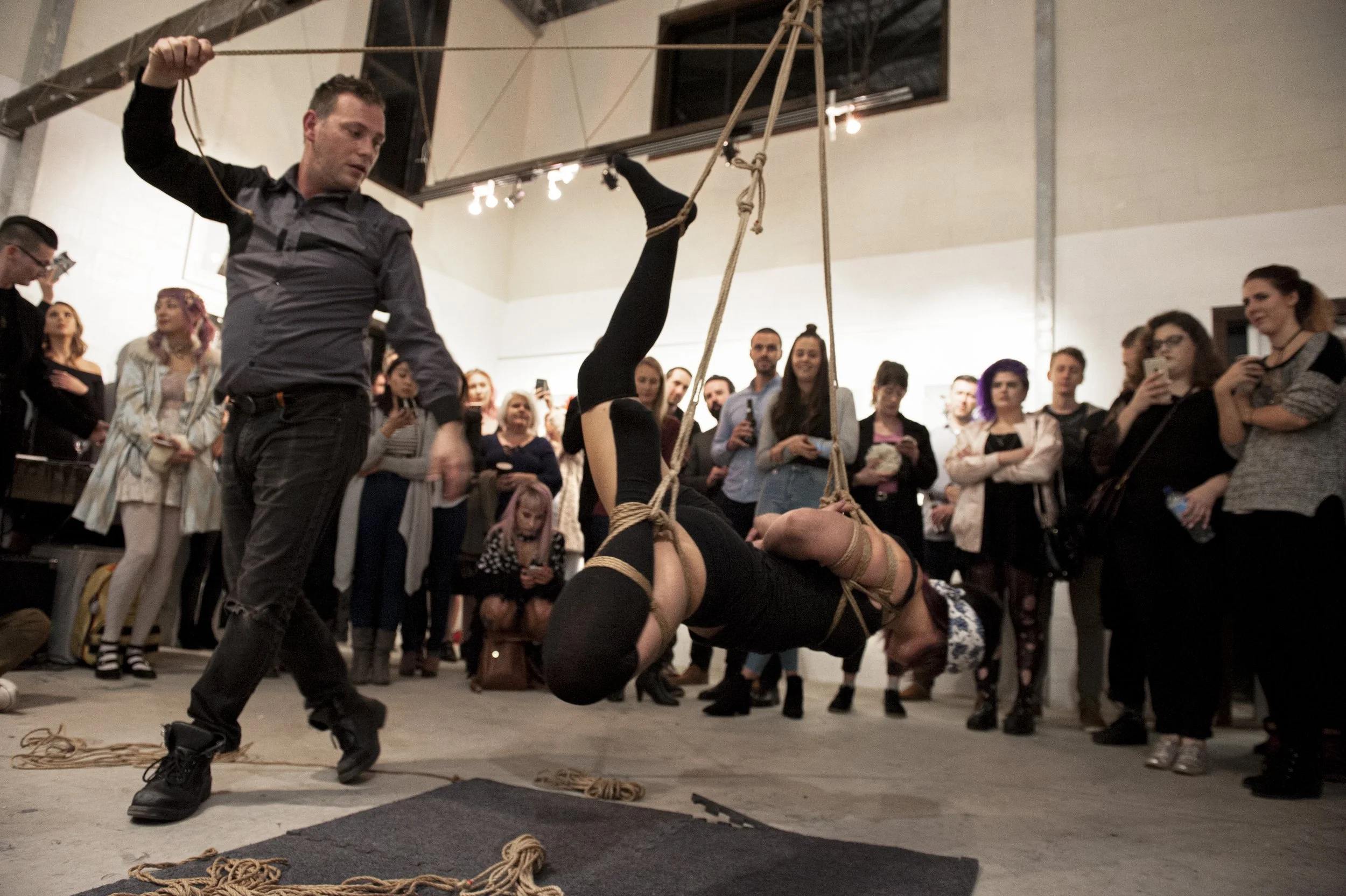
Shibari requires years of dedication and practice; the rope alone is treated with great respect. Jute is the rope of choice, burnished and bathed in beeswax and camellia oil, slowly baked, and the process repeated to create a soft yet strong binding rope. The care of the subject being tied is matched by the artist's ceremonial care of the rope. There’s a unique trust, respect, and detailed understanding of one another when Shibari is performed. The art form is full of intricacy, a balance of the body and mind, the rope requires careful placement and an understanding of the subjects sensitive areas, careful not to pinch vulnerable nerves, keeping blood flowing to the fingertips, and a keen eye out for discolouration. The dangers of a suspension without proper considerations can be permanent muscle and nerve damage, extreme exhaustion, collapse, fainting and intense muscle cramps.
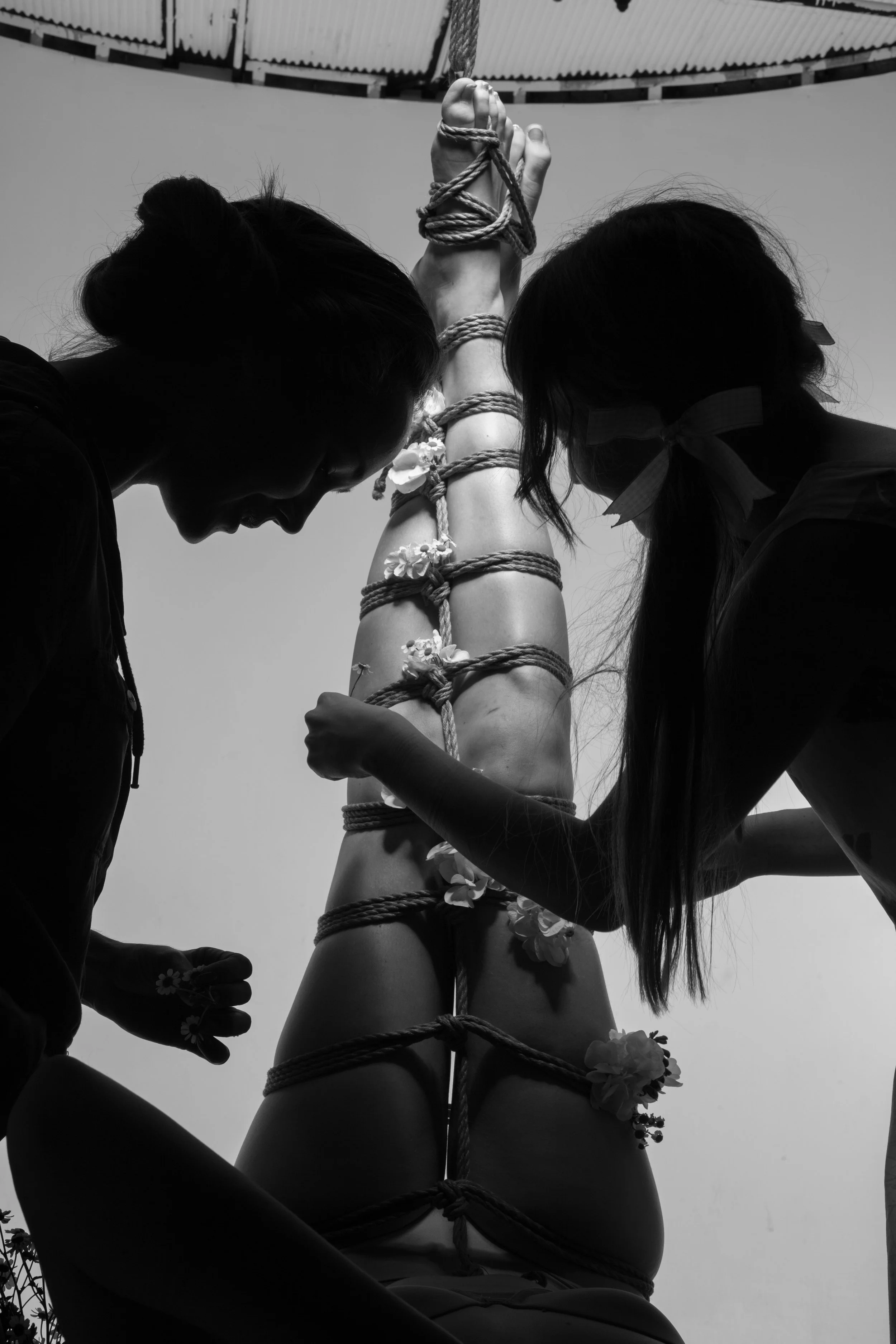
I can only hope that this series gives you the insight to accept the unknown, without judgement and to expand your curiosity to seek out the beauty in the taboo.
- A. McPolin






Written by MAR YVETTE
Shibari is the Japanese practice that literally means “to tie.”
They say beauty is in the eye of the beholder, but can the same be said about bondage?
Shibari originated back in thirteenth century Japan as hojojutsu, a method for restraining and punishing criminals. Today, however, the Japanese practice that literally means “to tie,” is treated as a consensual experience for the purposes of art or arousal with a rigger (“top” or “dom”) tying up another person “bottom,” “sub” or “bunny”). It might sound foreign to some, but Shibari has not only become increasingly visible within the BDSM community, but it has also become entwined in pop culture at large. Just think about some of the bondage motifs popularized by celebrities like Beyonce, Lady Gaga and Madonna, or do a search on Instagram for #shibari and more than 256,000 results will display.
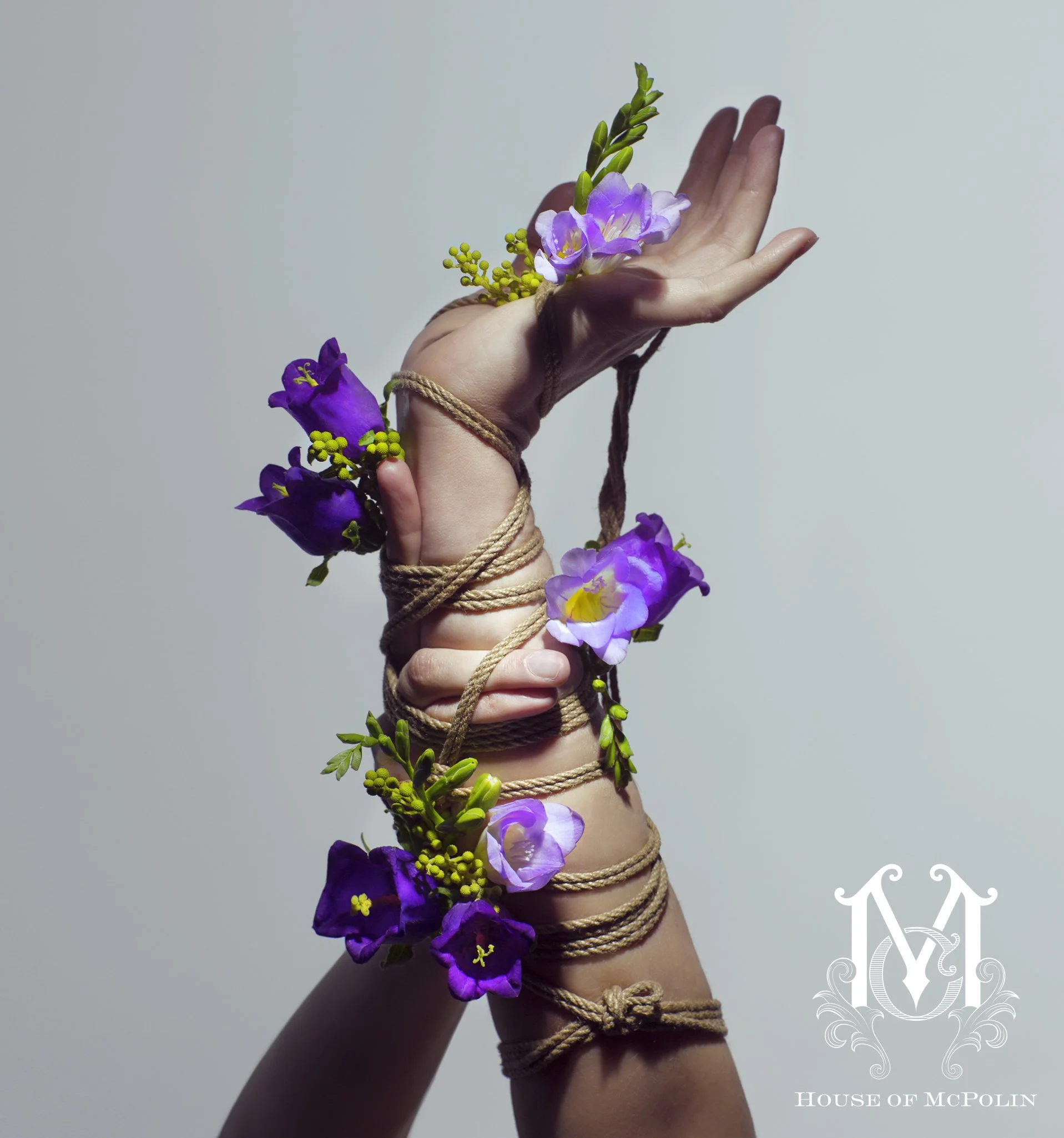
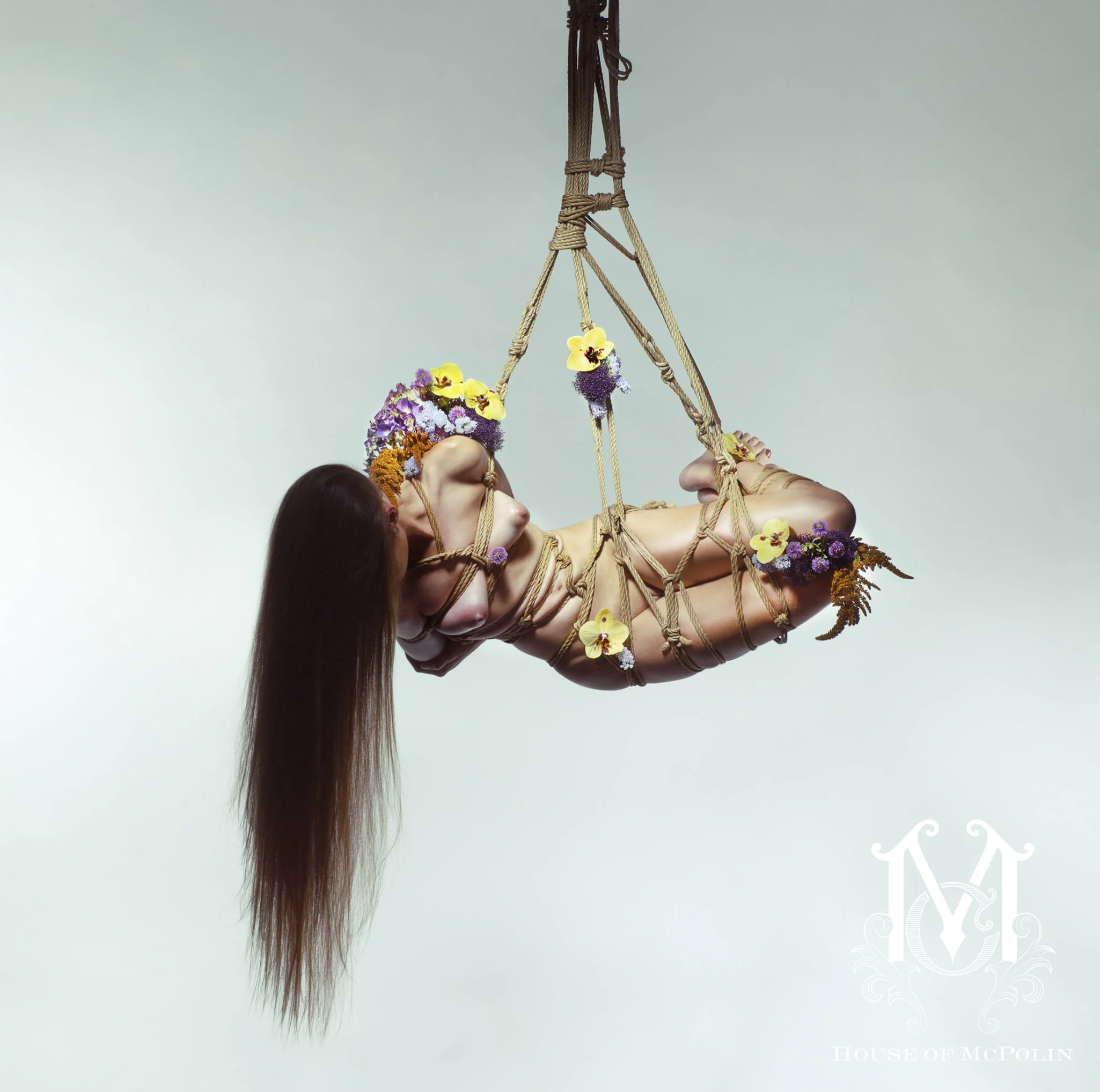
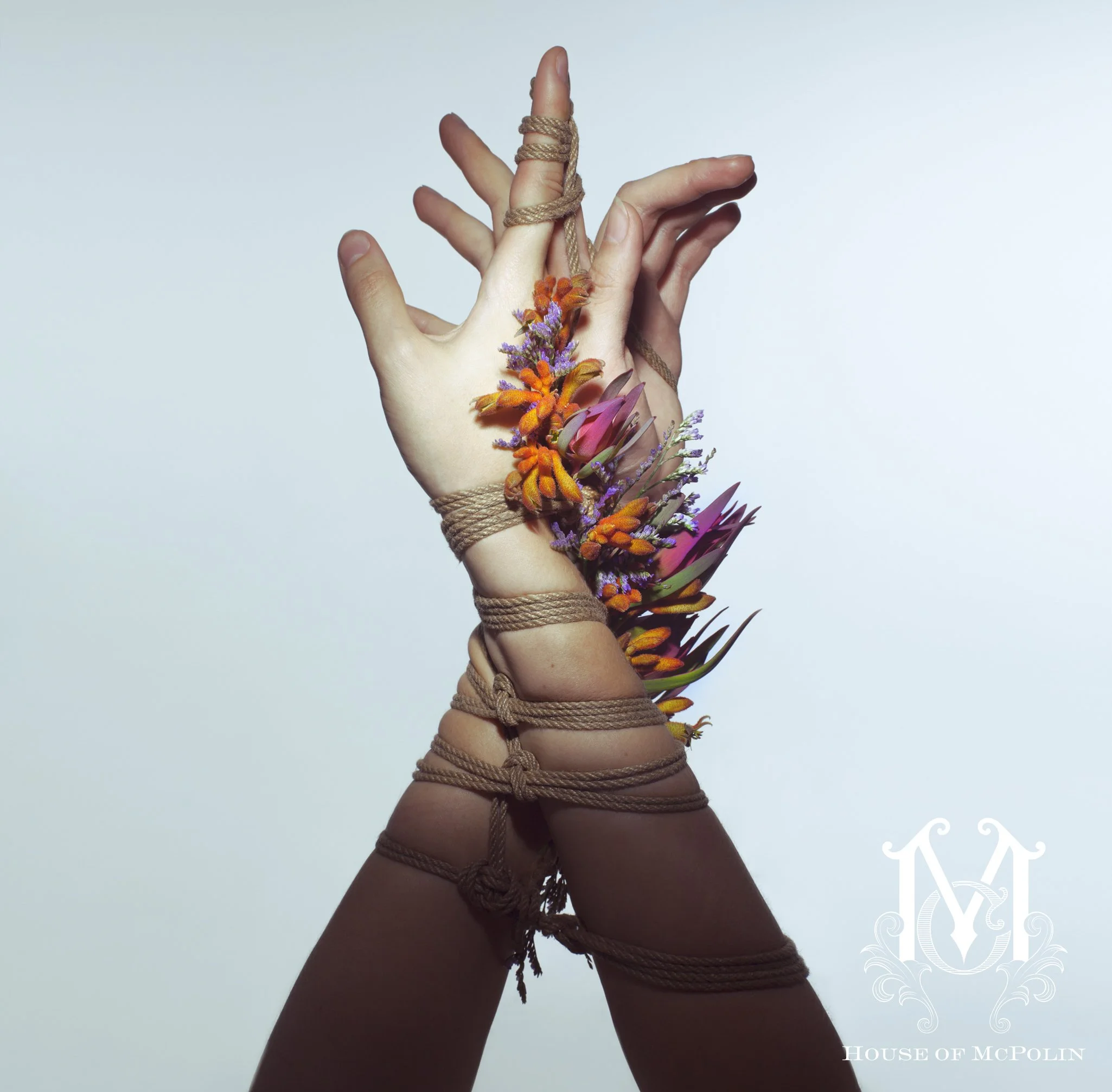
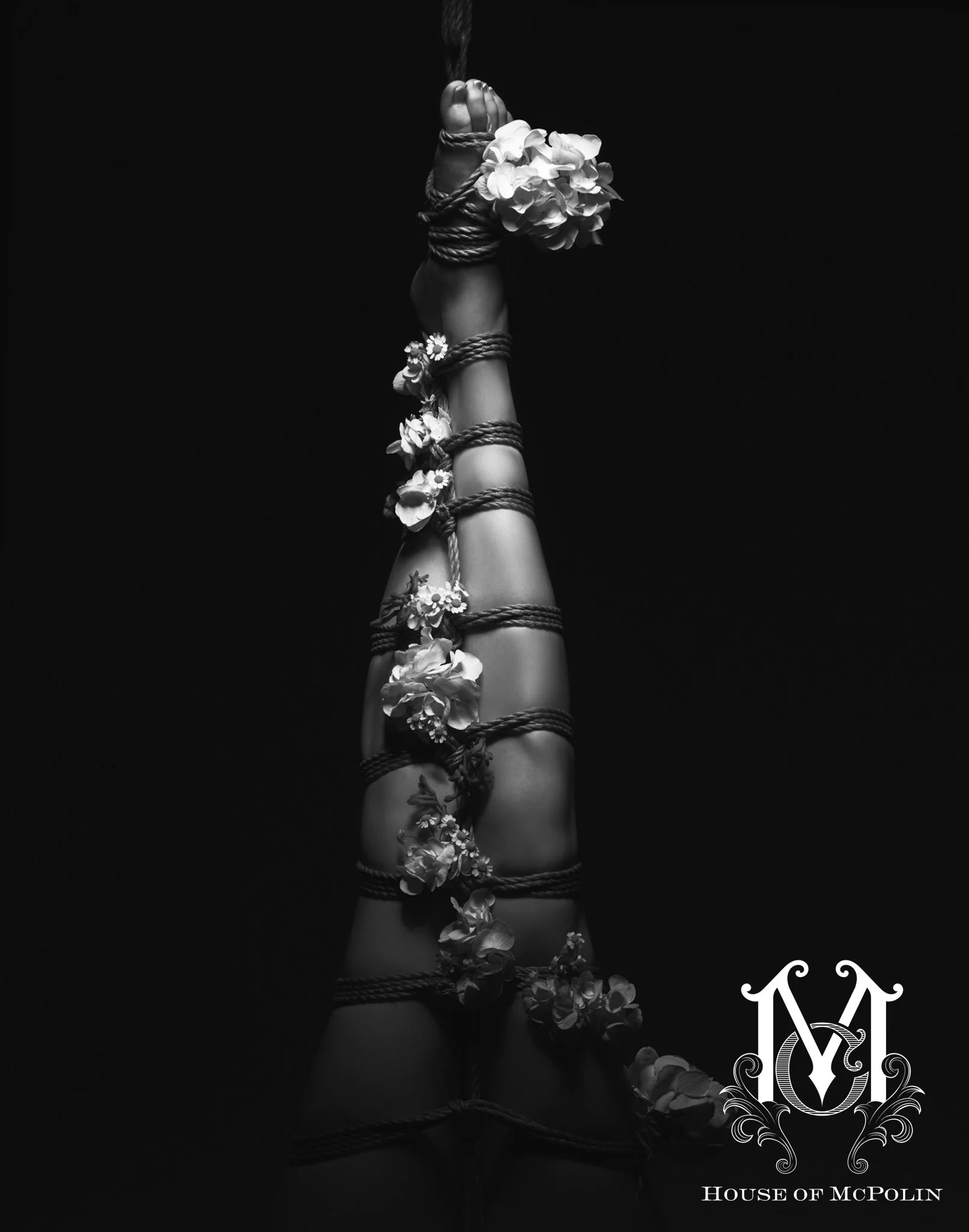
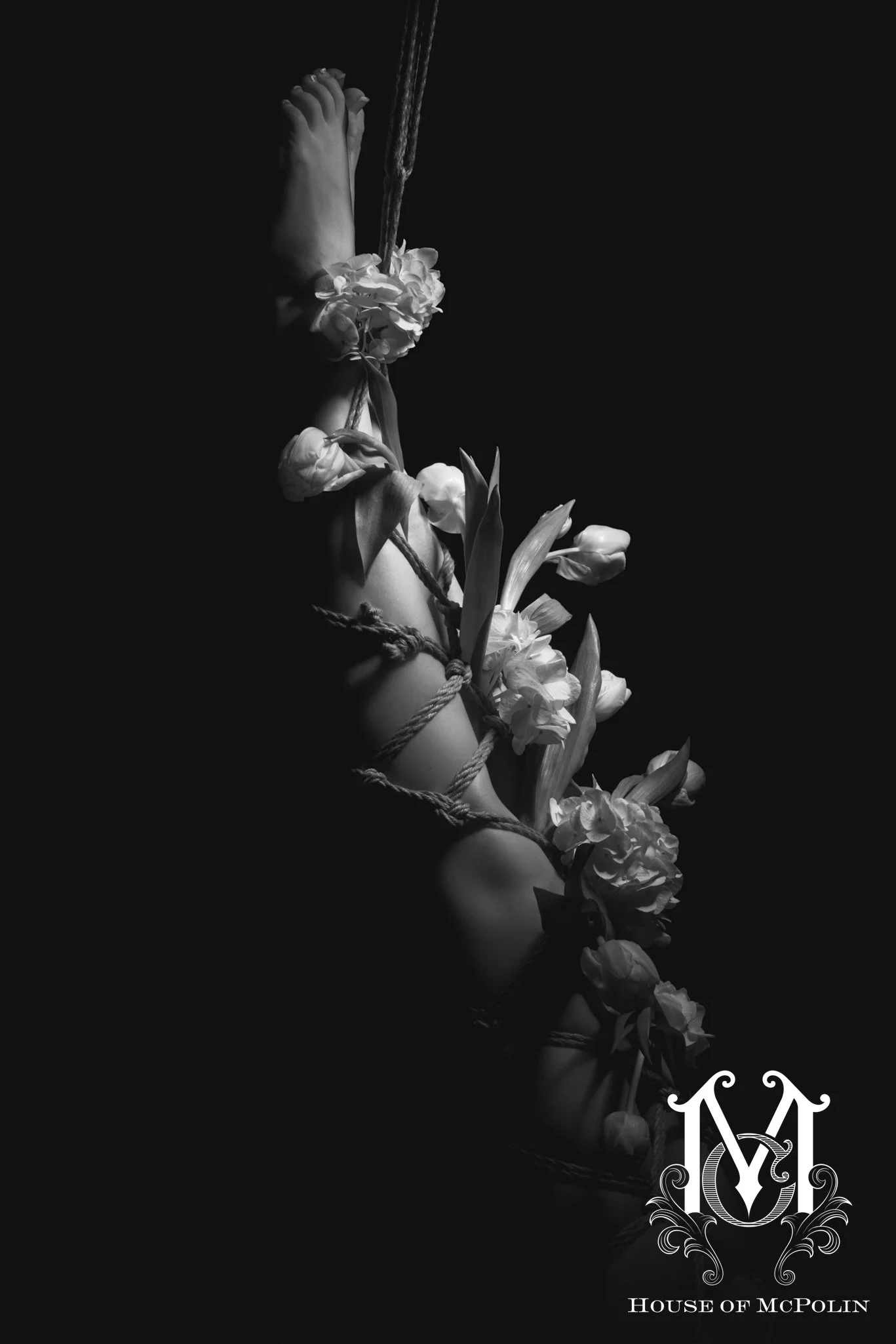
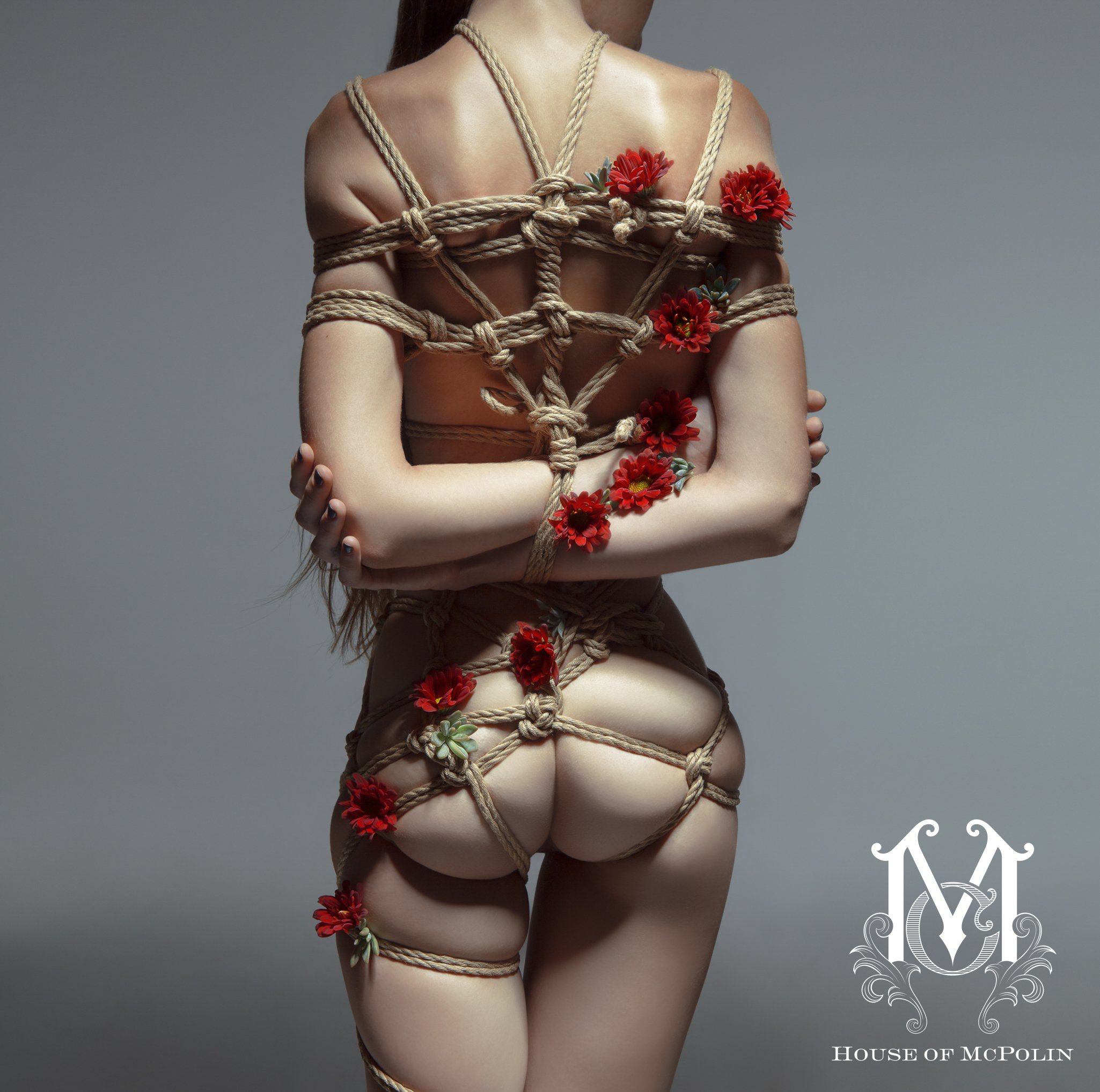
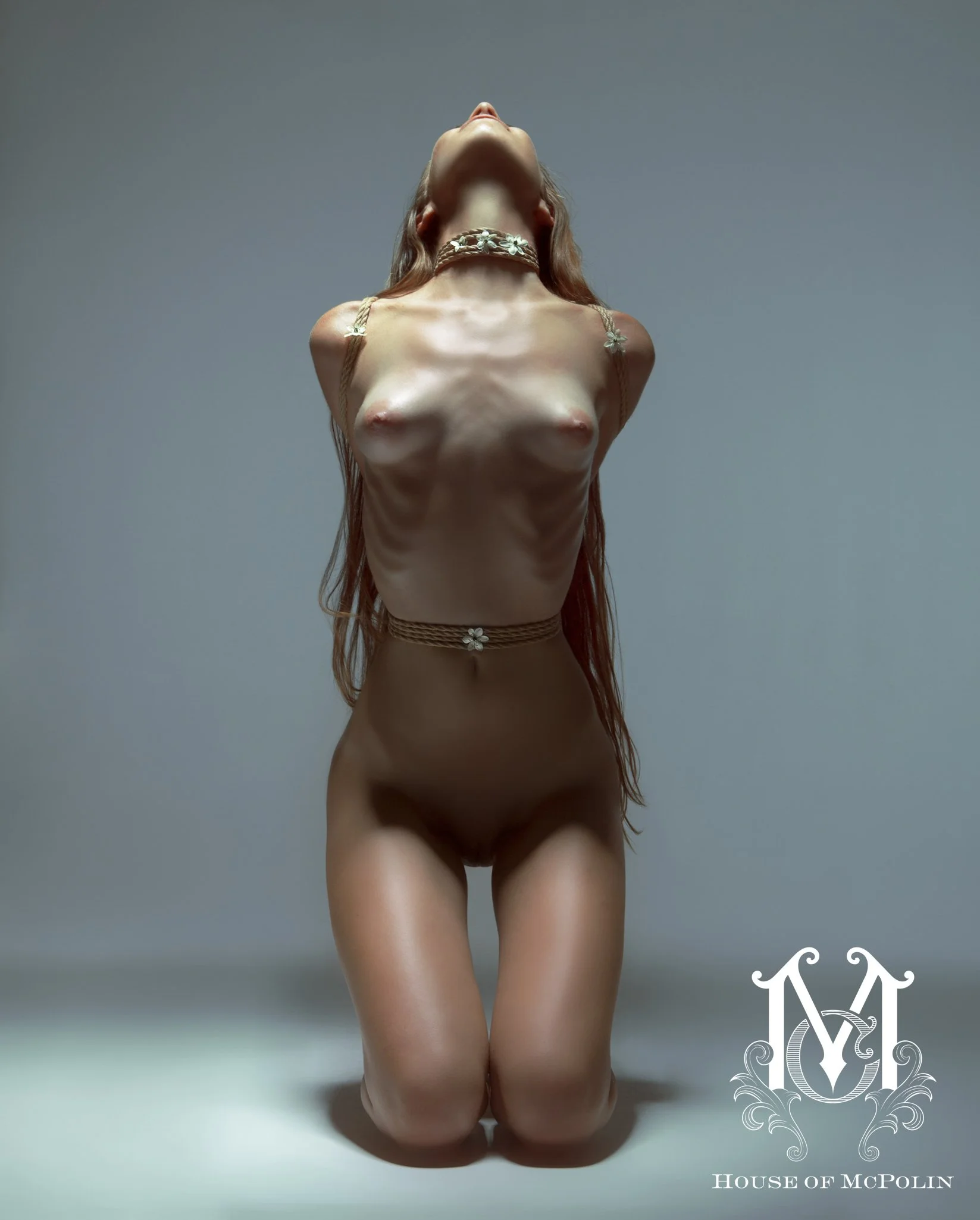
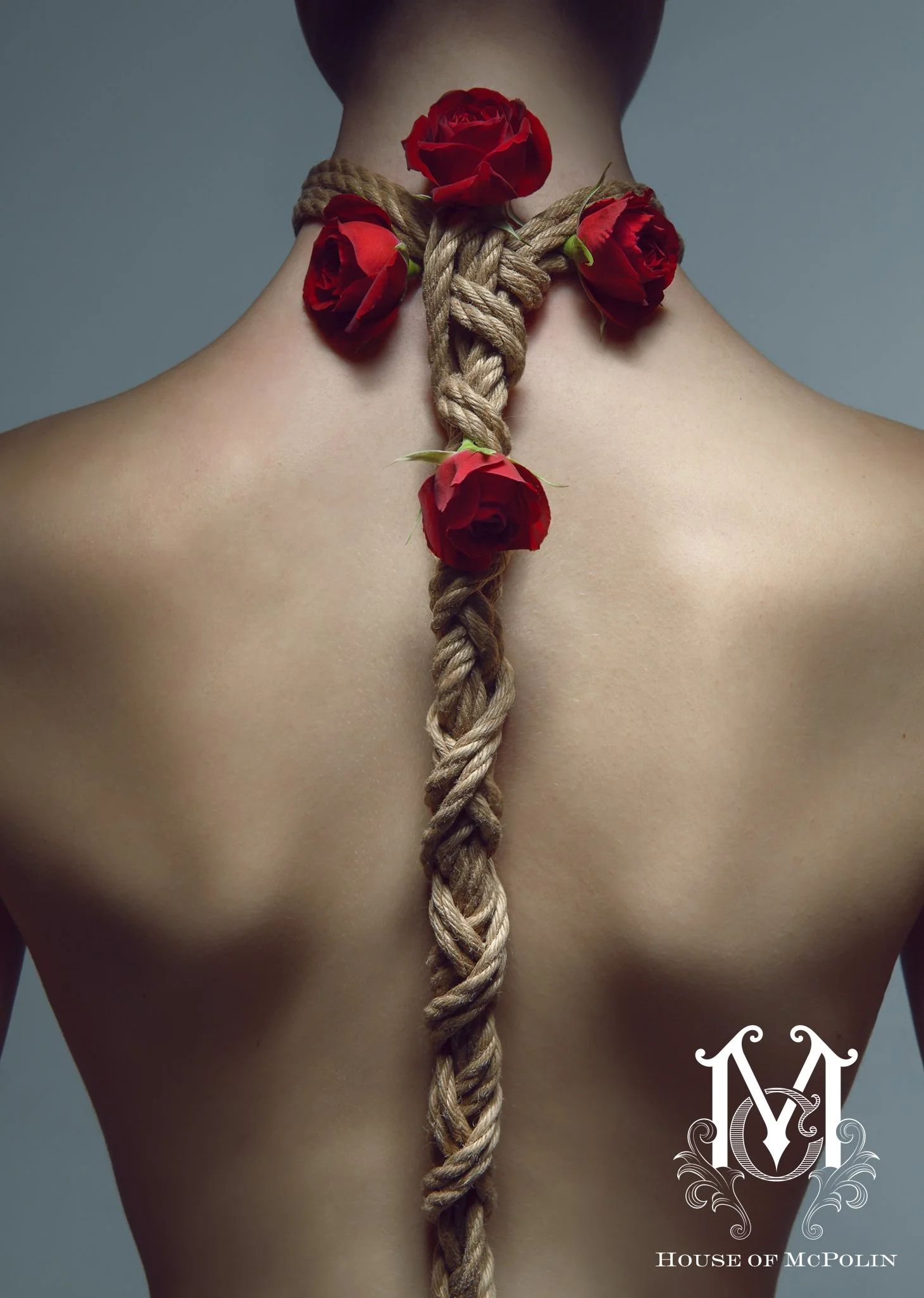
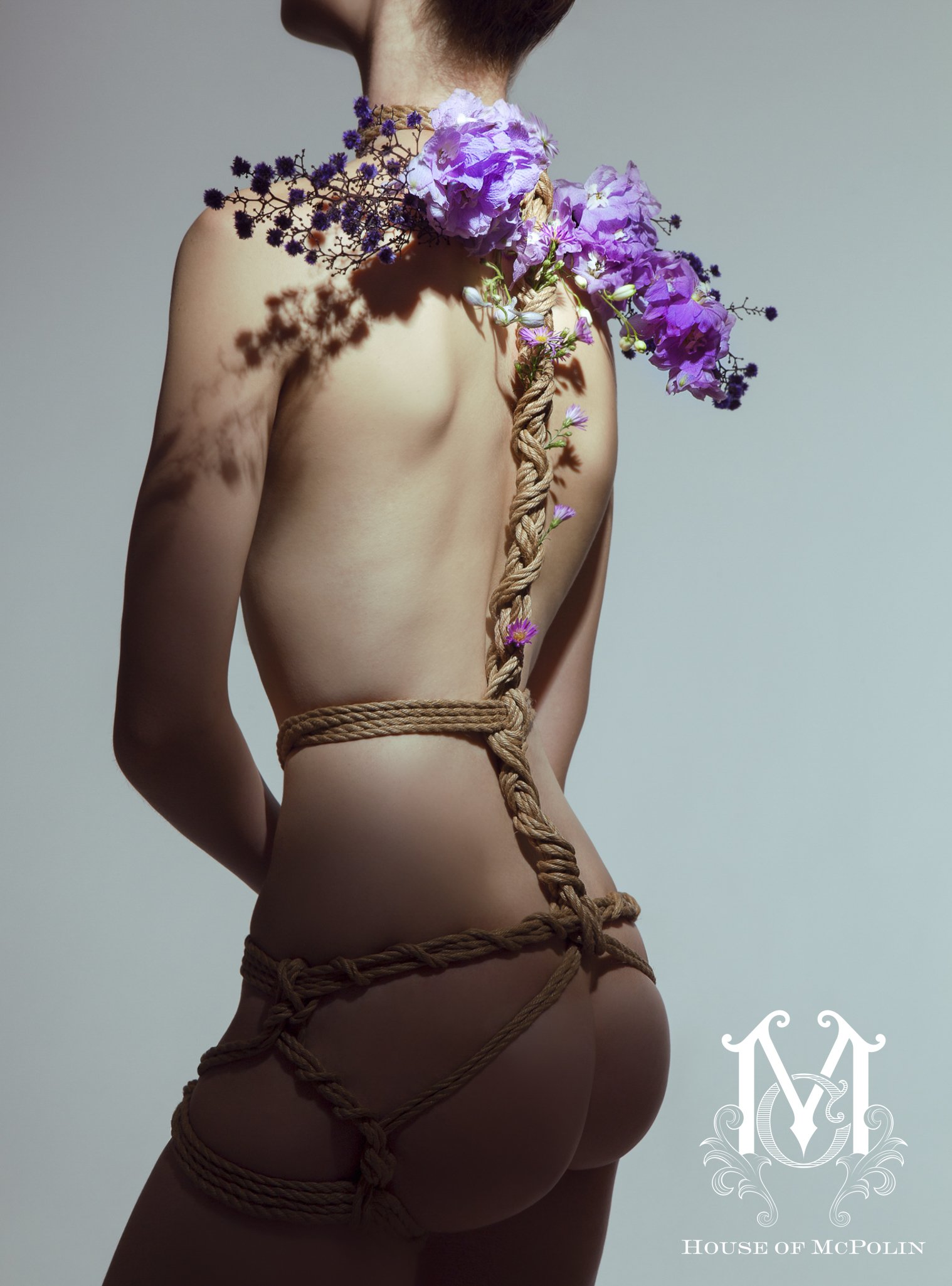
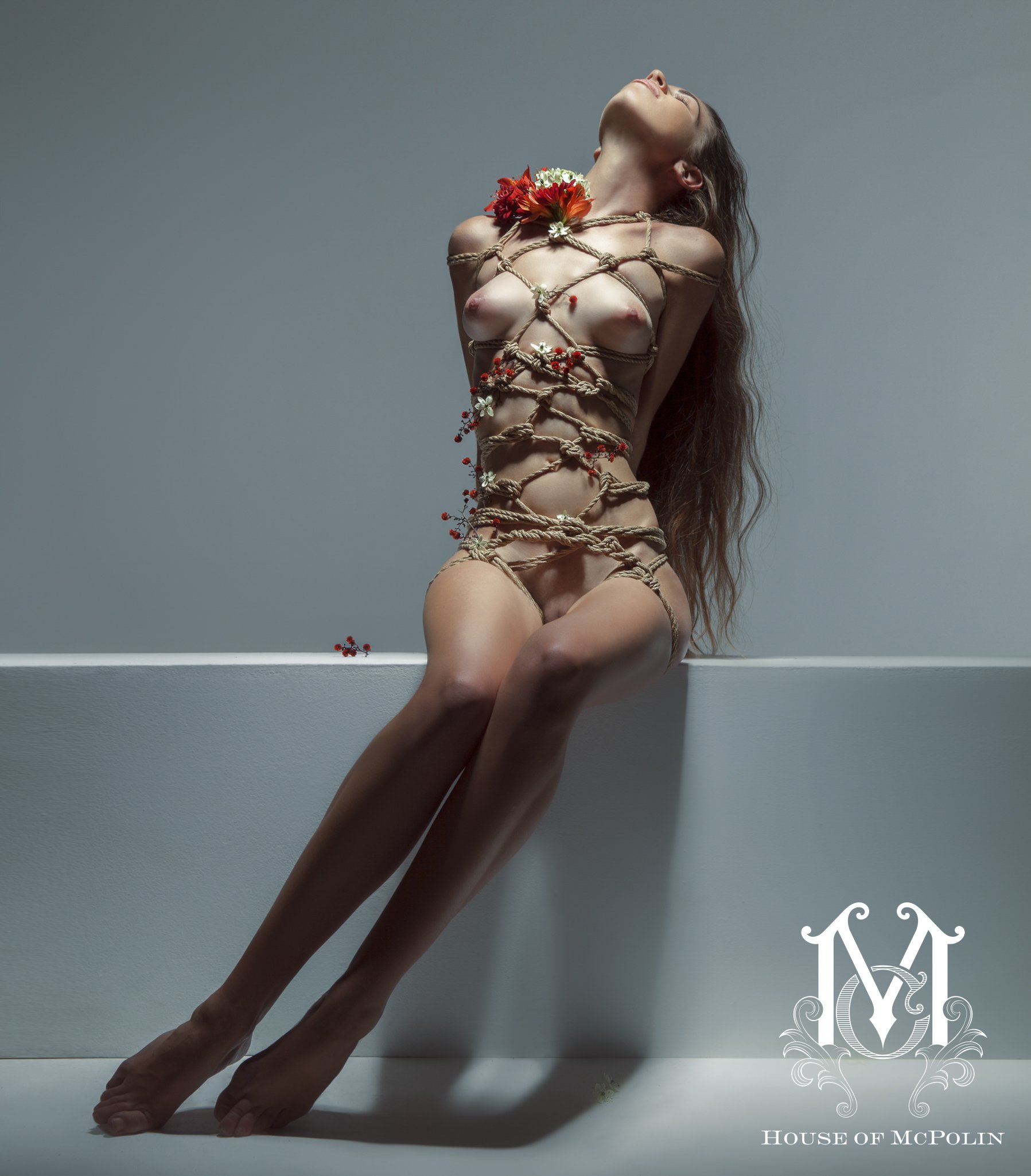
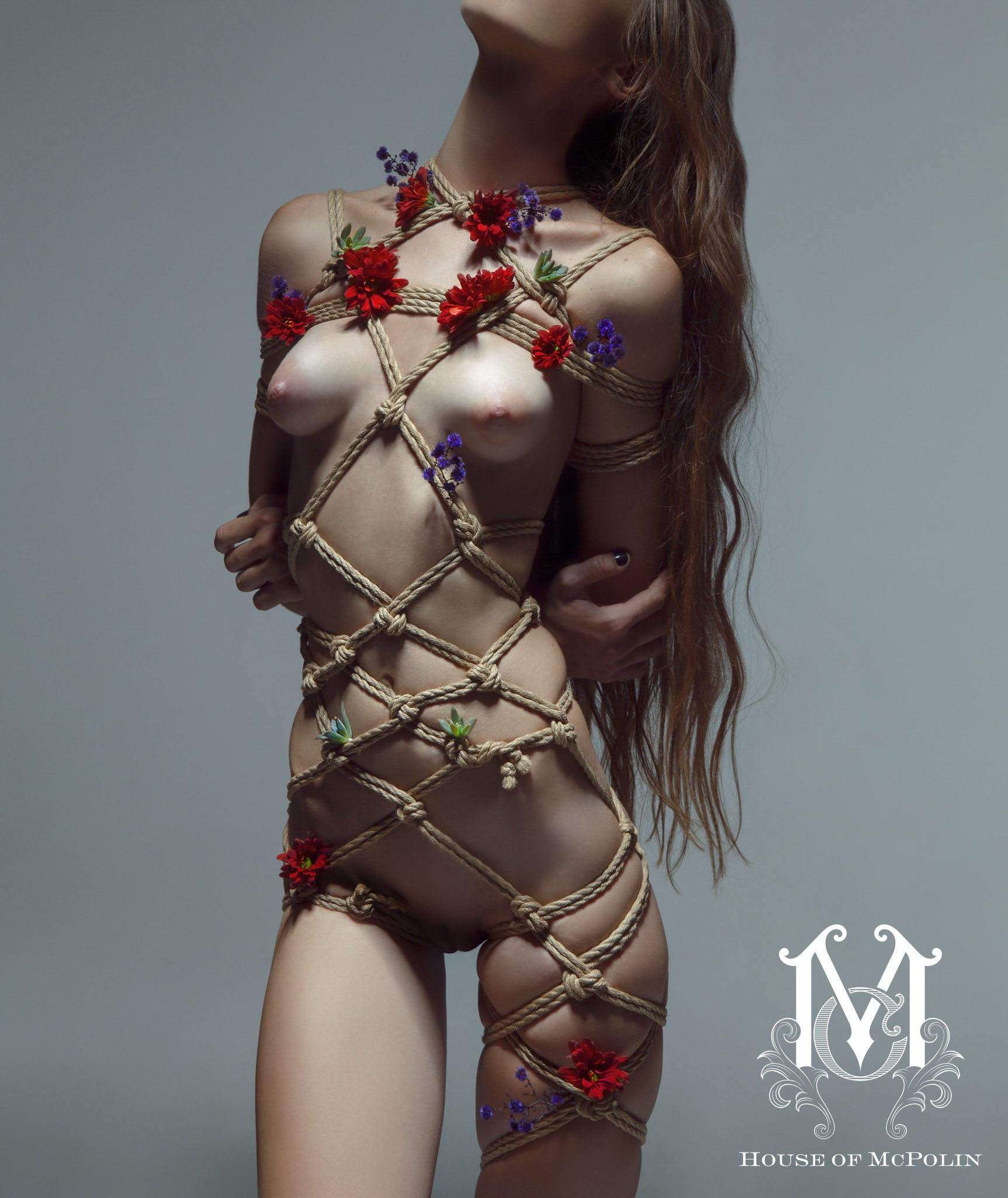
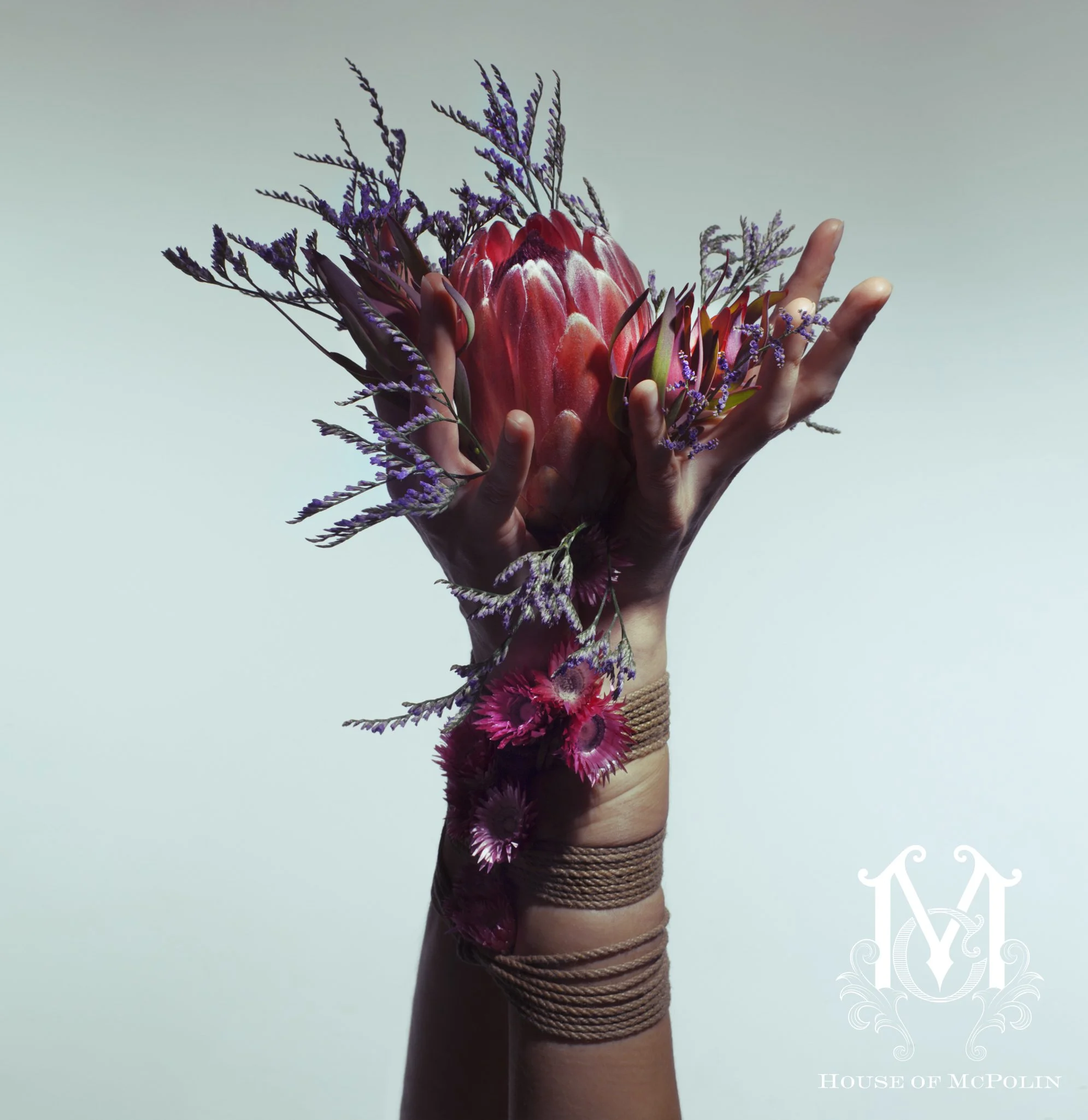
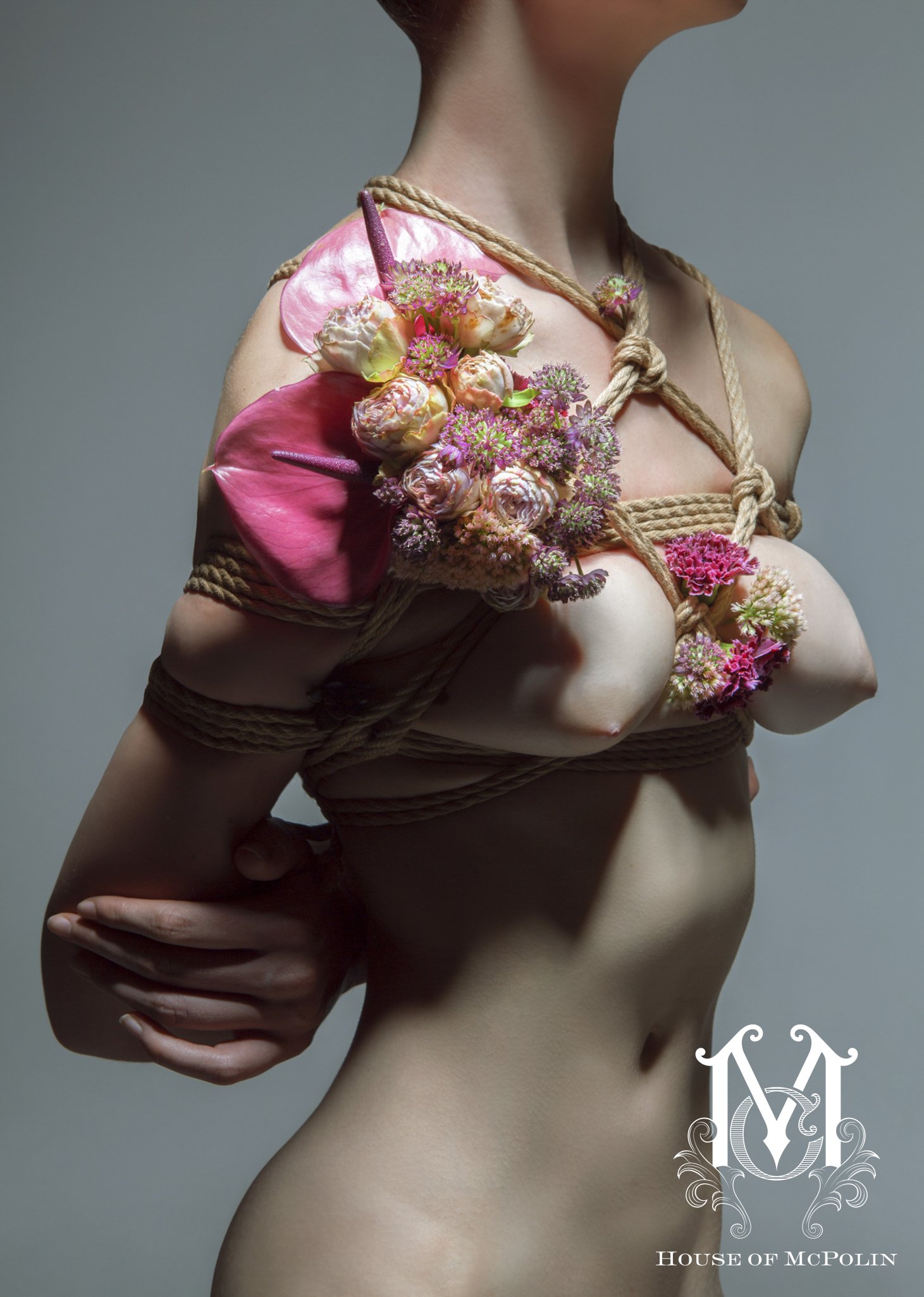
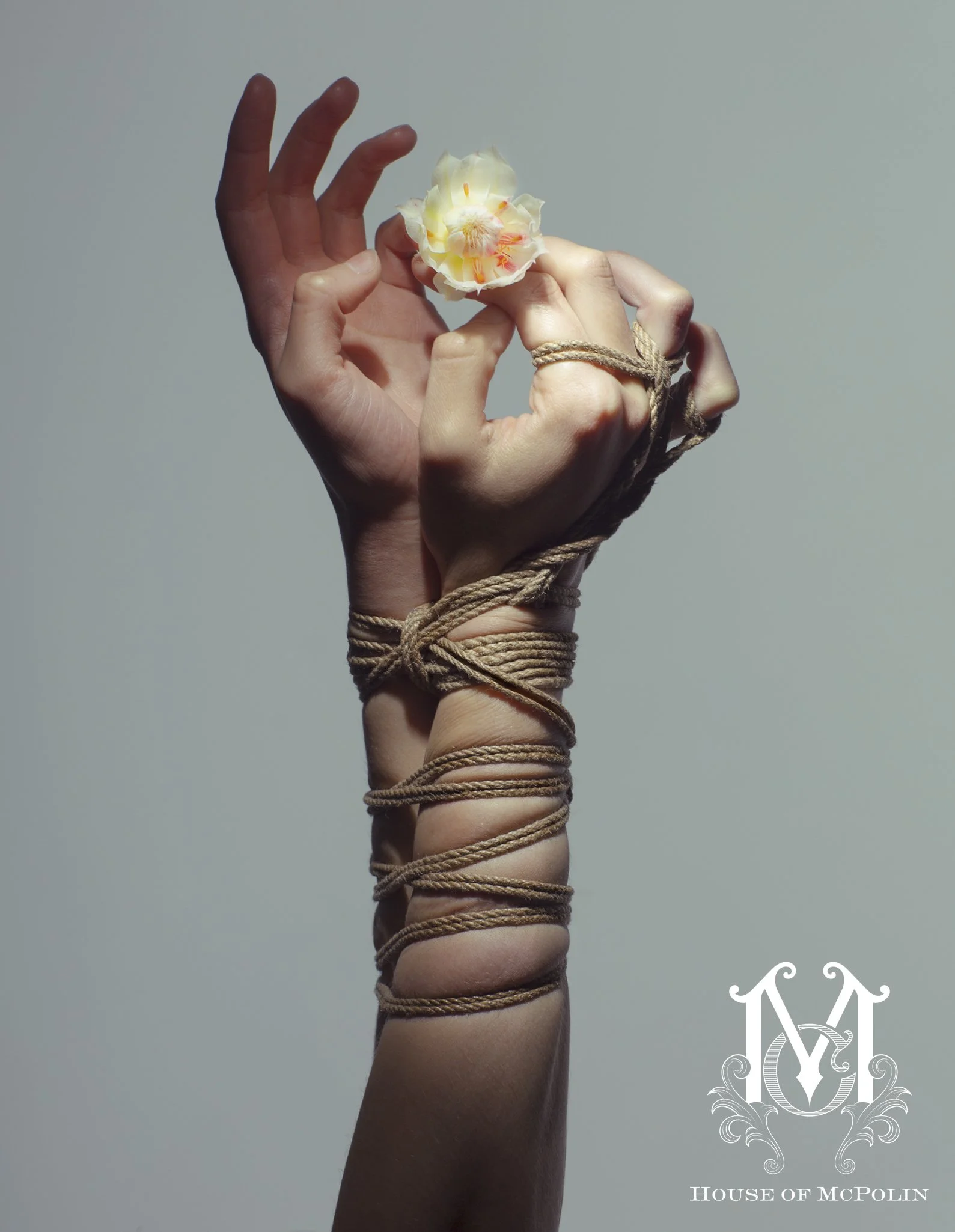
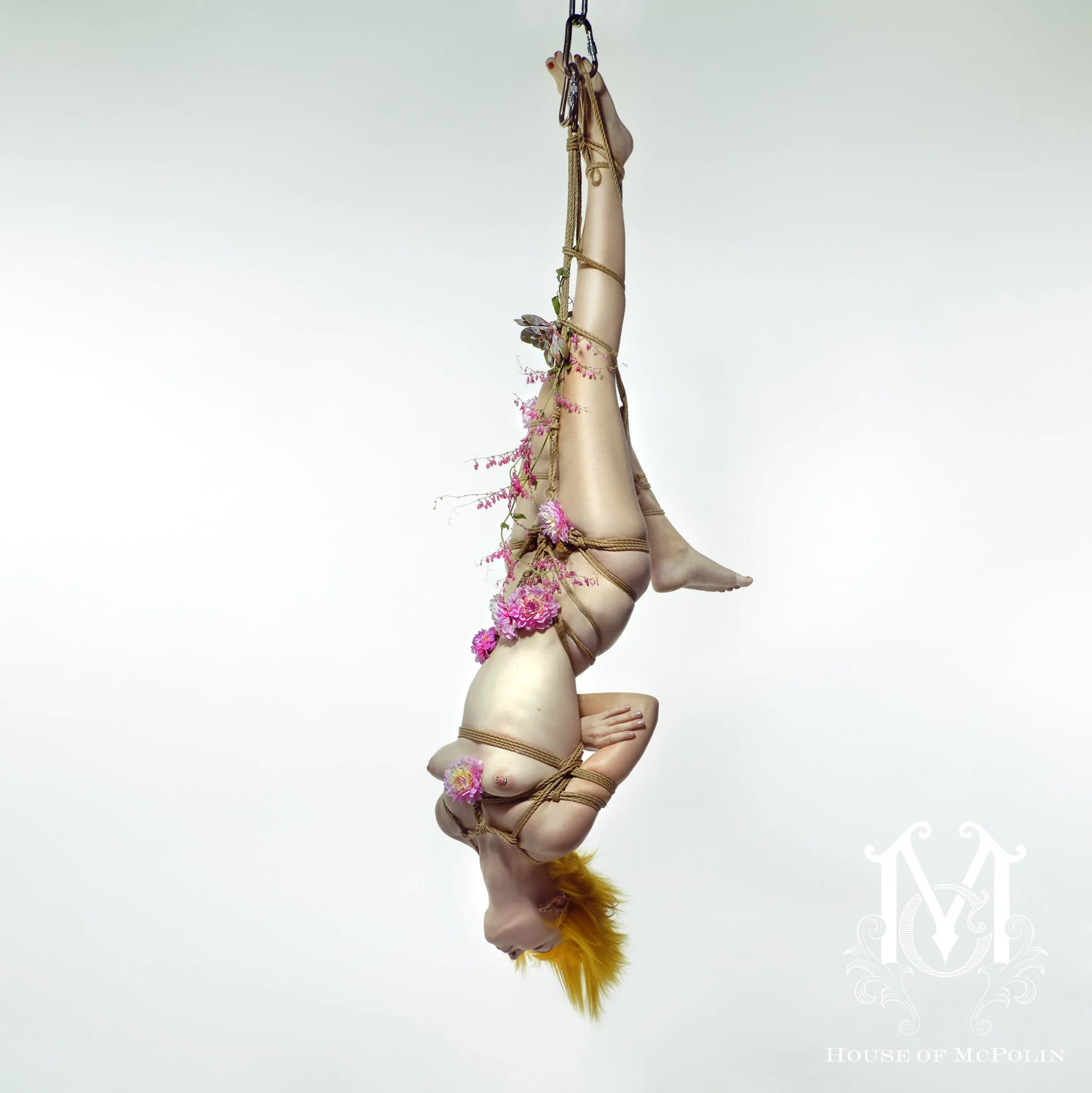
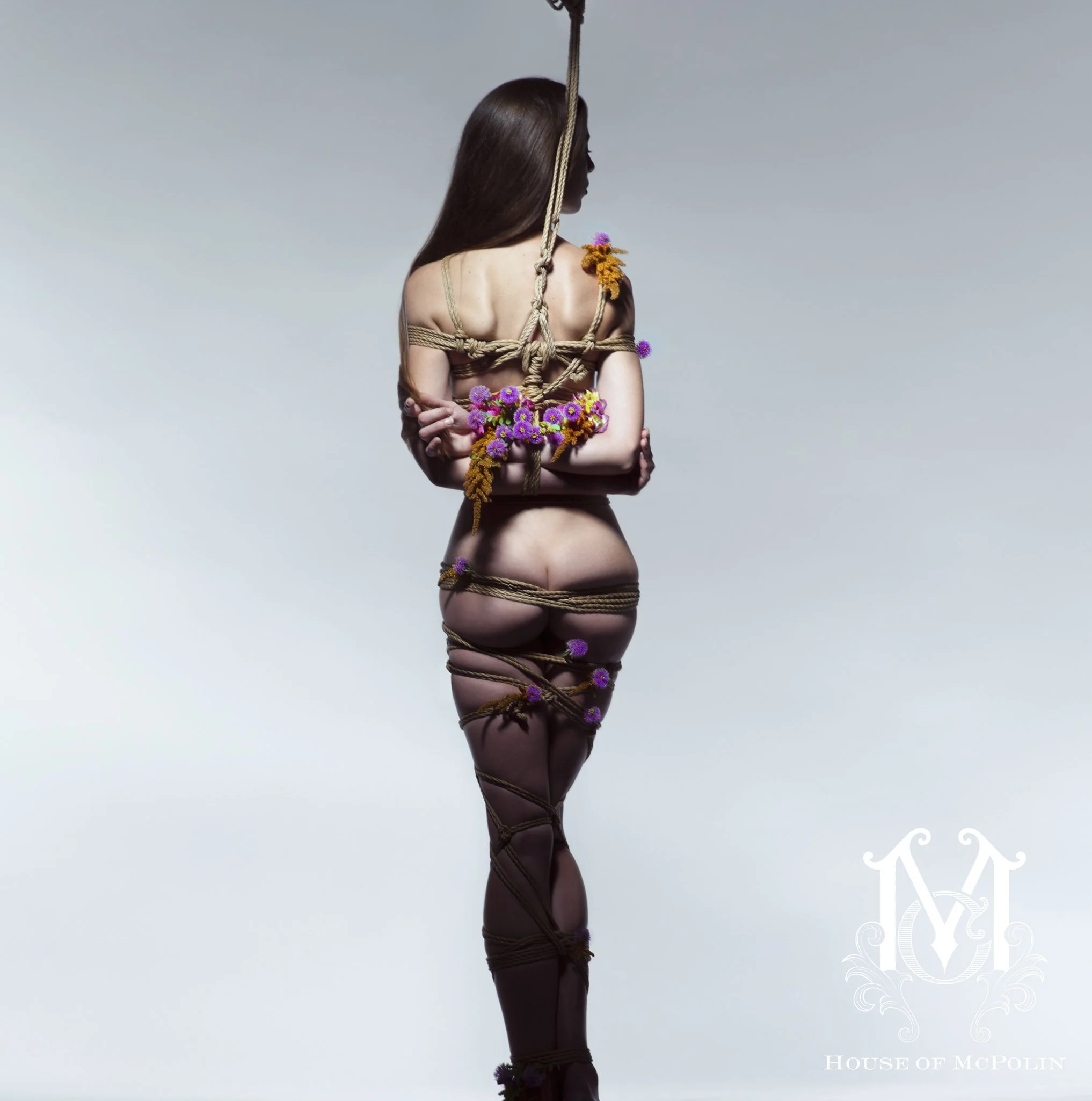
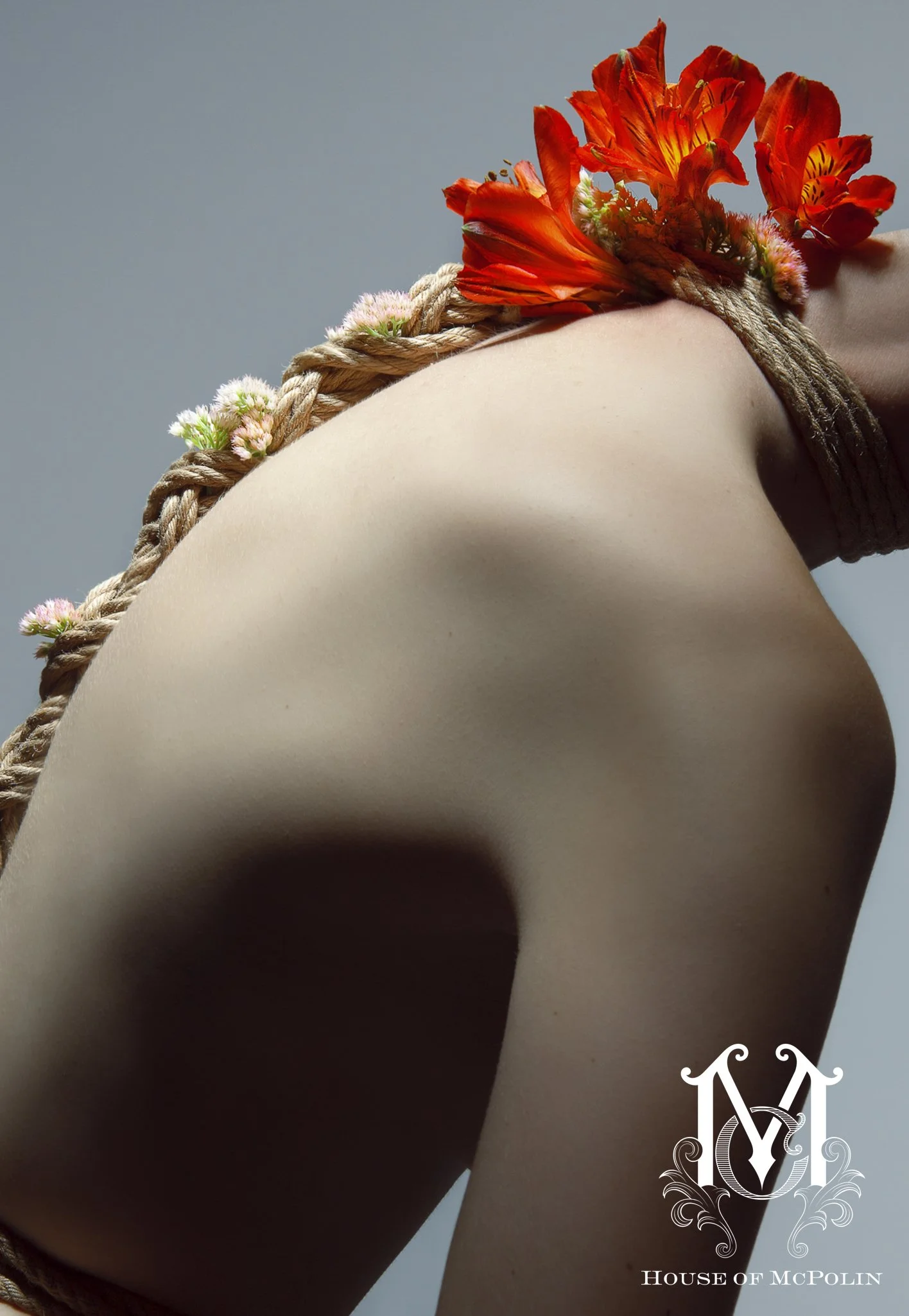
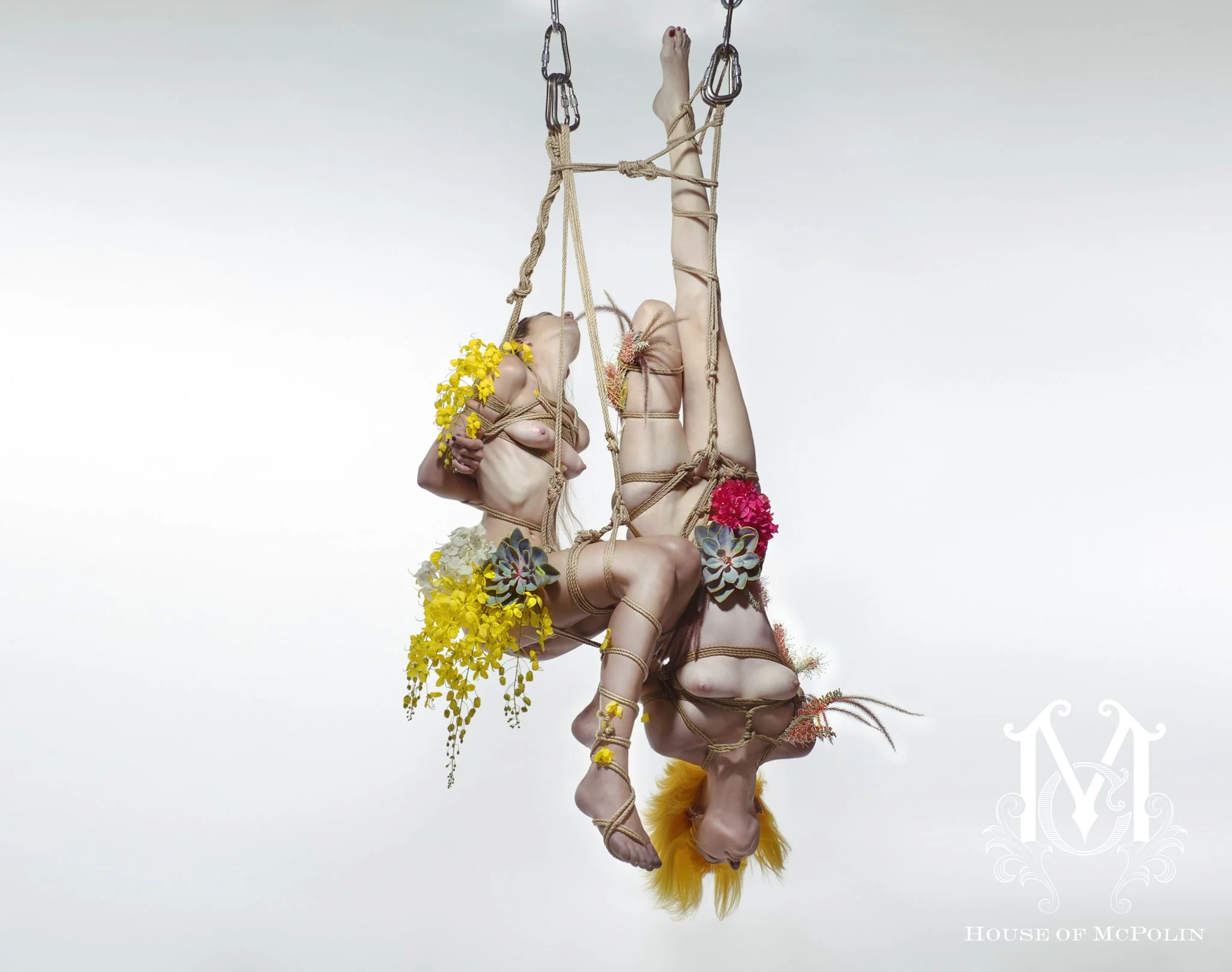
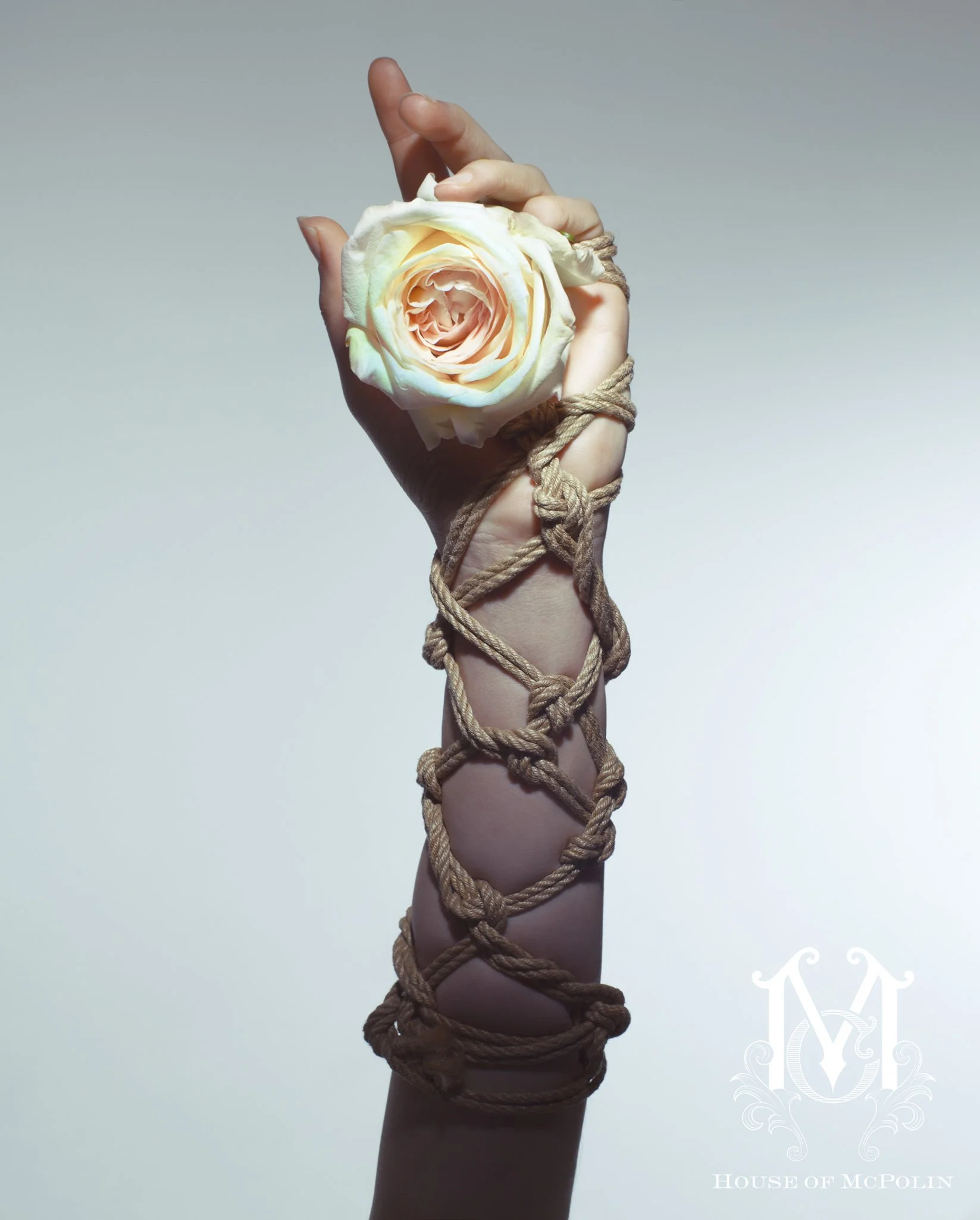
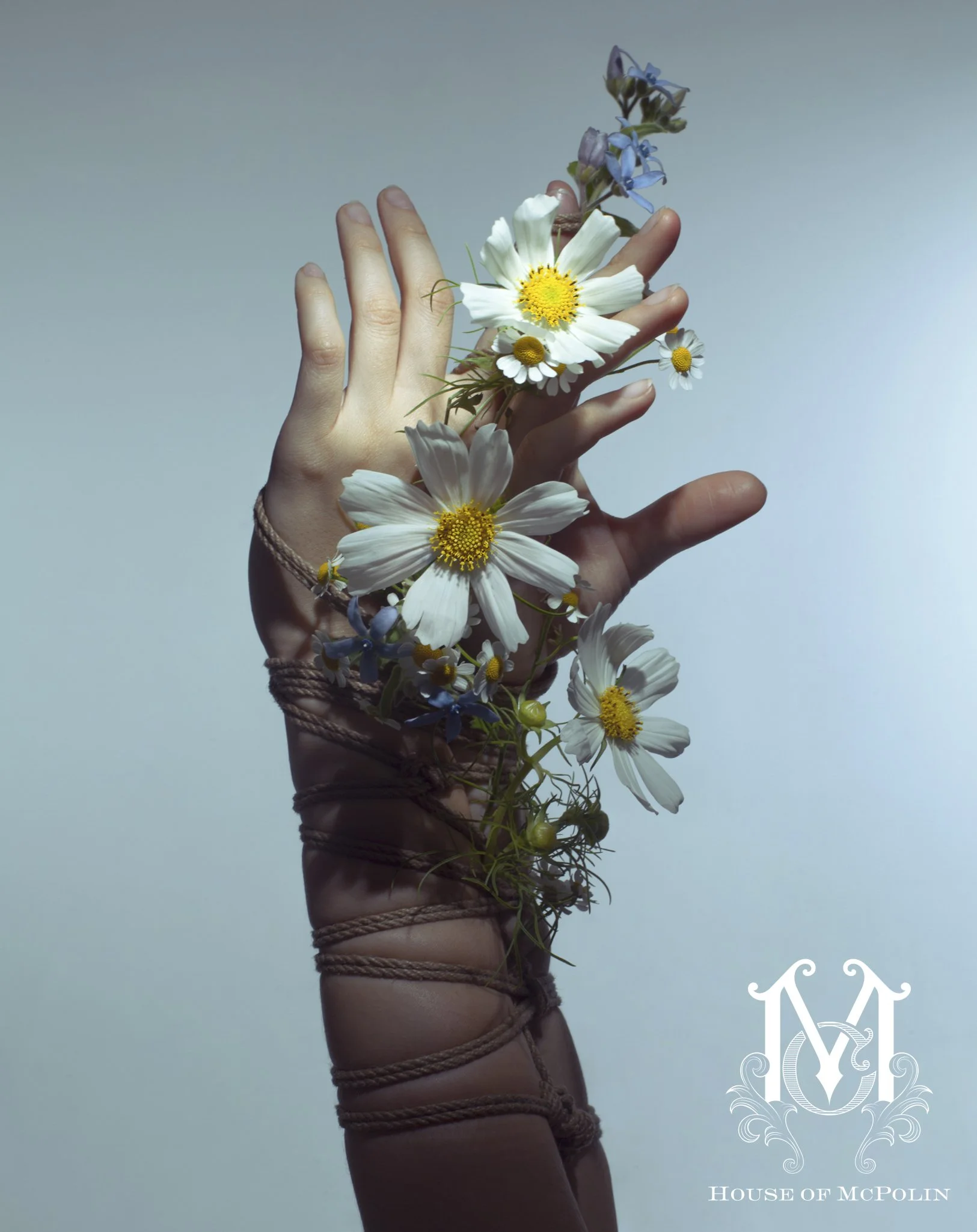
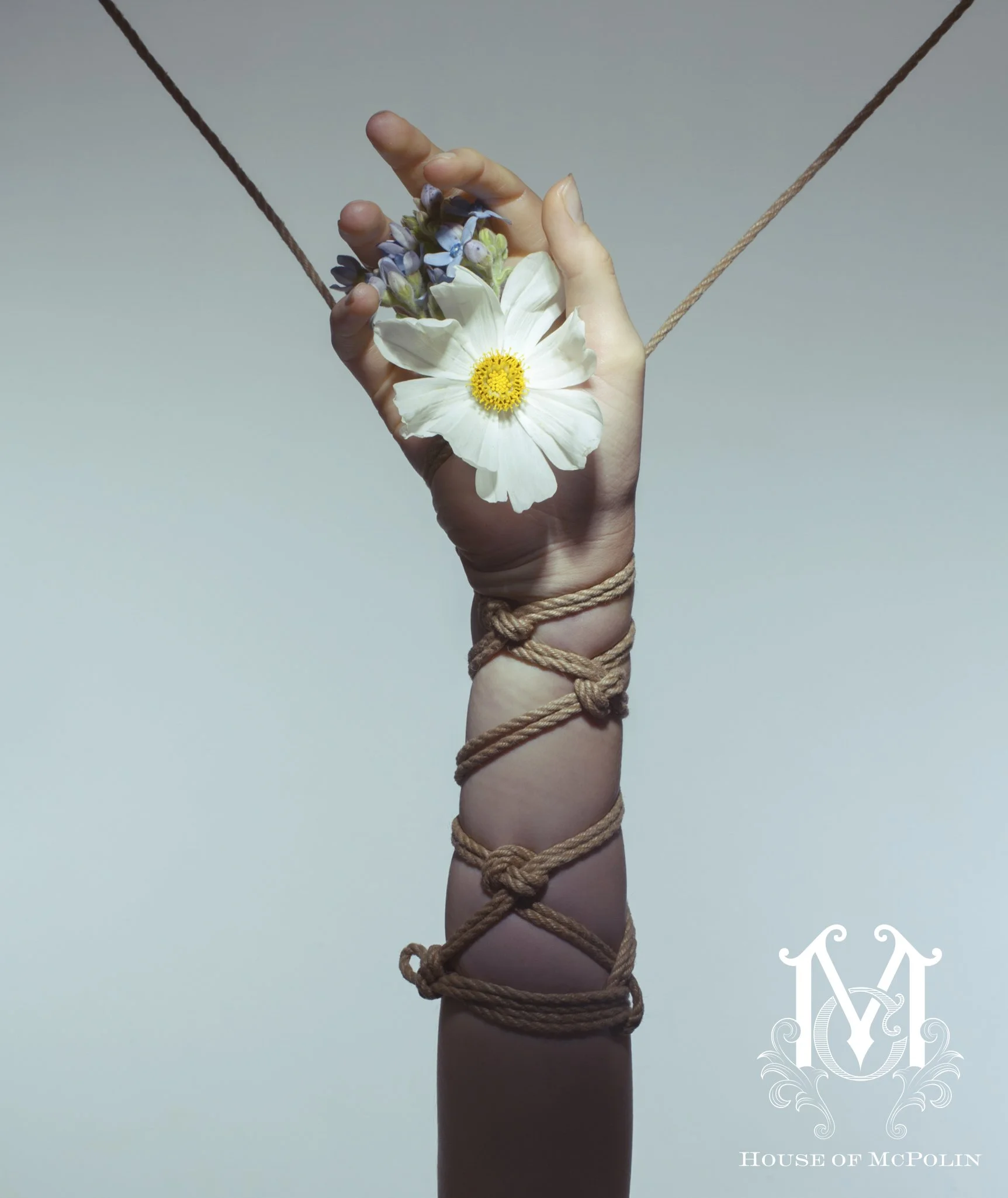
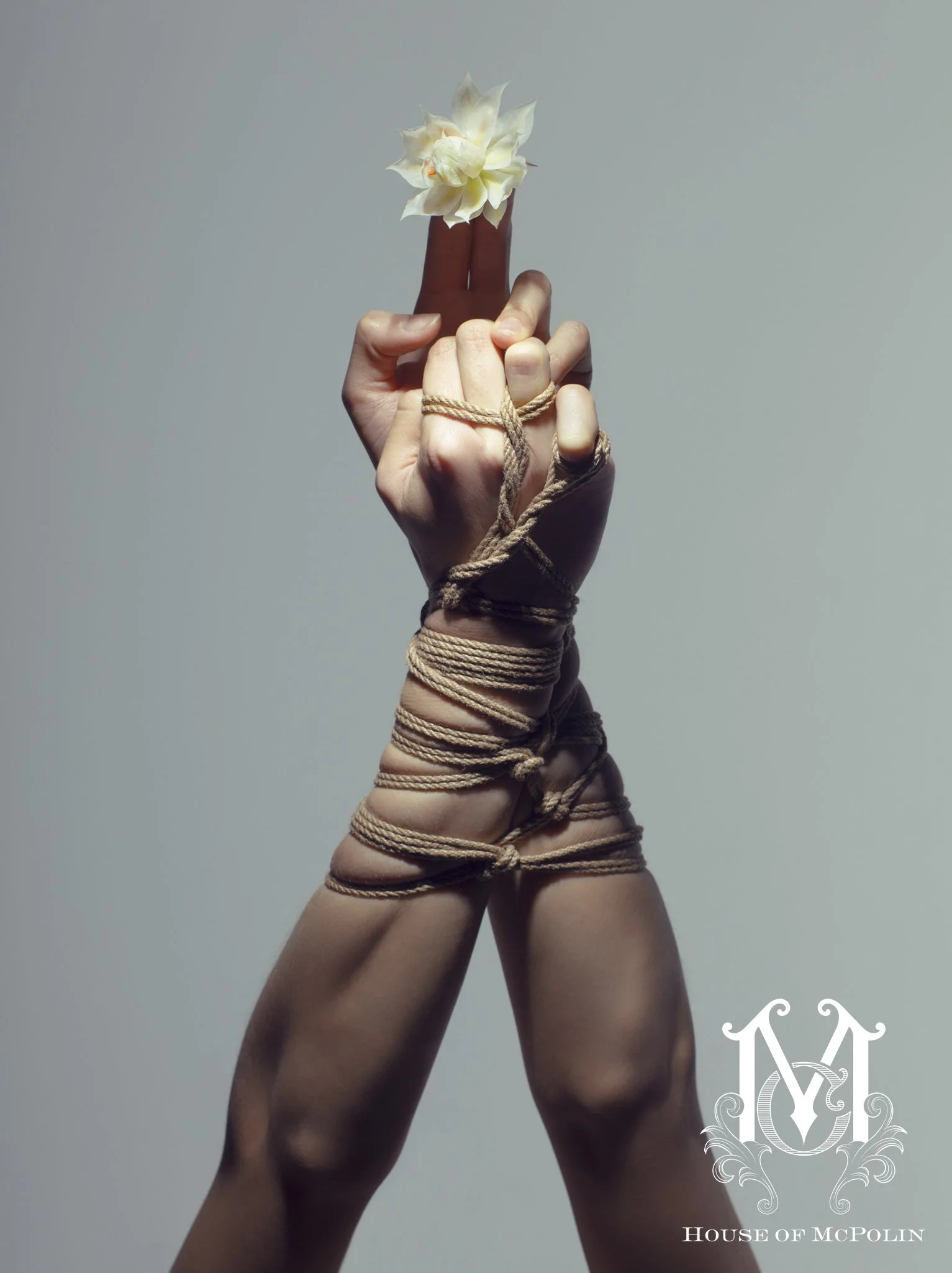
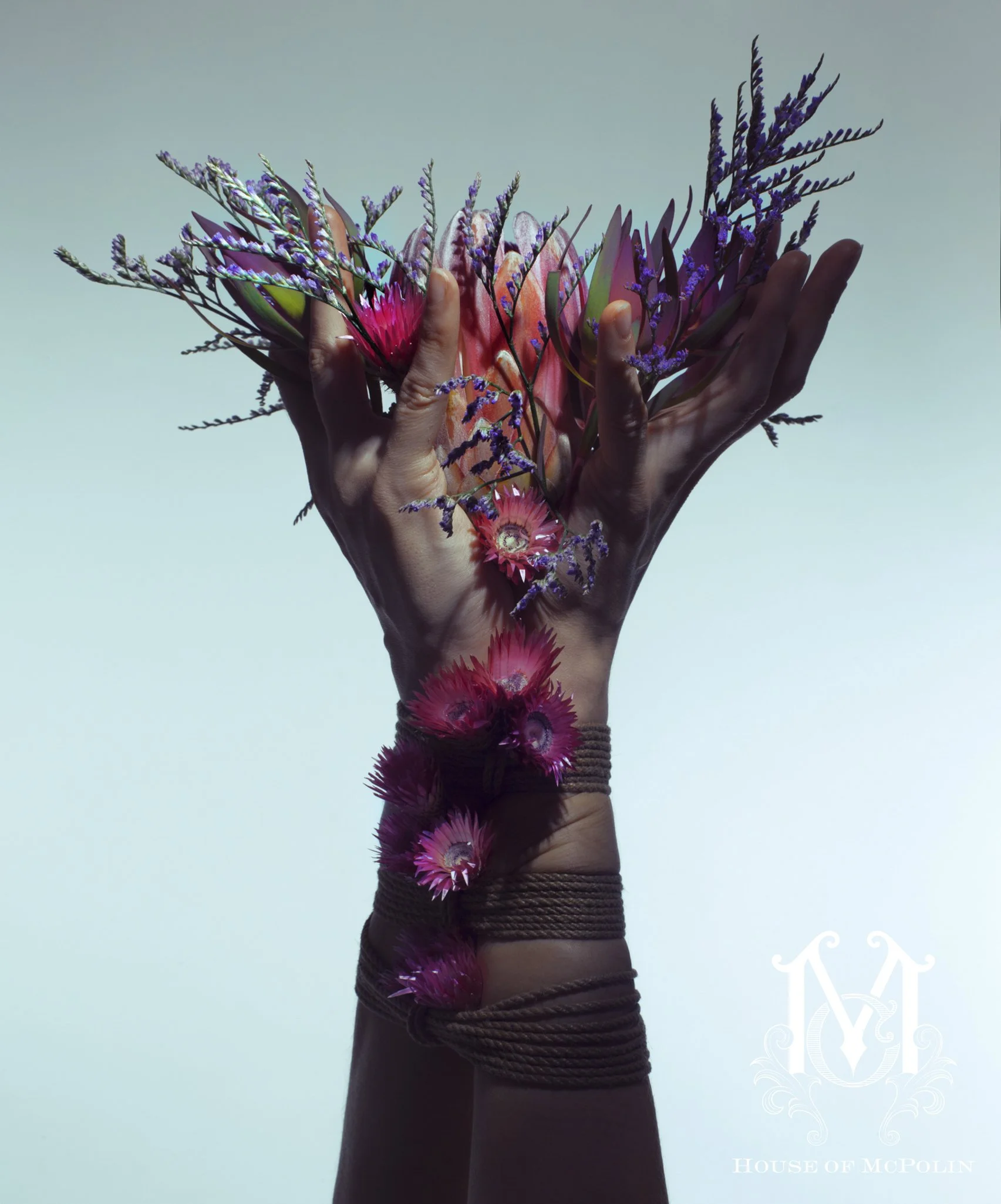
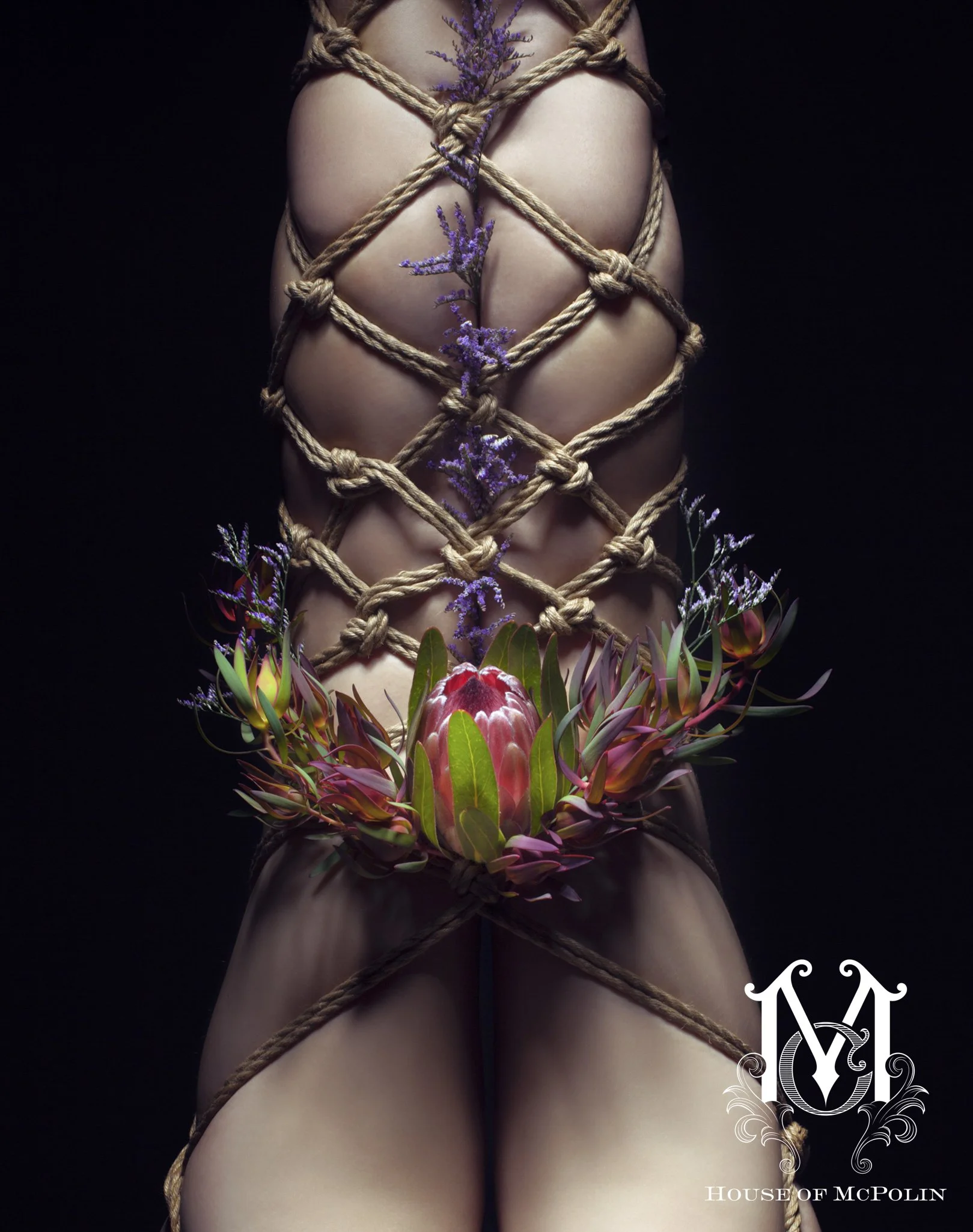
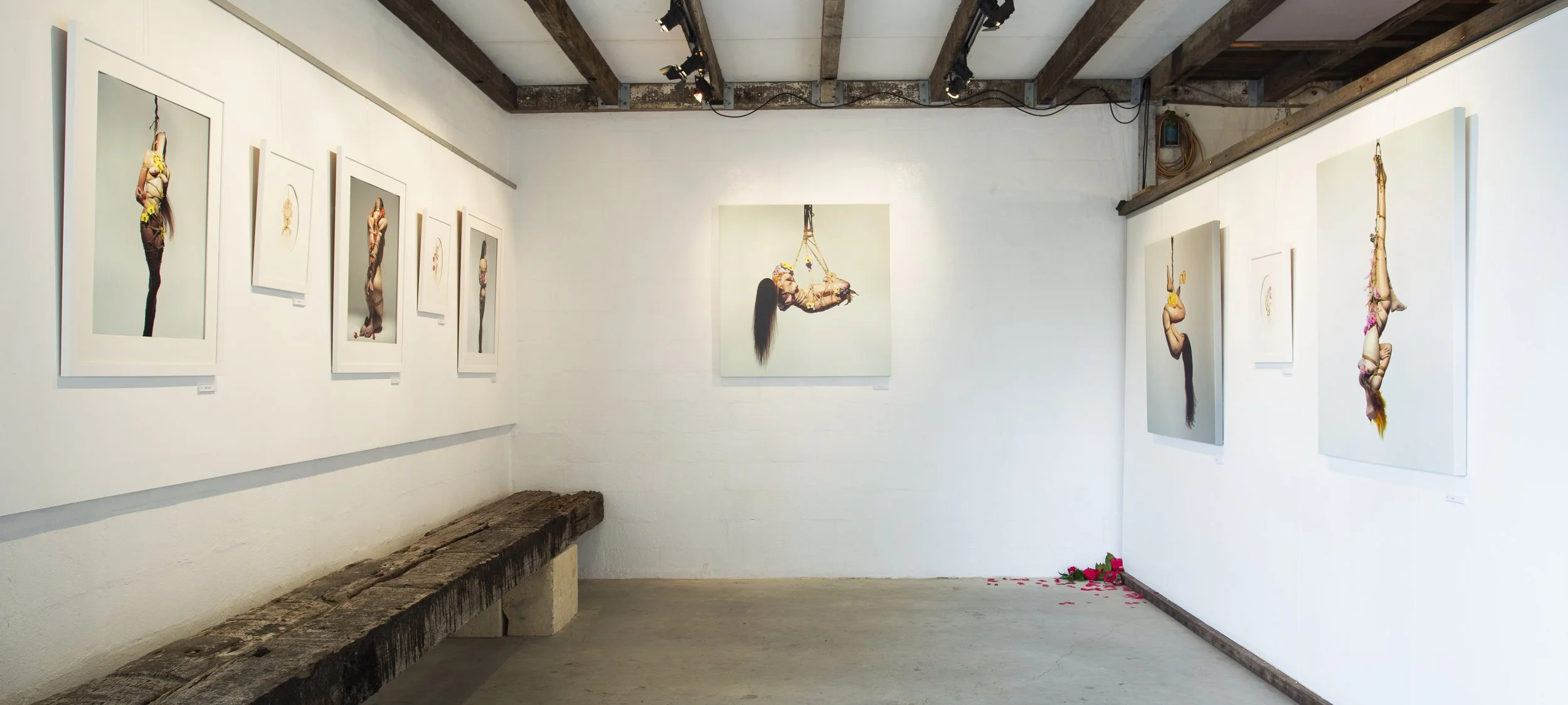
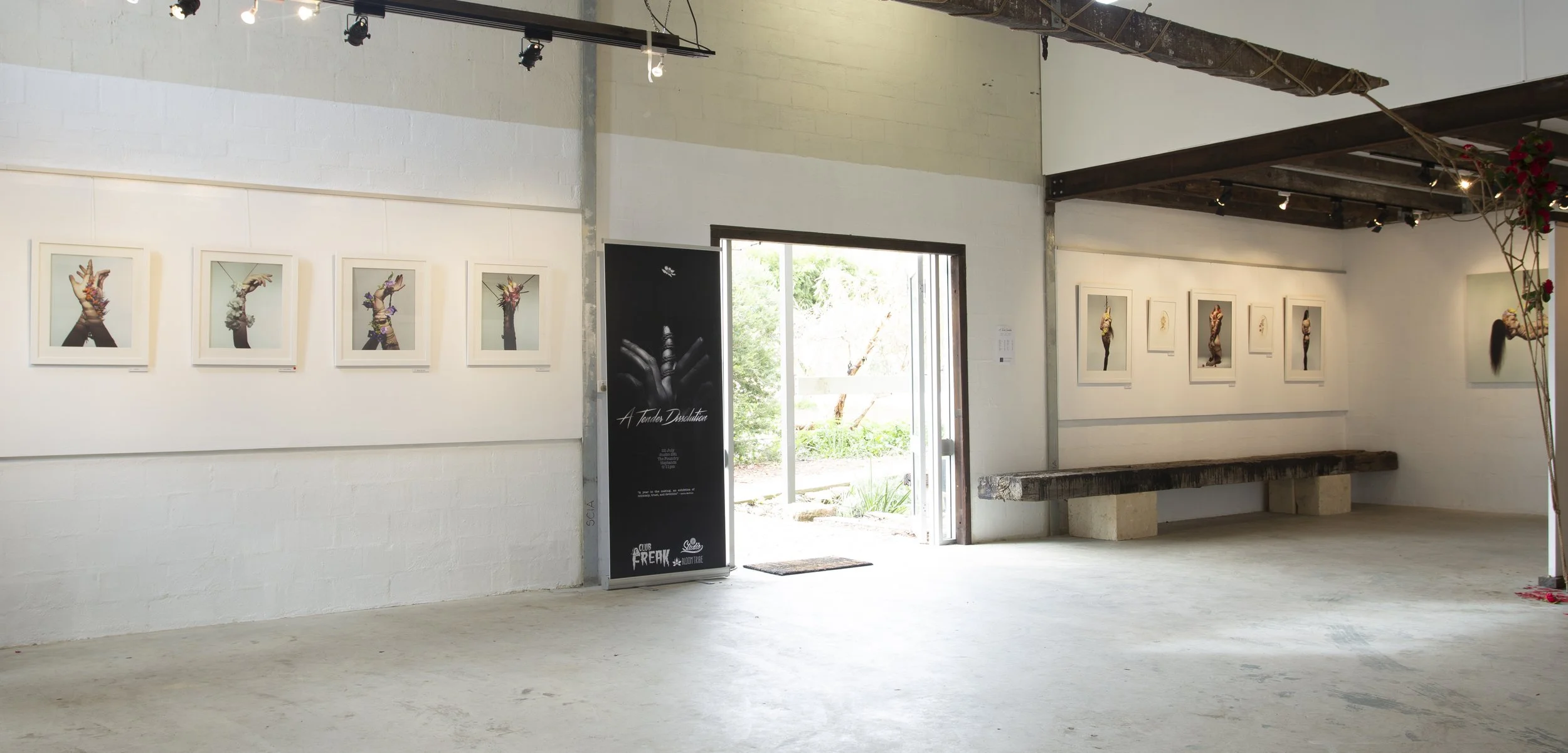
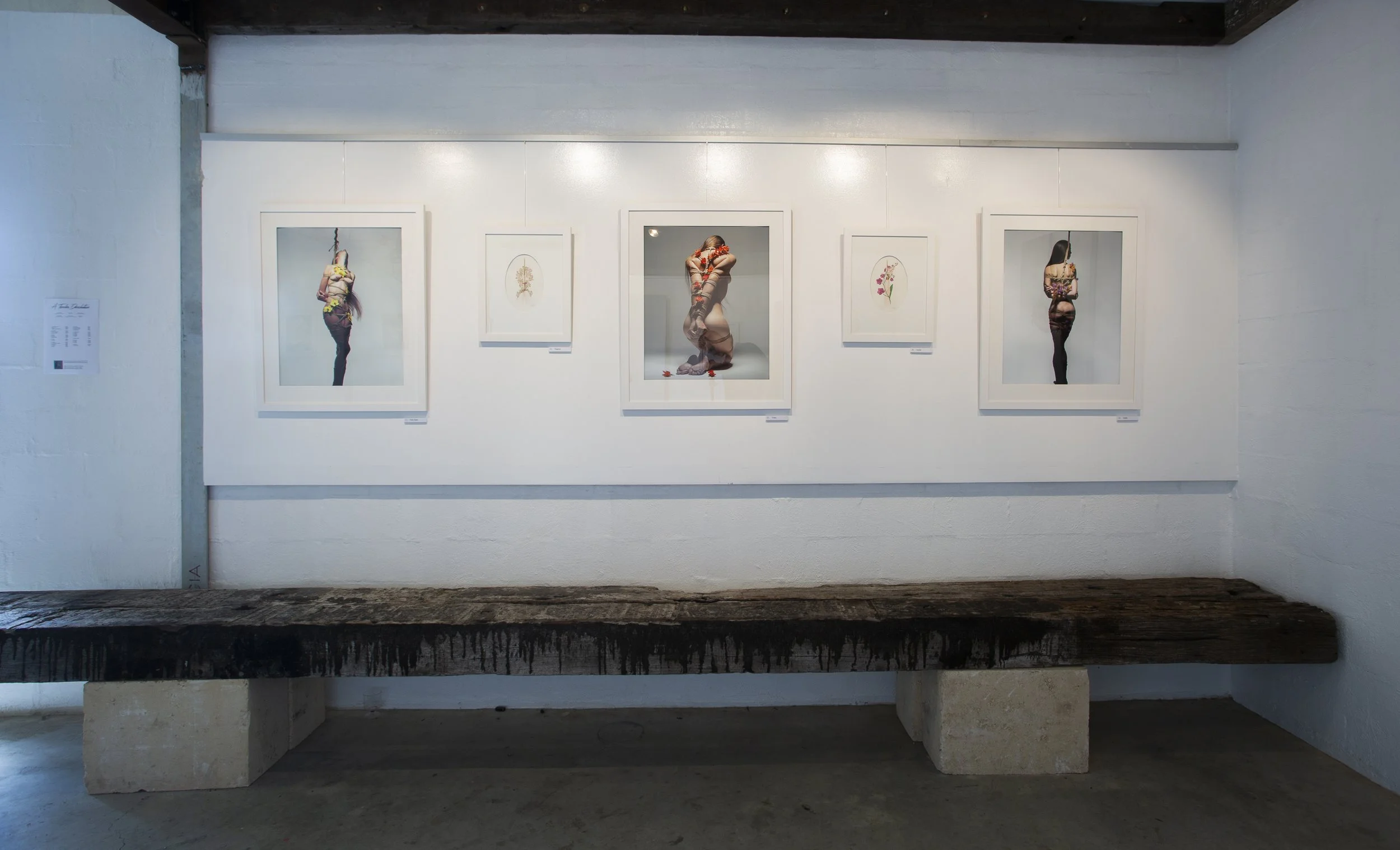
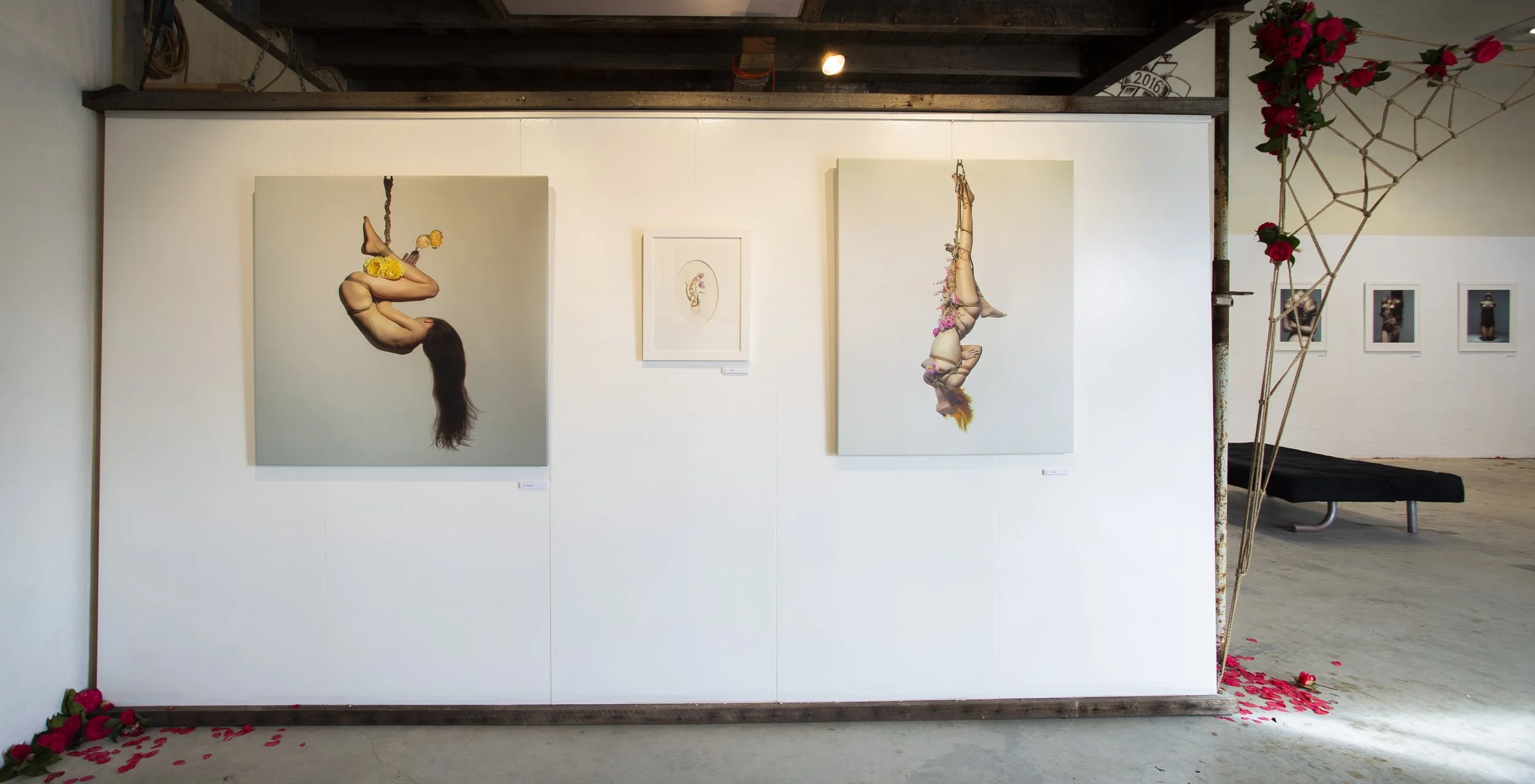
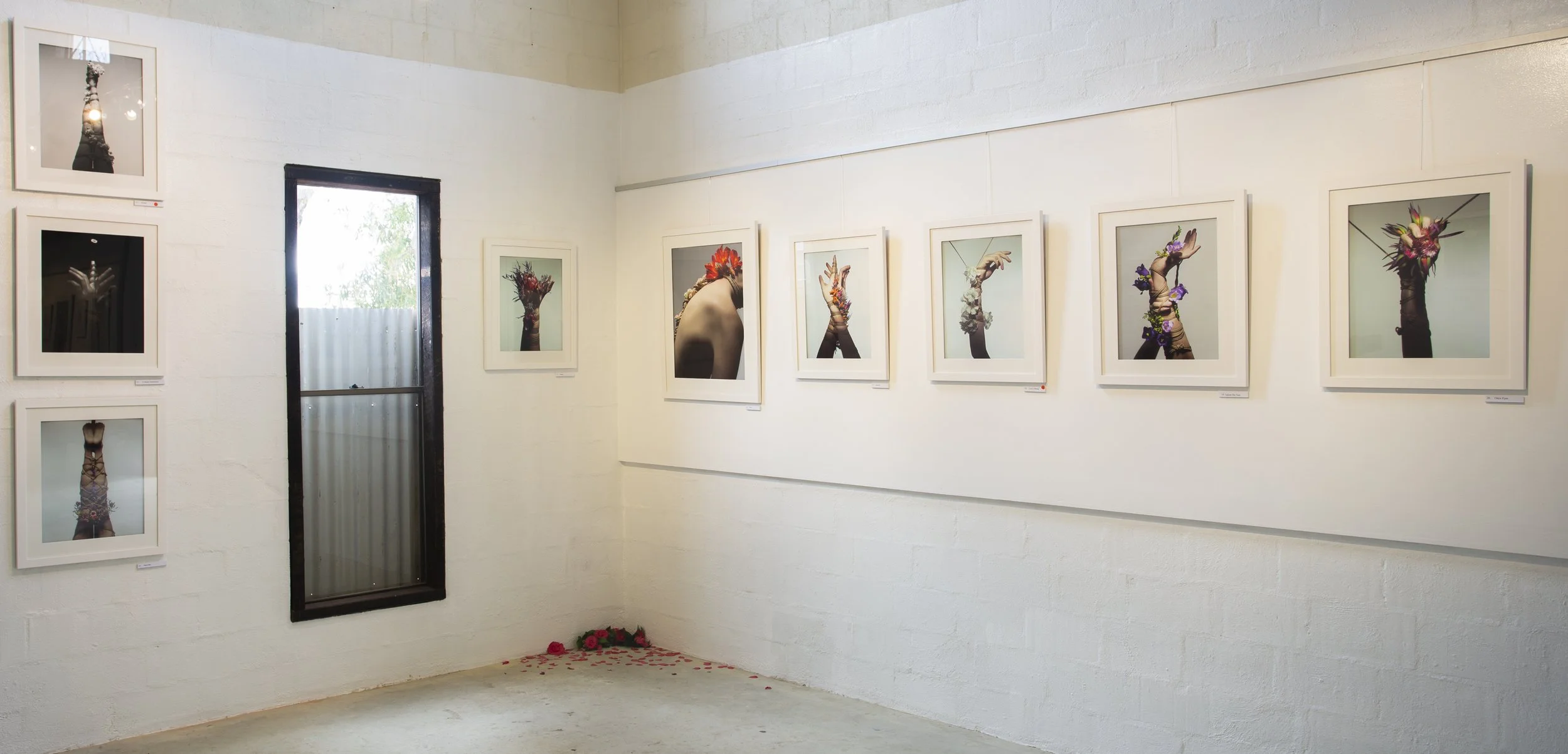
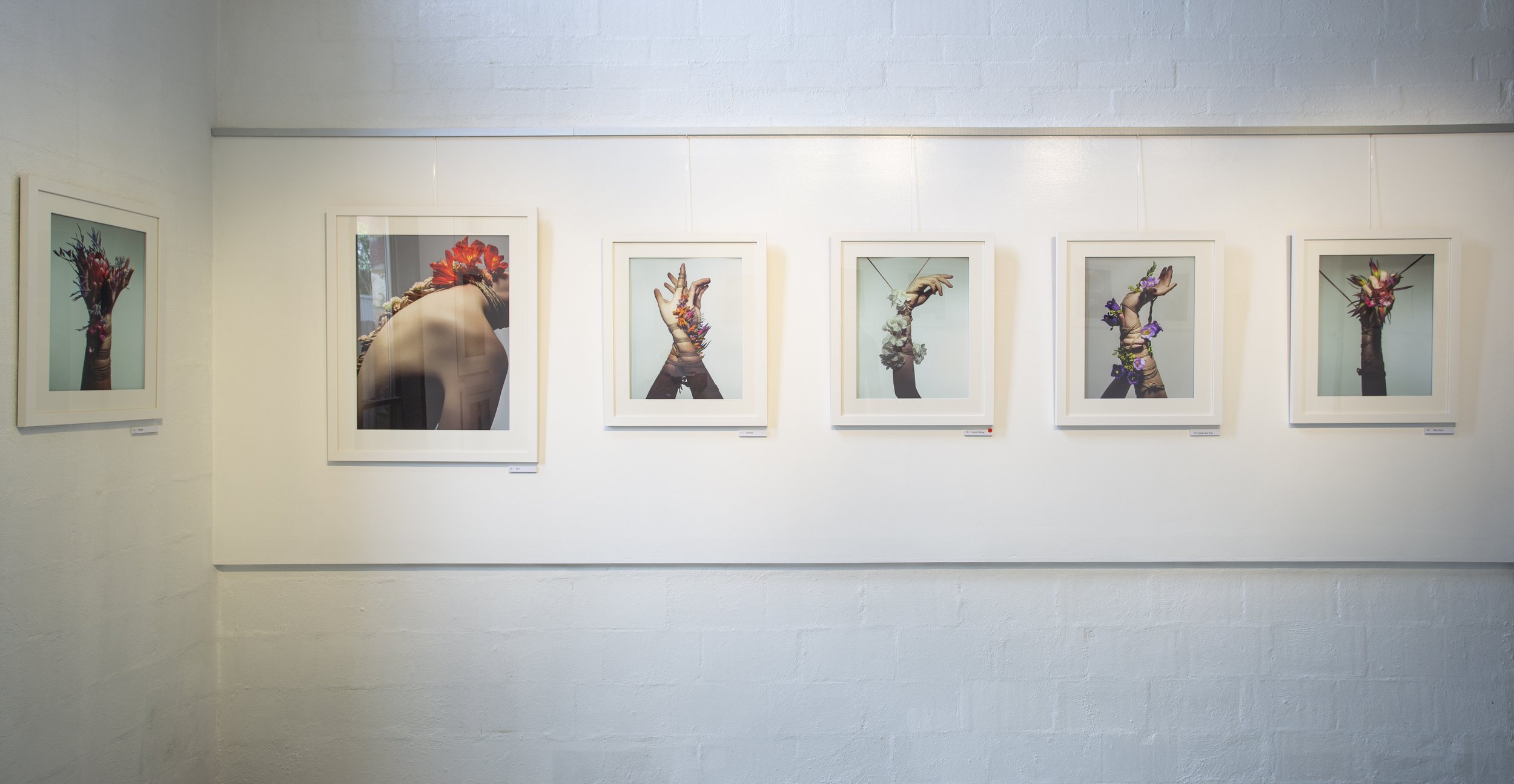
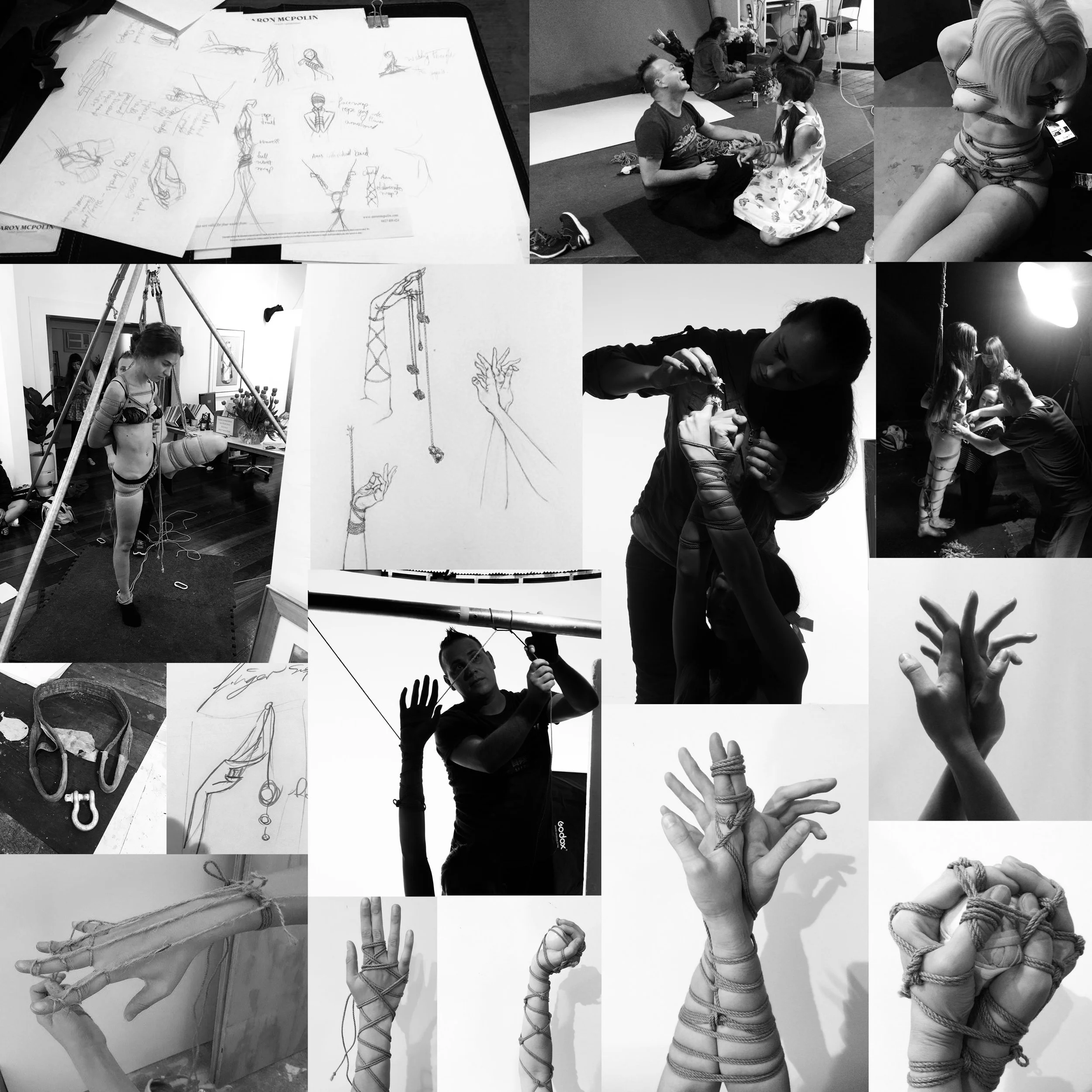
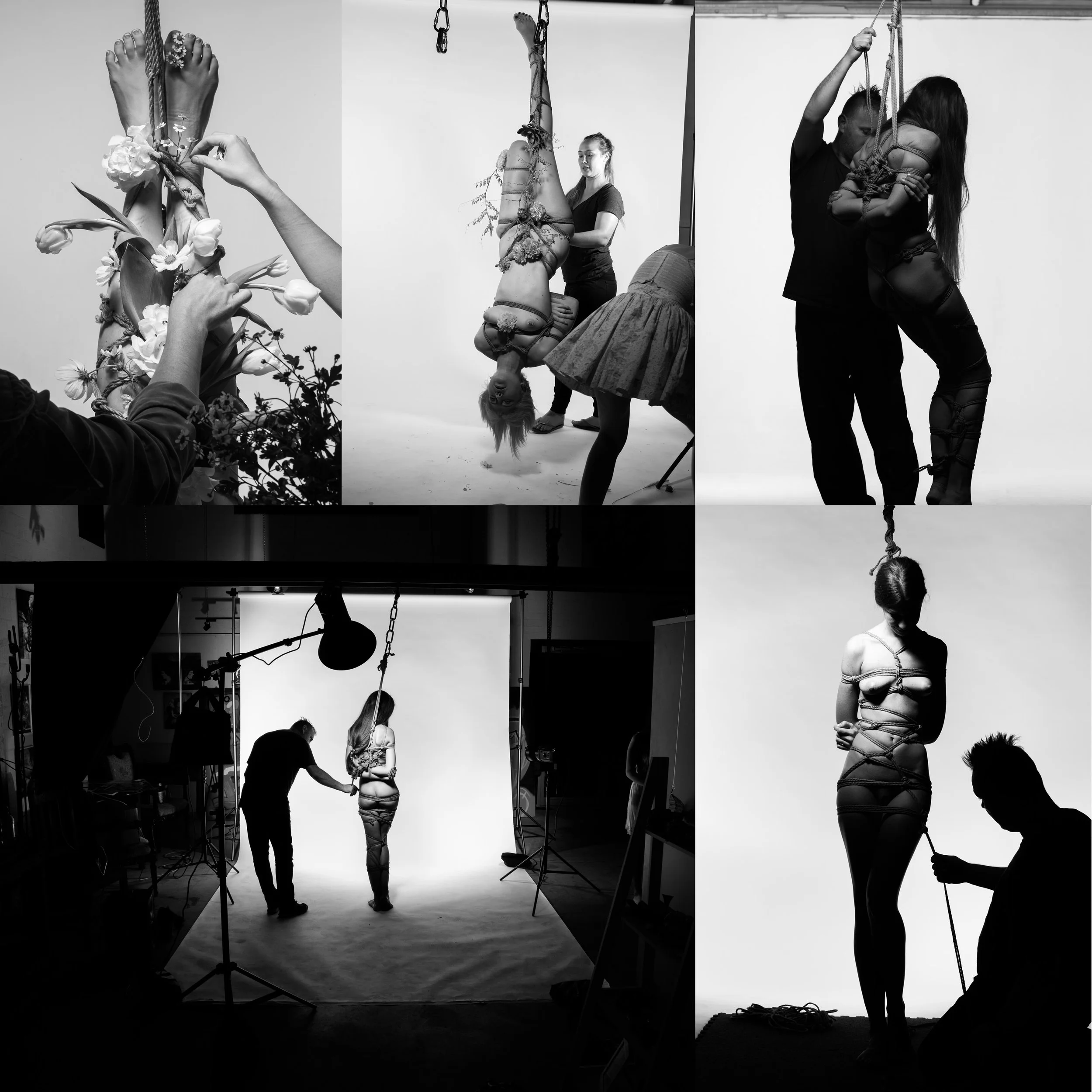
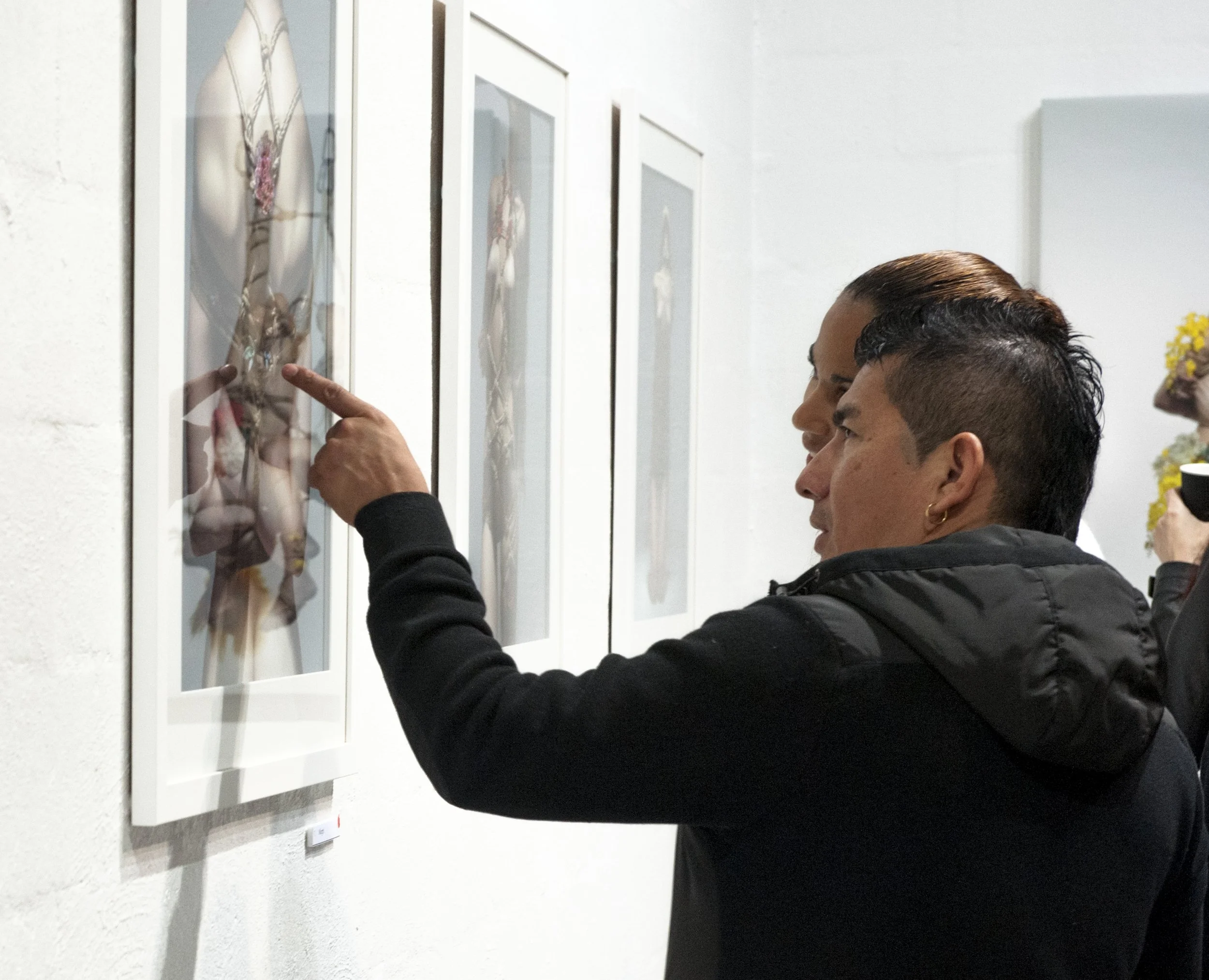
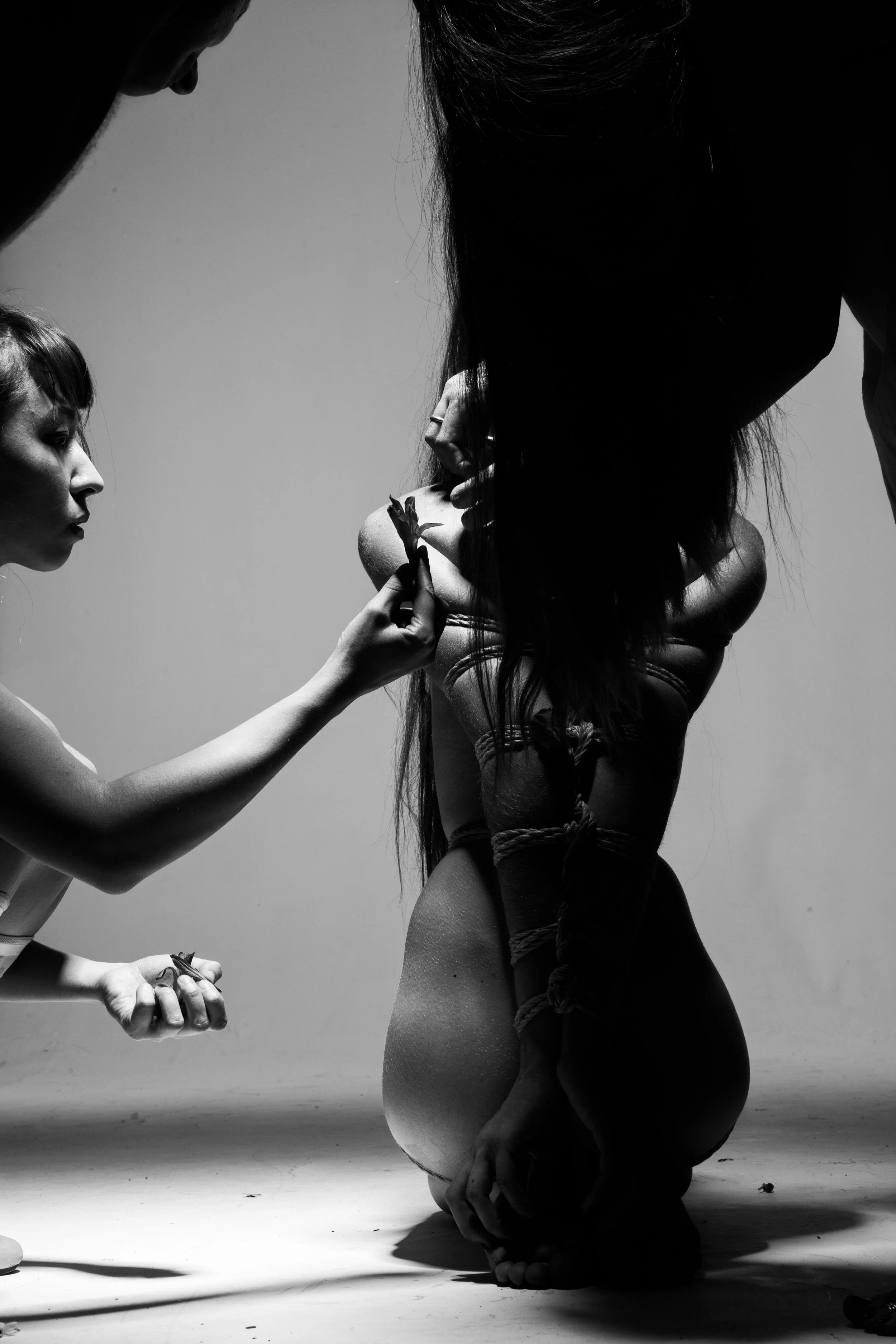
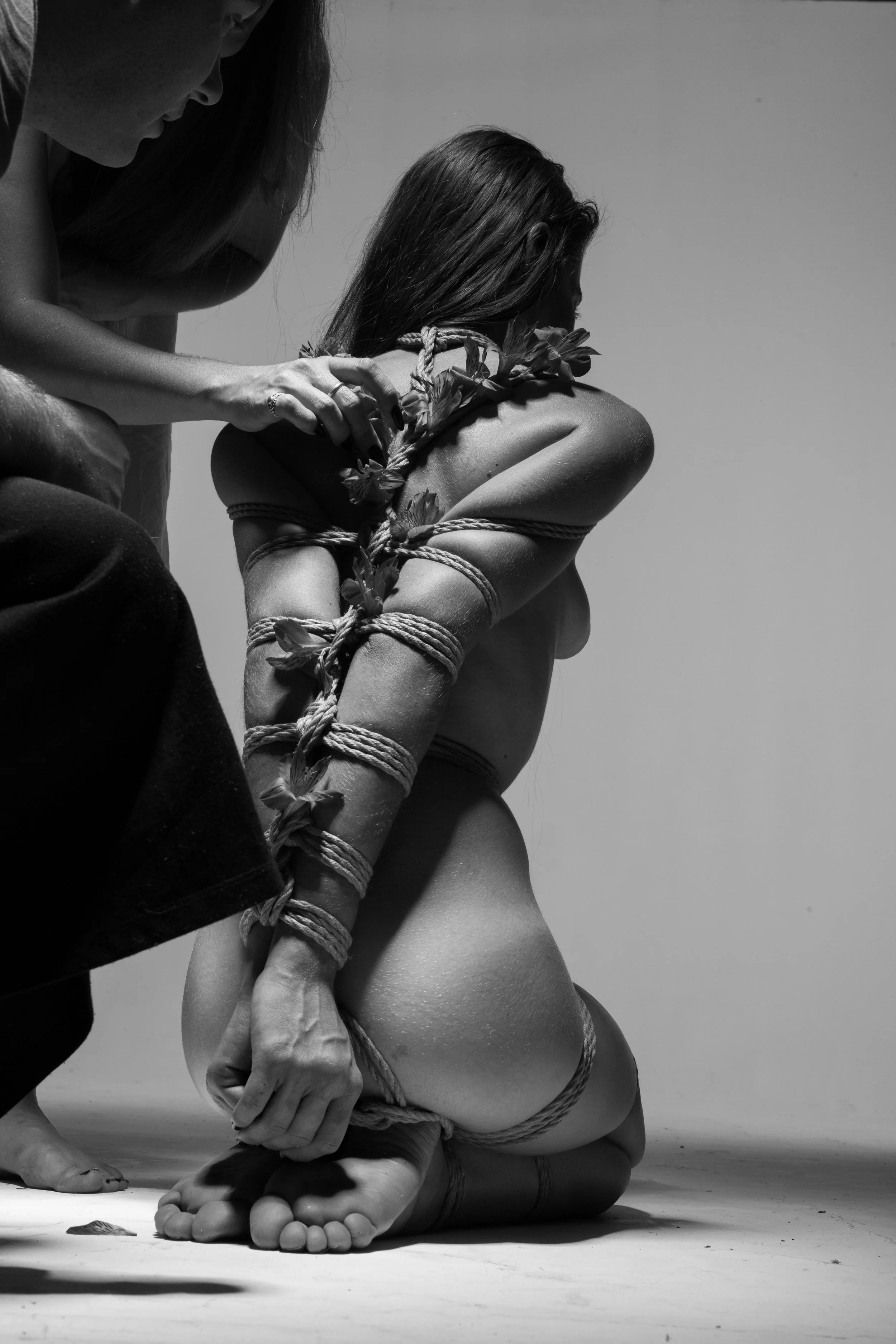
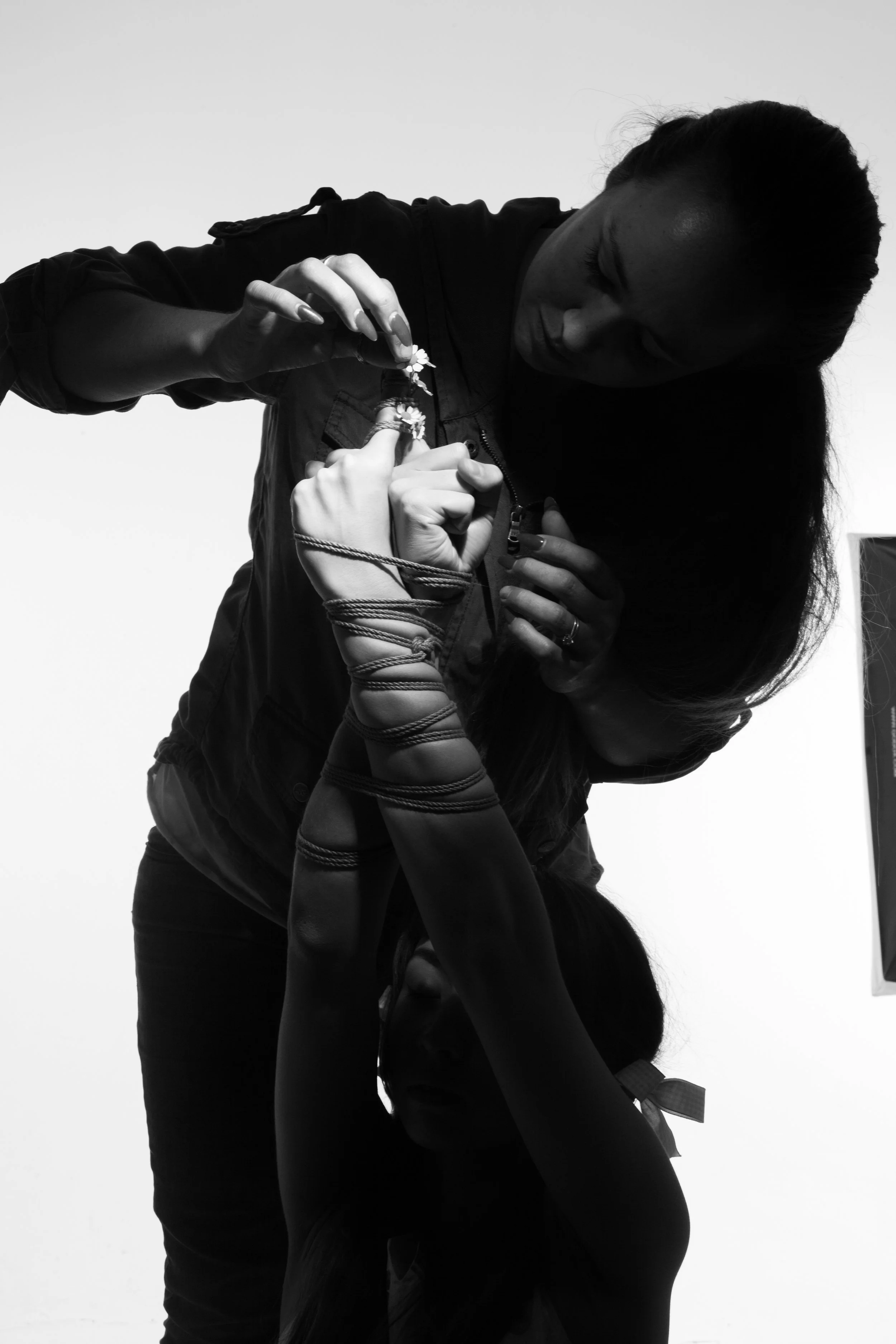
“Discovering the many reasons why people get into Shibari was like going down the rabbit hole,” says Aaron McPolin, a fashion and beauty photographer based in Perth, Western Australia. “It’s not just one facet that draws people in; there are many different sides and that’s what makes it such an interesting art form.” He became so captivated by the practice that he created a series of photos called “A Tender Dissolution” that was exhibited last year and released internationally as a book this month. “I have friends who are in [the BDSM] scene and it’s often misconstrued and misrepresented as creepy or something to be ashamed about,” McPolin explains. “But my goal is to show Shibari and BDSM culture in a way that can be accepted and dissolve any bad connotations. I want people to see its purest form, which is the artistry and the human body.” Such artistry abounds in the images McPolin created with artist/illustrator Calliope Bridge, rope artist Paul Kabzinski and florist Samara Flavel. At once delicate and audacious, “A Tender Dissolution” elegantly juxtaposes intricate rope and knot patterns, ornamental florals (comprised of native Western Australia flowers) and sculptural composition with lissome, nude models who exude more of a mystical sensuality than overt sexuality.
Still, McPolin realizes there are those who will instantly deem the images too explicit or unsettling. “It’s like, oh no, there’s boobs,” he laughs. “But that says more about the person looking at it than it does the actual artwork. Being tied up is not normal for most, but these are people’s bodies and these are their choices. When you don’t judge, you break down your barriers and dissolve your preconceptions. I photographed my models mainly without showing their faces because I wanted people to put themselves in that space rather than focusing on the model.”
It’s such an in-depth art form and skill set that you can’t ever stop learning.
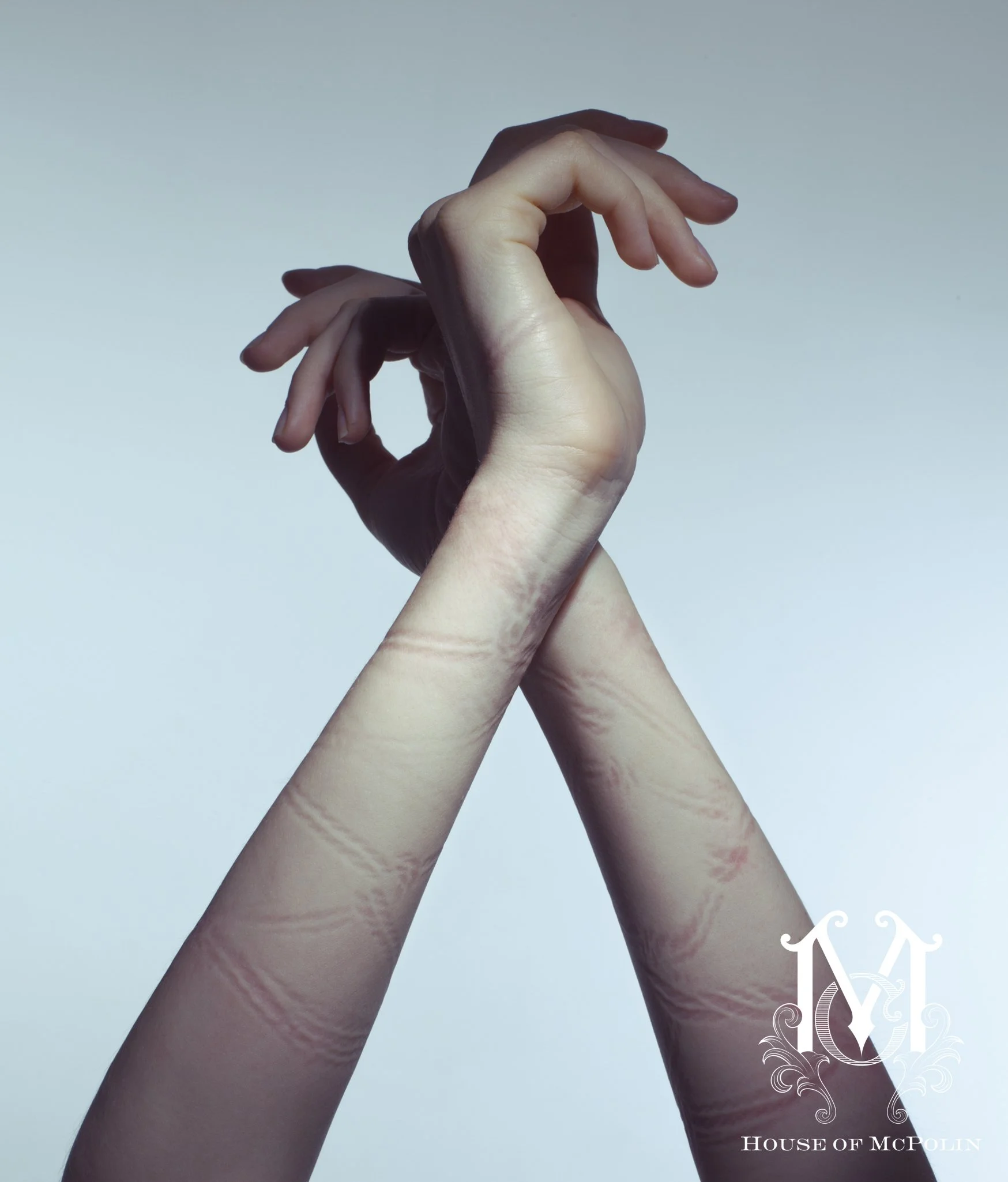
But practitioners of shibari don’t just do partake for shock value or even the beauty of it. According to a 2015 New York magazine article, there is preliminary scientific evidence that suggests bondage can actually reduce stress and anxiety. Referred to as “rope space” or “rope drunk,” the sensation is akin to a runner’s high where people experience physical, physiological and psychological changes. “I’ve witnessed people who’ve had Shibari performed on them and for weeks afterwards they’re more relaxed and present,” affirms McPolin. “It’s the build-up of adrenaline that you get because you can’t escape the environment and then the endorphins of being untied. Shibari isn’t just a tool of beauty; it’s a tool for practical purposes.”
Being part of the kink community and the BDSM community has definitely opened my eyes to things like inclusion and consent more so than the vanilla world has. There is a tremendous amount of respect and that’s something we could all learn from.” McPolin agrees in the way that shibari requires a great trust and “commitment unlike anything else I’ve seen. That’s why I think that people in BDSM are much more connected with trust than other people.” Both a method to restrain and to liberate, Shibari is a paradox that will no doubt continue to evolve, just as it has over the centuries. “I think eventually Shibari will be widely accepted not just as a practice but also as an art form,” says McPolin.
“Ultimately, I hope people will reserve judgment and become curious about the unknown and realize that you can find beauty in something that is considered taboo.”
Written by Corrine Barraclough
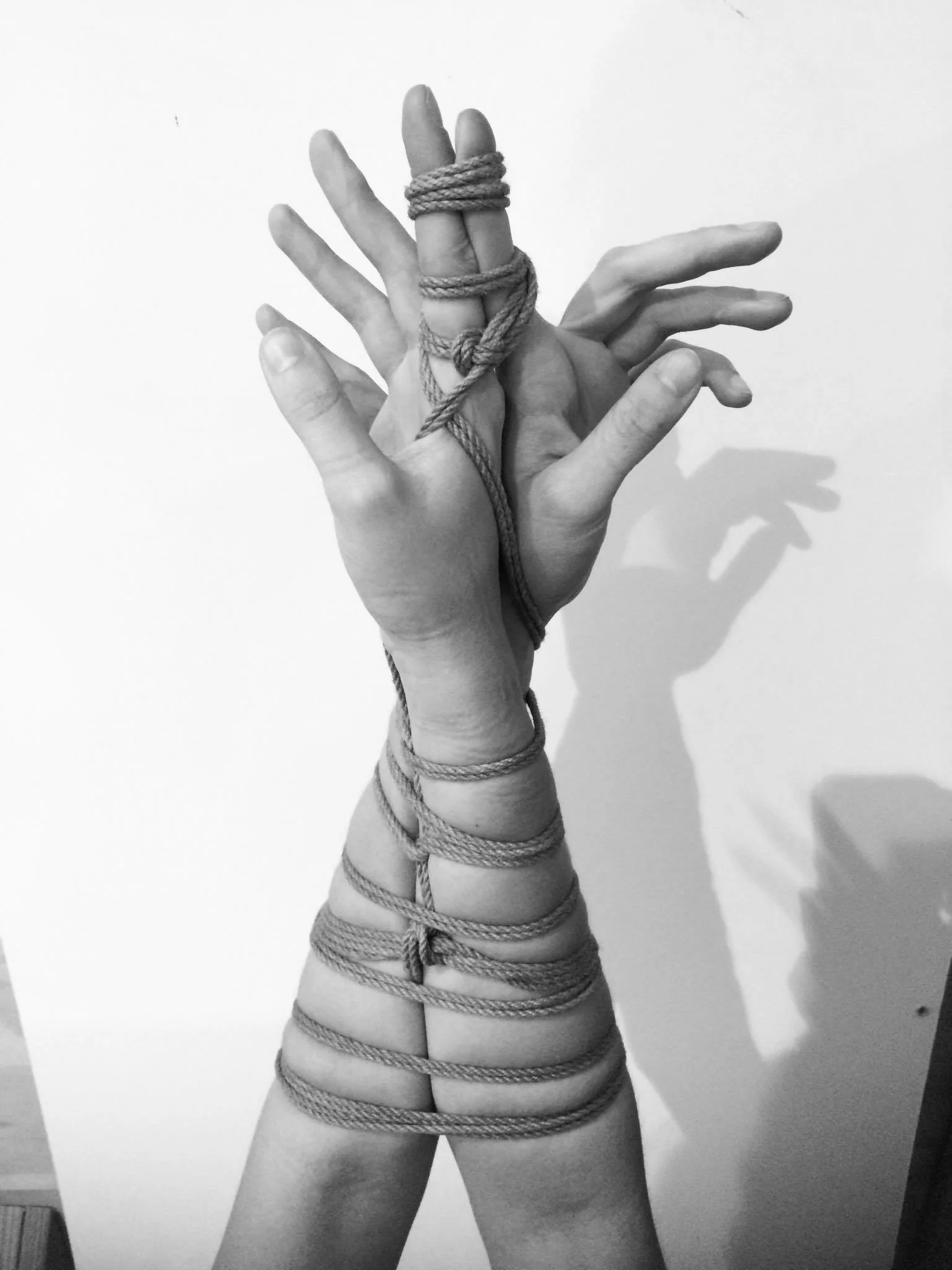
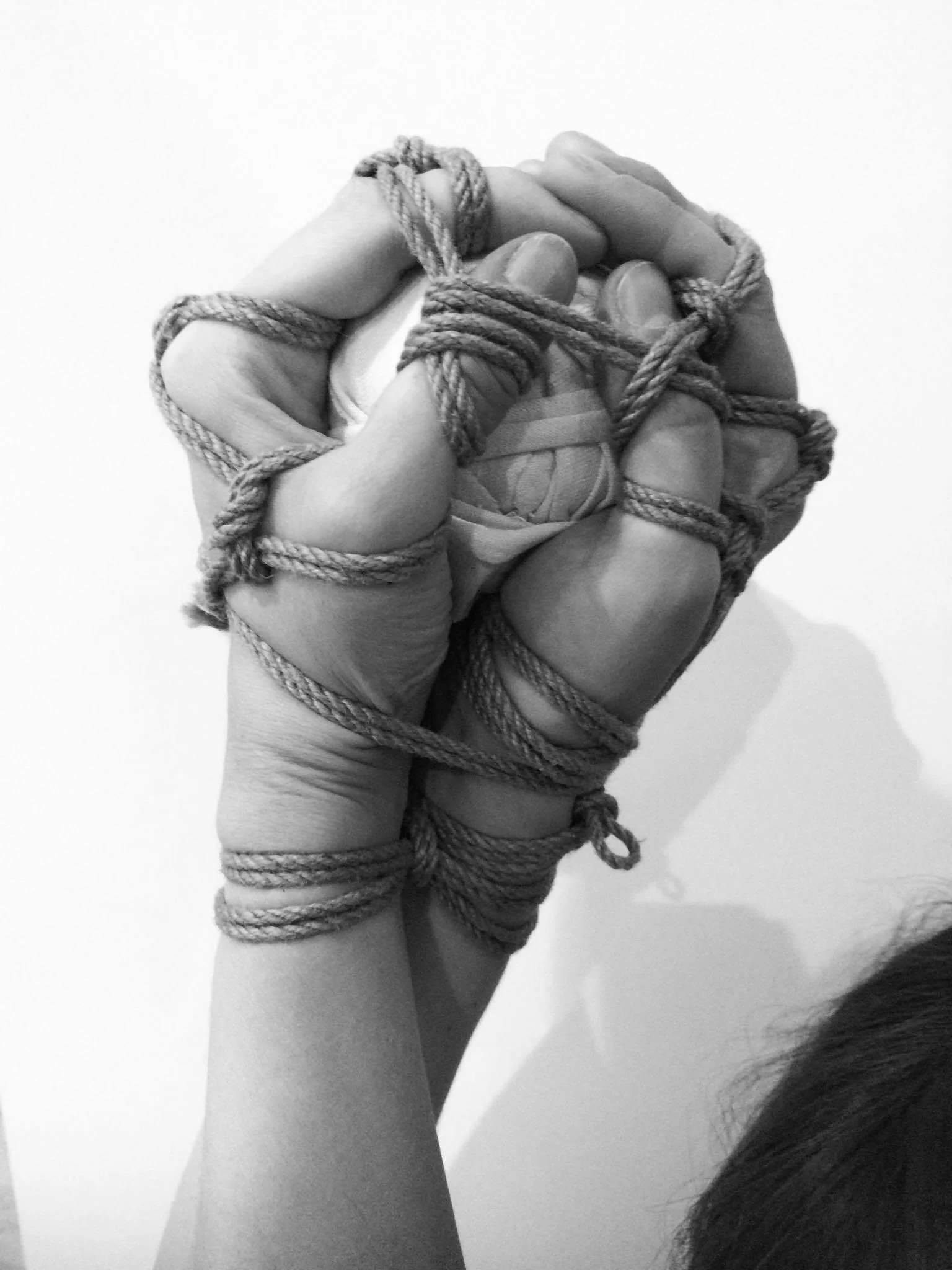
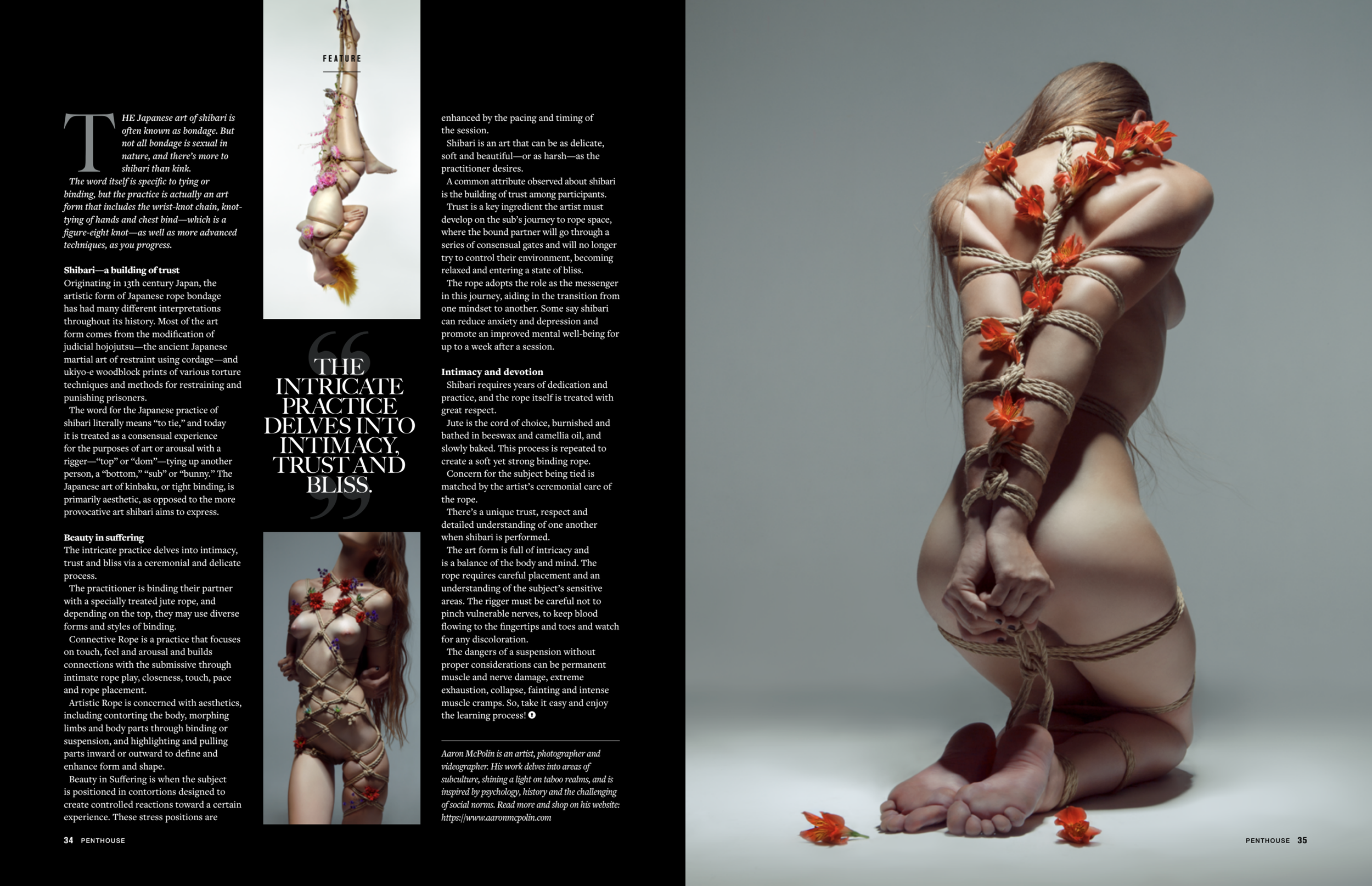
The Japanese art of shibari is often known as bondage. But not all bondage is sexual in nature, and there’s more to shibari than kink. The word itself is specific to tying or binding, but the practice is actually an art form that includes the wrist-knot chain, knot-tying of hands and chest bind—which is a figure-eight knot—as well as more advanced techniques, as you progress.
Shibari: A Building of Trust
Originating in 13th century Japan, the artistic form of Japanese rope bondage has had many different interpretations throughout its history. Most of the art form comes from the modification of judicial hojojutsu—the ancient Japanese martial art of restraint using cordage—and ukiyo-e woodblock prints of various torture techniques and methods for restraining and punishing prisoners.
The word for the Japanese practice of shibari literally means “to tie,” and today it is treated as a consensual experience for the purposes of art or arousal with a rigger—“top” or “dom”—tying up another person, a “bottom,” “sub” or “bunny.” The Japanese art of kinbaku, or tight binding, is primarily aesthetic, as opposed to the more provocative art shibari aims to express.
Beauty in Suffering
The intricate practice delves into intimacy, trust, and bliss via a ceremonial and delicate process. The practitioner is binding their partner with a specially treated jute rope, and depending on the top, they may use diverse forms and styles of binding.
Connective Rope is a practice that focuses on touch, feel, and arousal and builds connections with the submissive through intimate rope play, closeness, touch, pace, and rope placement.
Artistic Rope is concerned with aesthetics, including contorting the body, morphing limbs and body parts through binding or suspension, and highlighting and pulling parts inward or outward to define and enhance form and shape.
Beauty in Suffering is when the subject is positioned in contortions designed to create controlled reactions toward a certain experience. These stress positions are enhanced by the pacing and timing of the session.
Shibari is an art that can be as delicate, soft, and beautiful—or as harsh—as the practitioner desires. A common attribute observed about shibari is the building of trust among participants.
Trust is a key ingredient the artist must develop on the sub’s journey to rope space, where the bound partner will go through a series of consensual gates and will no longer try to control their environment, becoming relaxed and entering a state of bliss. The rope adopts the role as the messenger in this journey, aiding in the transition from one mindset to another. Some say shibari can reduce anxiety and depression and promote improved mental well-being for up to a week after a session.
Intimacy and Devotion
Shibari requires years of dedication and practice, and the rope itself is treated with great respect. Jute is the cord of choice, burnished and bathed in beeswax and camellia oil, and slowly baked. This process is repeated to create a soft yet strong binding rope.
Concern for the subject being tied is matched by the artist’s ceremonial care of the rope. There’s a unique trust, respect, and detailed understanding of one another when shibari is performed. The art form is full of intricacy and is a balance of the body and mind. The rope requires careful placement and an understanding of the subject’s sensitive areas. The rigger must be careful not to pinch vulnerable nerves, to keep blood flowing to the fingertips and toes, and watch for any discoloration.
The dangers of a suspension without proper considerations can be permanent muscle and nerve damage, extreme exhaustion, collapse, fainting, and intense muscle cramps. So, take it easy and enjoy the learning process!
Aaron McPolin is an artist, photographer, and videographer. His work delves into areas of subculture, shining a light on taboo realms, and is inspired by psychology, history, and the challenging of social norms. Read more and shop on his website: Aaron McPolin
Written by JENNIFER GORI
Interview: Aaron Mcpolin Reveals The Grace of Shibari With Photography
Since its invention, photography has been an incredible tool to document humanity and to get the best insights into global subcultures and countercultures that have fed what we now know as new contemporary art. Aaron McPolin is a fashion and beauty photographer, but also, in his own way, a sociologist. Indeed, the artist doesn’t confine himself to the skin-deep aspect of human body, he also enjoys exploring its mind and to document contemporary subcultures.
He grew up near Manchester, England, before moving to Perth, Australia. At the age of 17, he discovered that photography was his calling.
“I’ve always enjoyed people” he says. “Learning more about their beliefs and their ways of treading through life. I find that, through photography, I can personally explore and represent other people’s and my own ideas much more strongly than through any other means.”
Aaron’s observation of humanity often leads him down in the rabbit hole, deeper and deeper. With his two eyes wide open and his camera always nearby, he studies the world of taboo, meets the outcasts, the talented weirdos and beautiful freaks he is proud to know and love. His studies, in the form of fine art series, usually stagger over one or two years. His first one, ‘A Pattern of Rebirth’, in 2014, was exploring identity and acceptance.
A Tender Dissolution
With ‘A Tender Dissolution’, the photographer decided to shed light on Shibari. Aaron McPolin explains his choice of subject:
“At first, I was interested in Shibari as a vessel to communicate the taboo our culture harbours in the general public towards anything different and irregular. I wanted to really push the general public’s ideas of what they personally find acceptable. Breaking down people’s barriers isn’t easy, you can’t water something down and expect people to just integrate it.”
But soon, the artist is impressed by the dedication, skill and talent involved in this erotic art. Shibari is a contemporary, Western term to name a Japanese artistic form of rope bondage. It is inspired by Kinbaku (which translates by ‘tight binding’) a provocative yet aesthetic practice that delves into intimacy, trust and bliss. In a ceremonial, delicate process, the practitioner is binding his rope partner with a specially treated jute rope. The practice has diverse forms, most notably ‘Connective Rope’, ‘Artistic Rope’, which is shaped, around aesthetics and ‘Beauty in Suffering’, in which the subject is positioned in contortions designed to create controlled reactions.
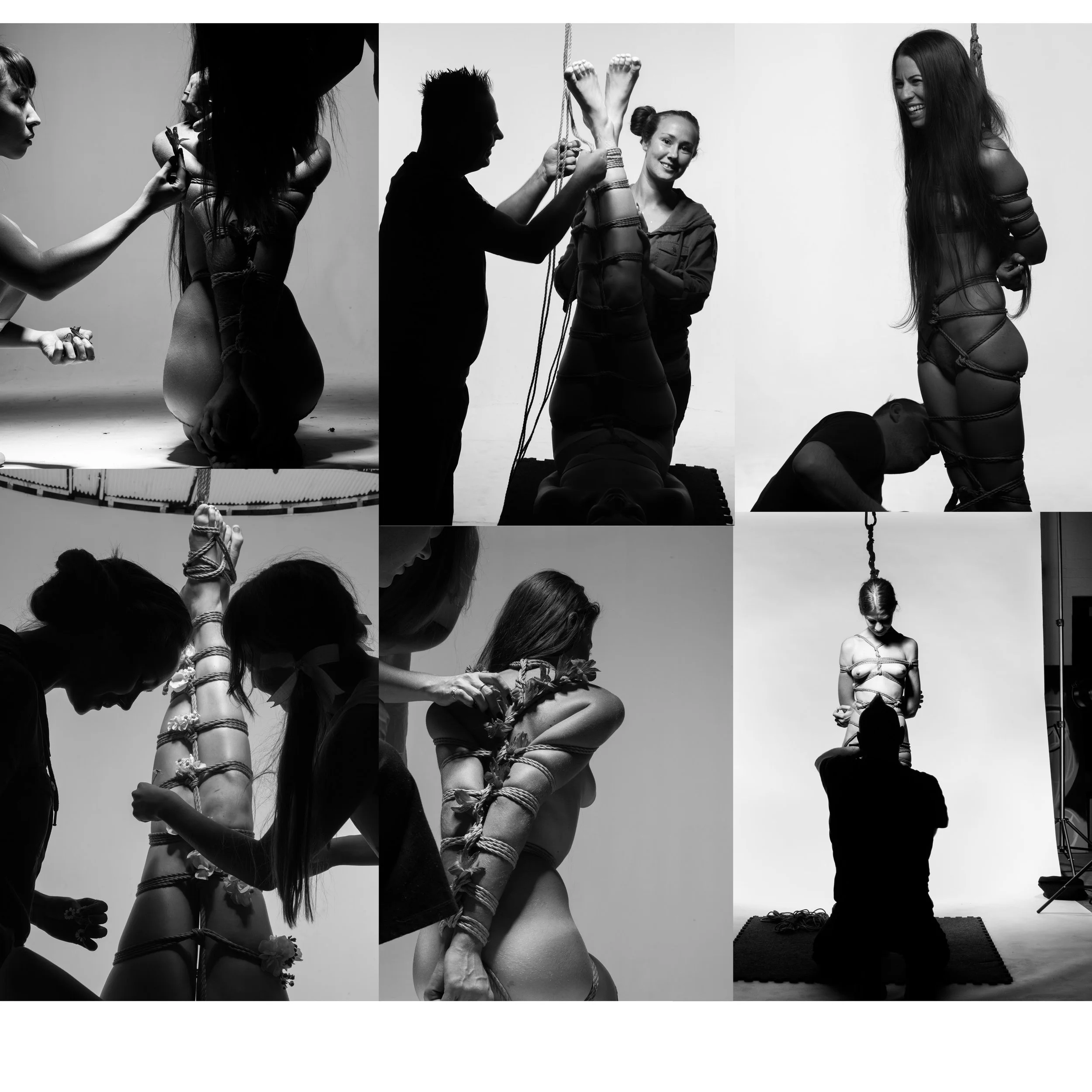
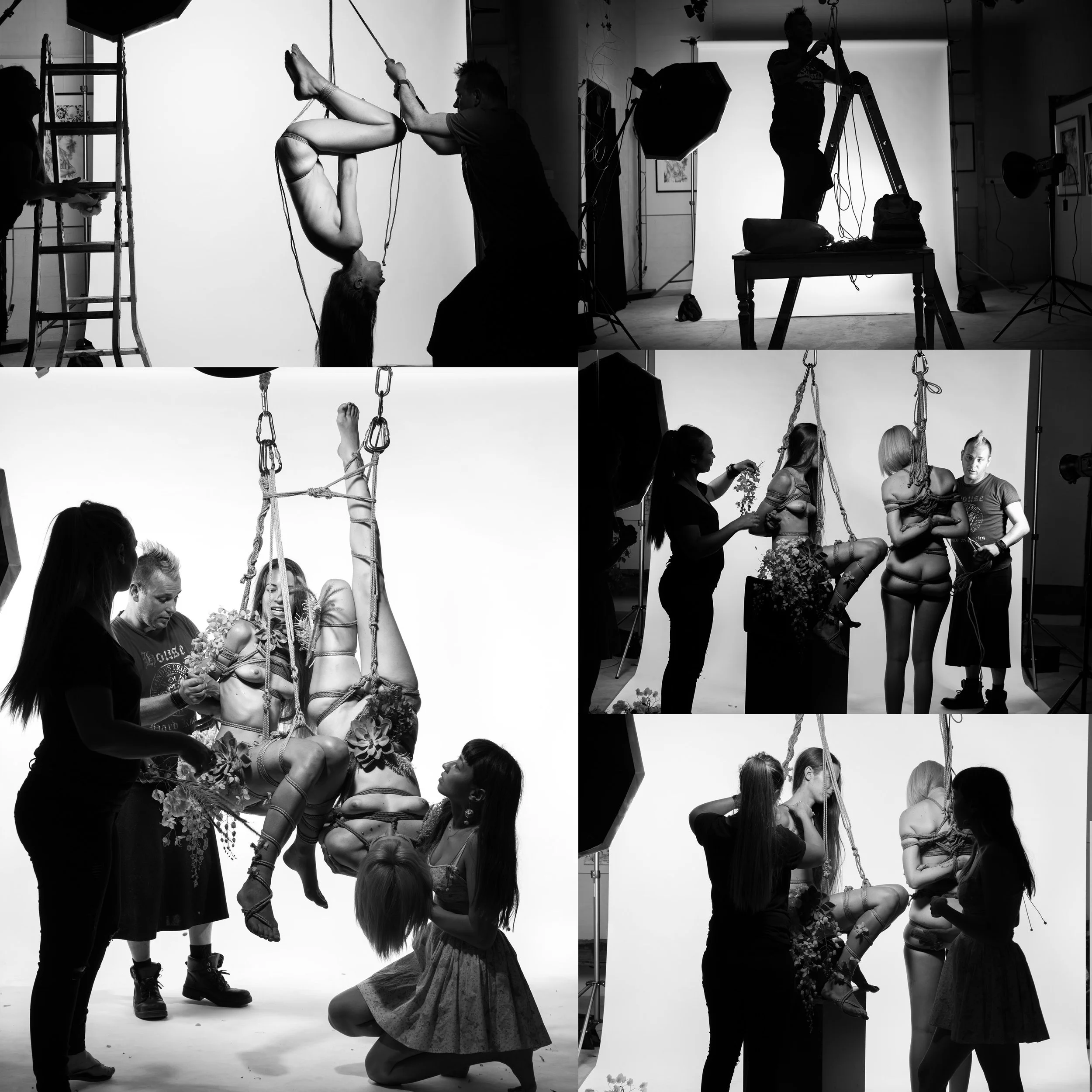
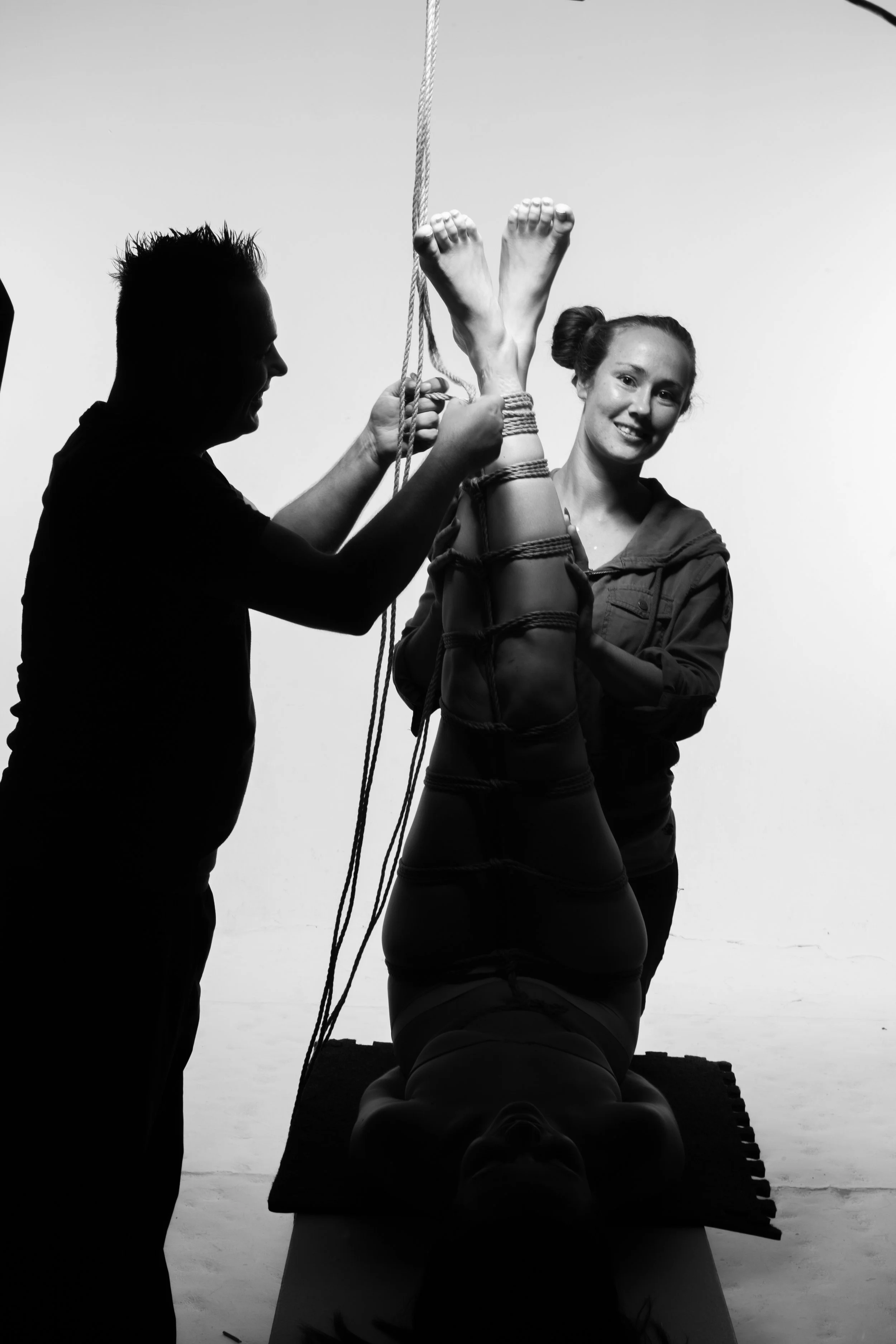
To learn the ropes (pun intended), Aaron has connected with Paul Kabzinski, a shibari artist and teacher, to guide him and his team in this special journey.
“I was like: hey, I have a project where I want to tie you up nude and suspend you in the air!” he recalls. “I had everyone go through a class with Paul, including myself, to be tied, bound and put through the motions. Having a team who fully understood the process and the experience was vital to the series coming to life.”
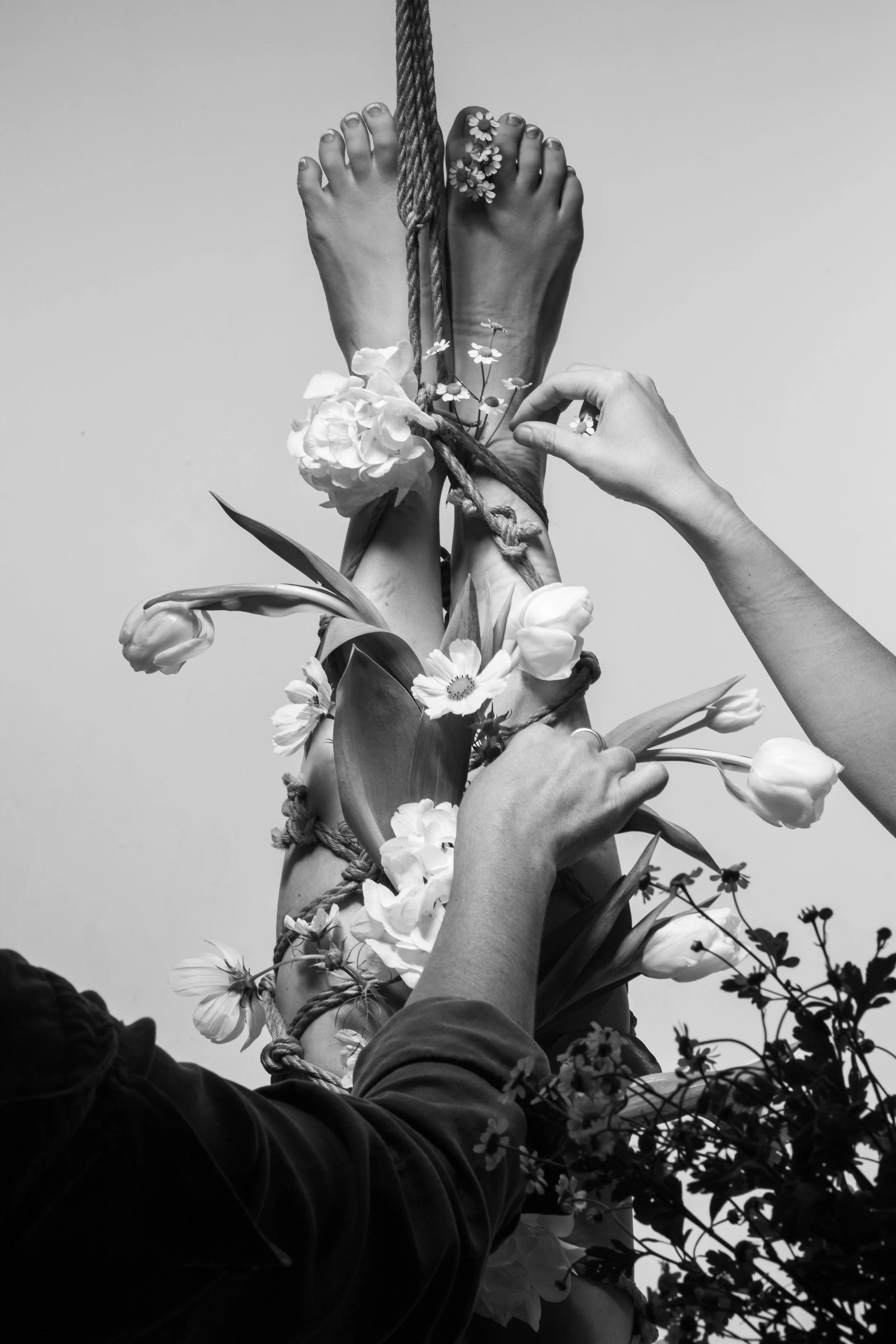
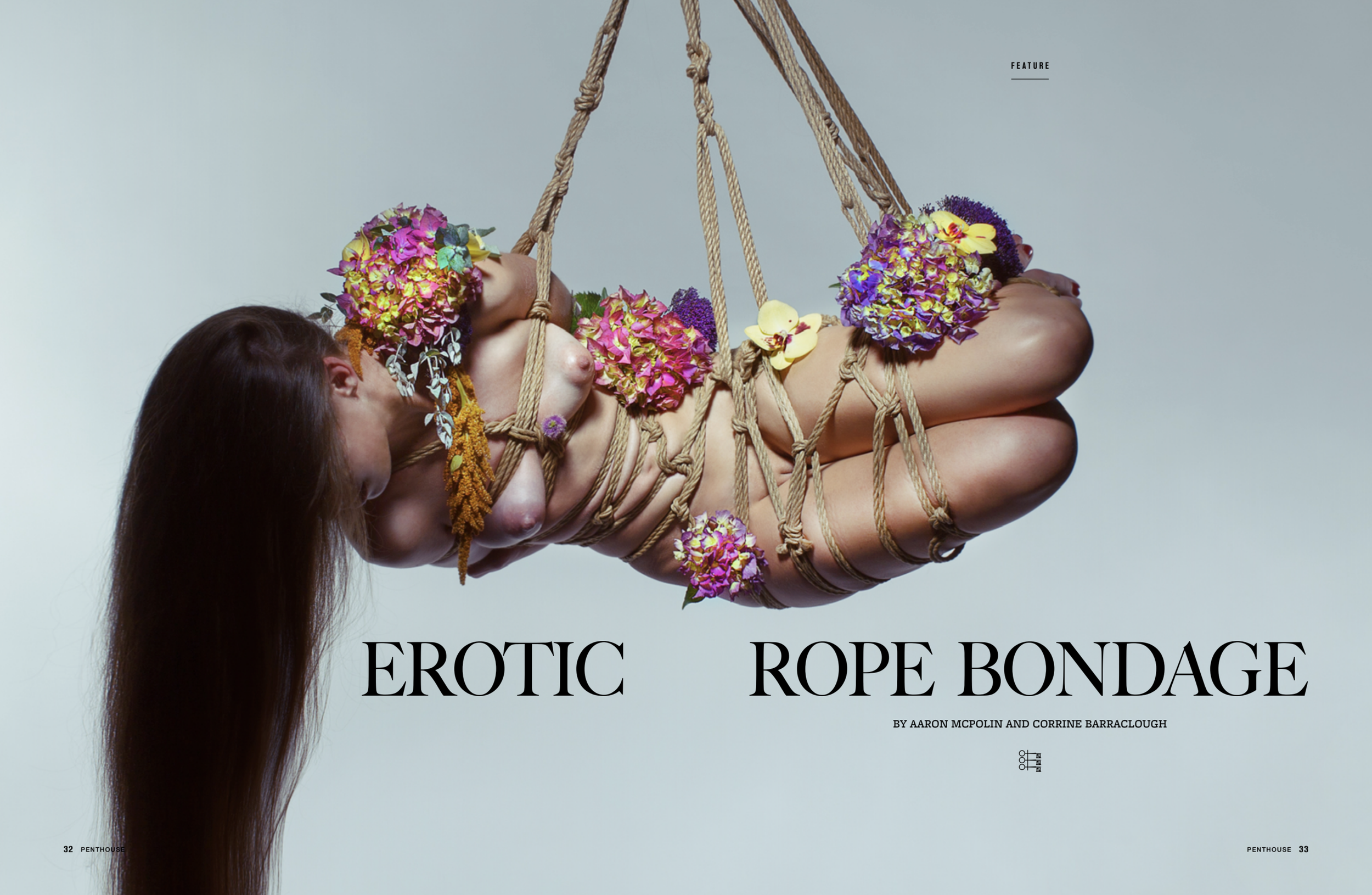
His series of photography, ‘A tender dissolution’, aimed to show shibari in a pure form, with his own interpretation from his experiences of the culture and community. The fully naked models are shot in a delicate light, to underline the connection between flesh and rope. Beautiful flowers are reinforcing the sensation of purity and weightlessness. We get a glimpse in a world at the same time puzzling and harmonious. Aaron states:
“I want people to feel disjointed, to be comfortable with accepting something different. They shouldn’t close up and shun the strange. Normal is an illusion. What is normal to the spider is chaos to the fly (you can’t go wrong with a bit of Morticia!)”
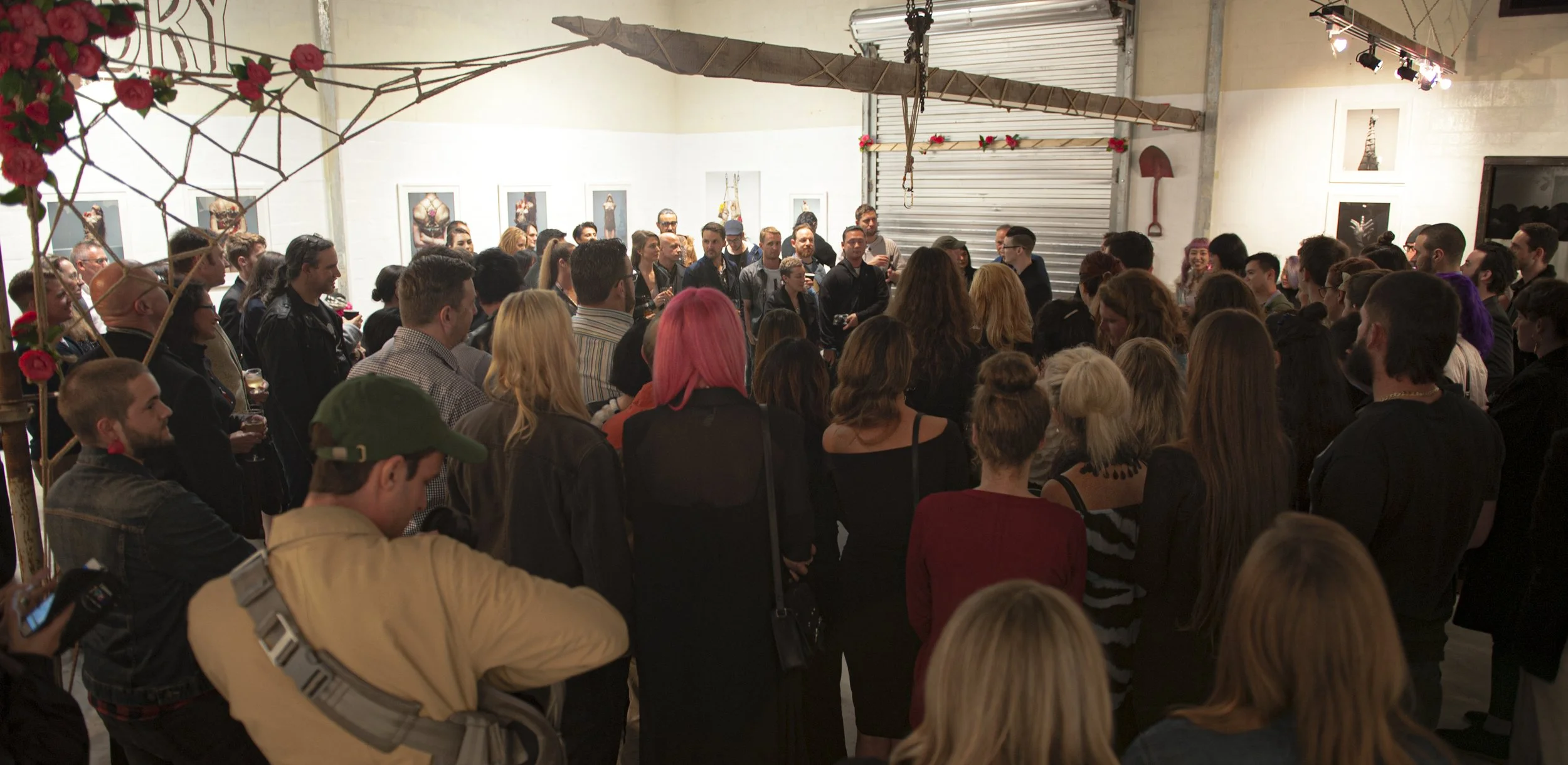
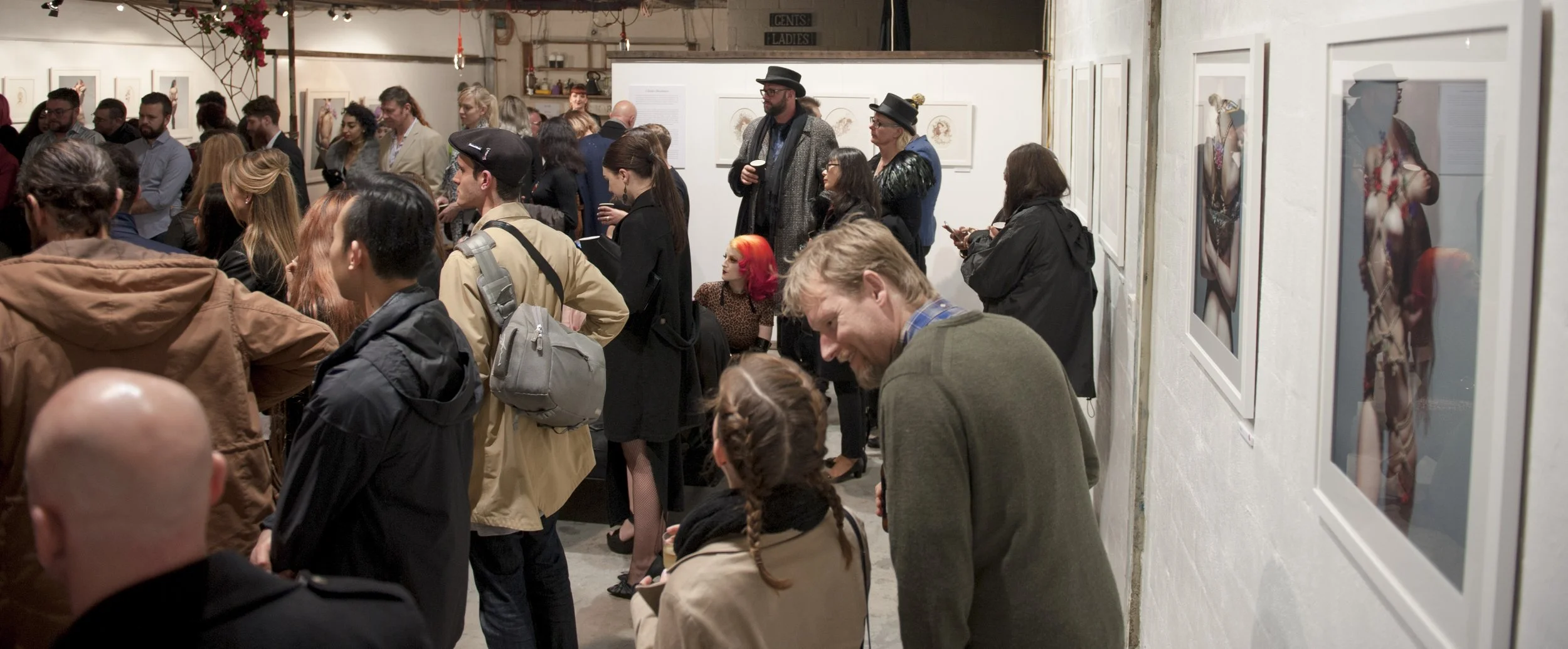
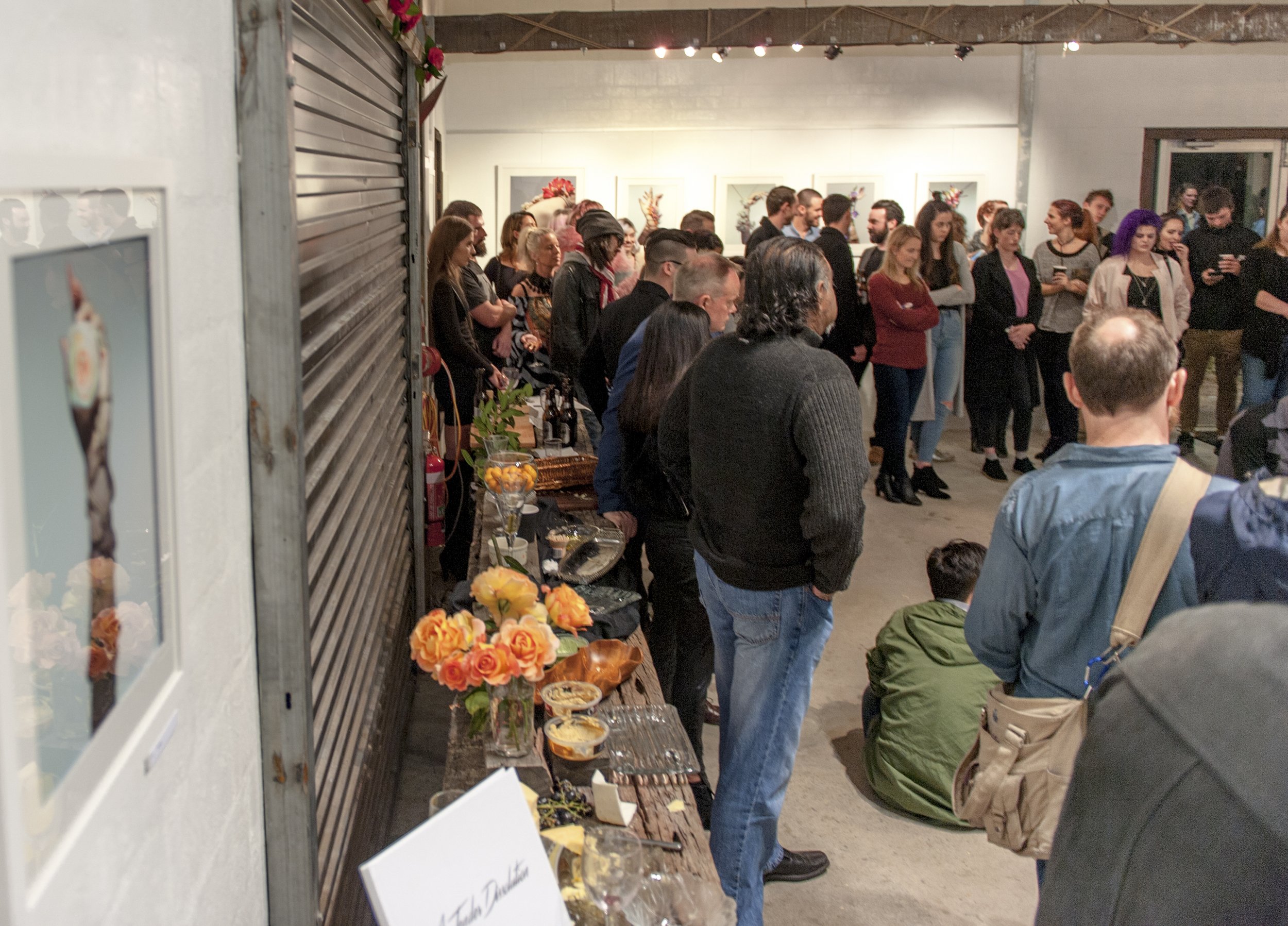
‘A Tender Dissolution’ was exhibited in July 2017 and will be available as a book in January 2018. Aaron McPolin hopes that it will help Shibari be more accepting as an art form, and he intends to explore it more over the coming years. His next series, to be released in January 2019, is based around another attribute of BDSM. The photographer concludes:
“I sincerely hope that [my work] gives viewers a new insight into this culture. I want them to question their stance on what may be taboo, to start a new conversation.”
A TENDER DISSOLUTIONAARON MCPOLINART IN AUSTRALIAART MAGAZINEART PHOTOGRAPHYARTISTARTISTIC PHOTOGRAPHYAUSTRALIAN ART MAGAZINEAUSTRALIAN ARTISTAUSTRALIAN PHOTOGRAPHERBDSMBDSM CULTUREBEAUTY PHOTOGRAPHYBONDAGECONTEMPORARY ARTEROTICEROTIC ARTEROTIC PHOTOGRAPHYEROTICAEROTICISMFASHION PHOTOGRAPHYFEMALE NUDEFETISH ARTINTERVIEWKINBAKUNEW CONTEMPORARY ARTNSFWNUDENUDE ARTNUDE PHOTOGRAPHYNUDE PORTRAITNUDE WOMENPAUL KABZINSKIPHOTOGRAPHERPHOTOGRAPHYROPE BONDAGESHIBARIWOMEN IN PHOTOGRAPHY